Lee Jooyeon, Kim Jung-Hyun, Hong Seok-Ho, Yang Se-Ran
Department of Thoracic and Cardiovascular Surgery, School of Medicine, Kangwon National University, Chuncheon, Korea.
Department of Internal Medicine, School of Medicine, Kangwon National University, Chuncheon, Korea.
Int J Stem Cells. 2021 Feb 28;14(1):1-8. doi: 10.15283/ijsc20093.
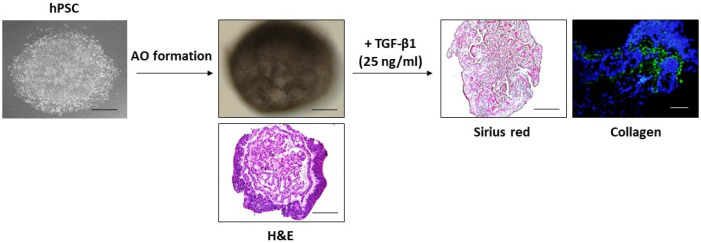
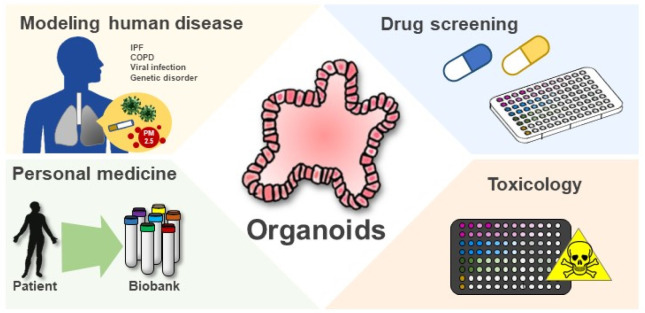
Idiopathic pulmonary fibrosis (IPF) is a chronic, progressive- fibrosing disease characterized by extensive deposition of extracellular matrix (ECM), scarring of the lung parenchyma. Despite increased awareness of IPF, etiology and physiological mechanism of IPF are unclear. Therefore, preclinical model will require relevant and recapitulative features of IPF. Recently, pluripotent stem cells (PSC)-based organoid studies are emerging as an alternative approach able to recapitulate tissue architecture with remarkable fidelity. Moreover, these biomimetic tissue models can be served to investigate the mechanisms of diverse disease progression. In this review, we will overview the current organoids technology for human disease modeling including lung organoids for IPF.
特发性肺纤维化(IPF)是一种慢性进行性纤维化疾病,其特征是细胞外基质(ECM)广泛沉积,肺实质形成瘢痕。尽管对IPF的认识有所提高,但其病因和生理机制仍不清楚。因此,临床前模型需要具备IPF的相关和概括性特征。最近,基于多能干细胞(PSC)的类器官研究正在成为一种能够以惊人的保真度重现组织结构的替代方法。此外,这些仿生组织模型可用于研究多种疾病进展的机制。在本综述中,我们将概述当前用于人类疾病建模的类器官技术,包括用于IPF的肺类器官。