Department of Thoracic Medicine, Chang Gung Memorial Hospital at Linkou, Taoyuan, Taiwan.
Chang Gung University, College of Medicine, Taoyuan, Taiwan.
Int J Chron Obstruct Pulmon Dis. 2020 Oct 23;15:2643-2652. doi: 10.2147/COPD.S272511. eCollection 2020.
The 6-min walk test (6MWT) is a useful tool to assess the physiologic function in patients with chronic obstructive pulmonary disease (COPD). The recent study showed that patients with COPD with oxygen desaturation during the 6MWT had an increased risk of exacerbation and death compared with those without oxygen desaturation. This study aimed to explore the potential risk factors for exercise-induced desaturation (EID) in patients with COPD.
Adult patients with COPD were enrolled from the Chang Gung Research Database between January 2013 and January 2017. Age, sex, body mass index, underlying diseases, medications, and results of the pulmonary function tests and 6MWT were retrospectively collected and analyzed.
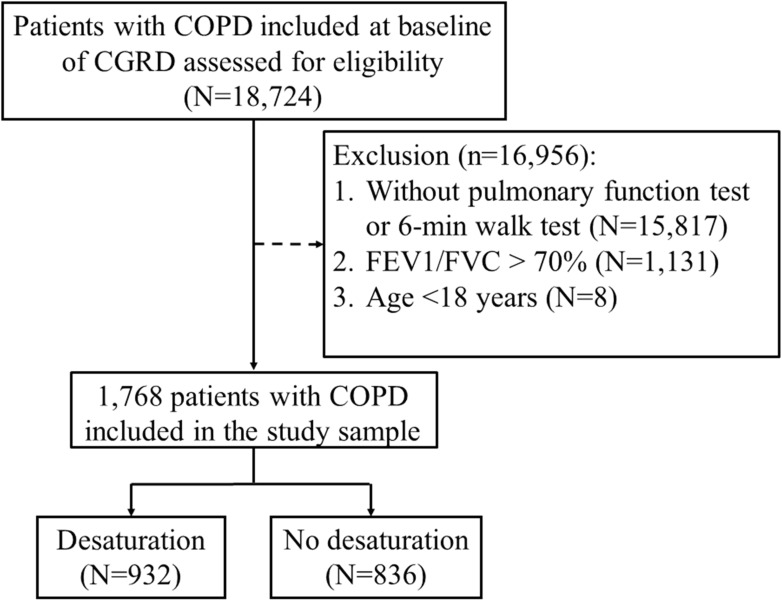
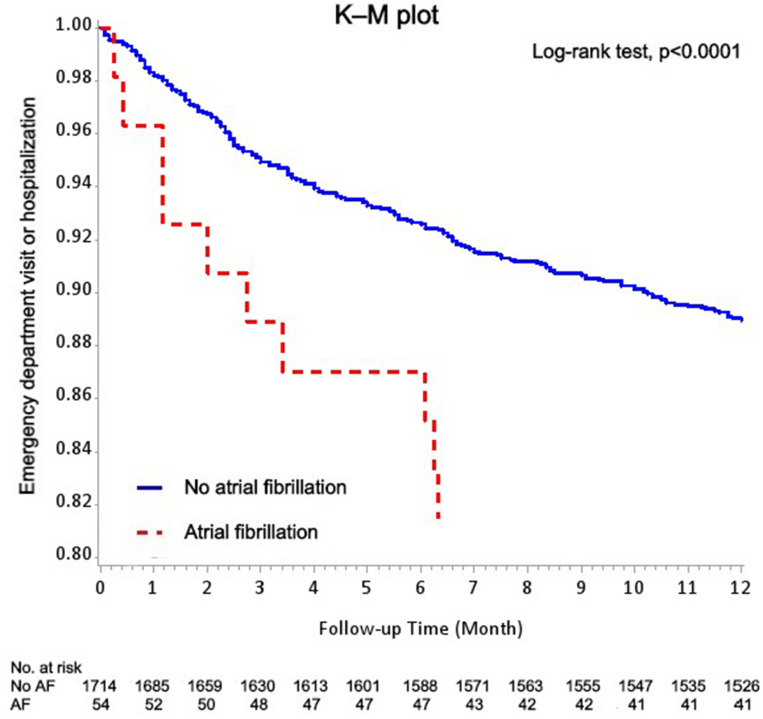
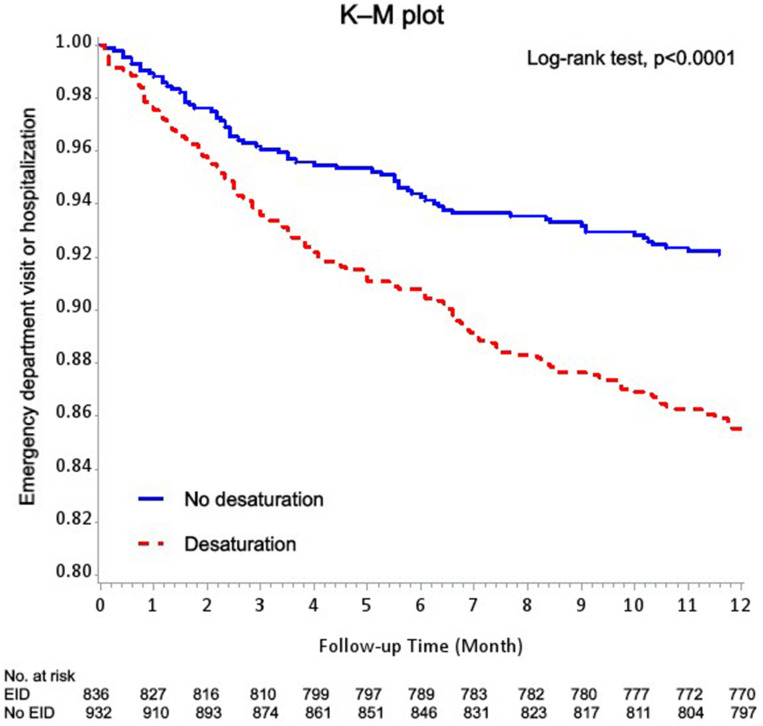
Among 1768 patients with COPD, 932 (52.7%) had oxygen desaturation, and the other 836 (47.3%) had no desaturation during the 6MWT. The patients with EID had a shorter 6-min walk distance than those without desaturation (352.08±120.29 vs 426.56±112.56, p<0.0001). In the multivariate logistic regression analysis, older age, female sex, lower forced expiratory volume in 1 s, and comorbidity with atrial fibrillation (AF) were associated with oxygen desaturation during the 6MWT. Patients with EID had higher exacerbation frequency than those without desaturation in the 1-year follow-up period (0.59±1.50 vs 0.34±1.26, p<0.0001). Patients with COPD with AF also had a higher rate of exacerbation requiring emergency department visit or hospitalization in the 1-year follow-up.
This study demonstrates that older age, low FEV1, and female sex are risk factors for EID. Desaturation during 6MWT is related to frequent acute exacerbation of COPD in the 1-year follow-up.
6 分钟步行试验(6MWT)是评估慢性阻塞性肺疾病(COPD)患者生理功能的有用工具。最近的研究表明,与无低氧血症的患者相比,在 6MWT 期间发生低氧血症的 COPD 患者发生恶化和死亡的风险增加。本研究旨在探讨 COPD 患者运动诱导性低氧血症(EID)的潜在危险因素。
2013 年 1 月至 2017 年 1 月,从长庚研究数据库中招募了成年 COPD 患者。回顾性收集并分析了年龄、性别、体重指数、基础疾病、药物治疗以及肺功能检查和 6MWT 的结果。
在 1768 例 COPD 患者中,932 例(52.7%)发生低氧血症,其余 836 例(47.3%)在 6MWT 期间无低氧血症。EID 患者的 6 分钟步行距离短于无低氧血症患者(352.08±120.29 与 426.56±112.56,p<0.0001)。多变量逻辑回归分析显示,年龄较大、女性、1 秒用力呼气量较低以及合并心房颤动(AF)与 6MWT 期间的低氧血症相关。在 1 年随访期间,EID 患者的恶化频率高于无低氧血症患者(0.59±1.50 与 0.34±1.26,p<0.0001)。在 1 年随访期间,患有 COPD 和 AF 的患者恶化需要急诊就诊或住院的发生率也较高。
本研究表明,年龄较大、FEV1 较低和女性是 EID 的危险因素。6MWT 期间的低氧血症与 COPD 在 1 年随访期间的频繁急性恶化有关。