Zickfeld Janis H, Schubert Thomas W, Herting Anders Kuvaas, Grahe Jon, Faasse Kate
Department of Psychology, University of Oslo, Oslo, Norway.
Mannheimer Zentrum für Europäische Sozialforschung, University of Mannheim, Mannheim, Germany.
Front Psychol. 2020 Oct 6;11:564083. doi: 10.3389/fpsyg.2020.564083. eCollection 2020.
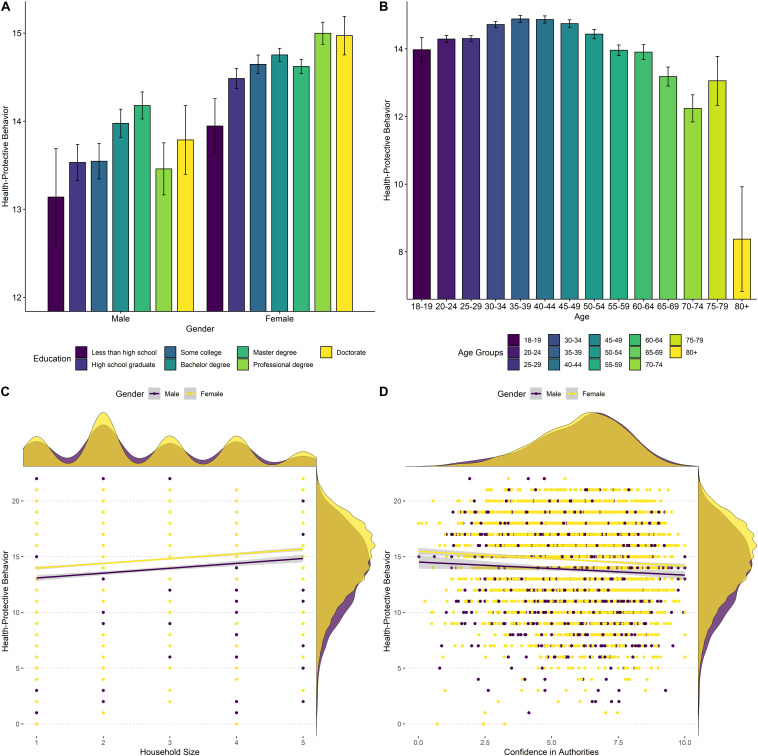
The coronavirus outbreak manifested in Norway in March 2020. It was met with a combination of mandatory changes (closing of public institutions) and recommended changes (hygiene behavior, physical distancing). It has been emphasized that health-protective behavior such as increased hygiene or physical distancing are able to slow the spread of infections and . Drawing on previous health-psychological studies during the outbreak of various pandemics, we investigated psychological and demographic factors predicting the adoption and engagement in health-protective behavior and changes in such behavior, attitudes, and emotions over time. We recruited a non-representative sample of Norwegians ( = 8676) during a 15-day period (March 12-26 2020) at the beginning of the COVID-19 outbreak in Norway. Employing both traditional methods and exploratory machine learning, we replicated earlier findings that engagement in health-protective behavior is associated with specific demographic characteristics. Further, we observed that increased media exposure, perceiving measures as effective, and perceiving the outbreak as serious was positively related to engagement in health-protective behavior. We also found indications that hygiene and physical distancing behaviors were related to somewhat different psychological and demographic factors. Over the sampling period, reported engagement in physical distancing increased, while experienced concern or fear declined. Contrary to previous studies, we found no or only small positive predictions by confidence in authorities, knowledge about the outbreak, and perceived individual risk, while all of those variables were rather high. These findings provide guidance for health communications or interventions targeting the adoption of health-protective behaviors in order to diminish the spread of COVID-19.
2020年3月,挪威出现了新冠病毒疫情。针对这一情况,采取了一系列措施,包括强制改变(关闭公共机构)和建议性改变(卫生习惯、保持社交距离)。需要强调的是,诸如加强卫生措施或保持社交距离等健康保护行为能够减缓感染的传播。借鉴以往在各种疫情爆发期间进行的健康心理学研究,我们调查了预测健康保护行为的采用和参与情况以及此类行为、态度和情绪随时间变化的心理和人口统计学因素。在挪威新冠疫情爆发初期的15天内(2020年3月12日至26日),我们招募了一个非代表性的挪威样本(n = 8676)。我们采用传统方法和探索性机器学习,重复了早期的研究结果,即参与健康保护行为与特定的人口统计学特征相关。此外,我们观察到,增加媒体曝光、认为措施有效以及认为疫情严重与参与健康保护行为呈正相关。我们还发现,卫生和保持社交距离行为与一些不同的心理和人口统计学因素有关。在抽样期间,报告的保持社交距离的参与度有所增加,而经历的担忧或恐惧则有所下降。与以往的研究相反,我们发现对当局的信心、对疫情的了解以及感知到的个人风险对健康保护行为的预测作用不明显或仅有很小的正向作用,而所有这些变量的水平都相当高。这些发现为旨在促进健康保护行为以减少新冠病毒传播的健康宣传或干预措施提供了指导。