Sato Chie, Osakabe Mitsumasa, Nagasawa Takayuki, Suzuki Hiromu, Itamochi Hiroaki, Baba Tsukasa, Sugai Tamotsu
Department of Molecular Diagnostic Pathology, School of Medicine, Iwate Medical University, Yahaba, Iwate 028-3695, Japan.
Department of Obstetrics and Gynecology, School of Medicine, Iwate Medical University, Yahaba, Iwate 028-3695, Japan.
Oncol Lett. 2020 Dec;20(6):338. doi: 10.3892/ol.2020.12198. Epub 2020 Oct 8.
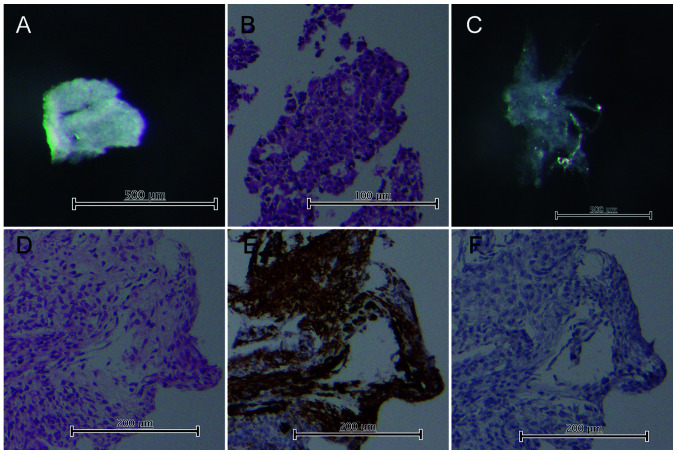
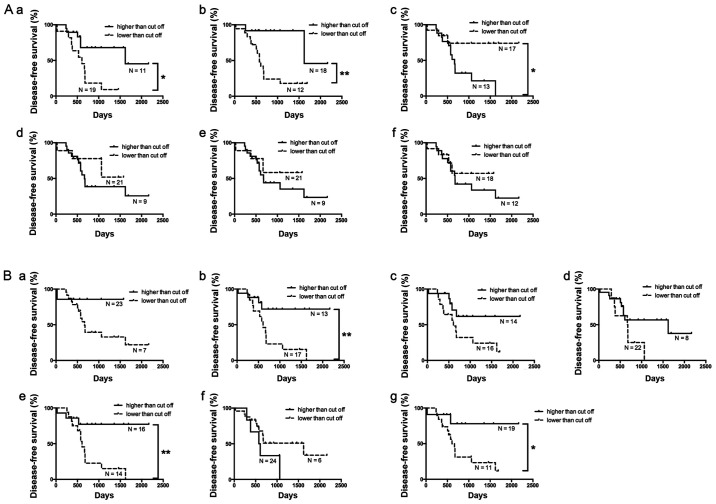
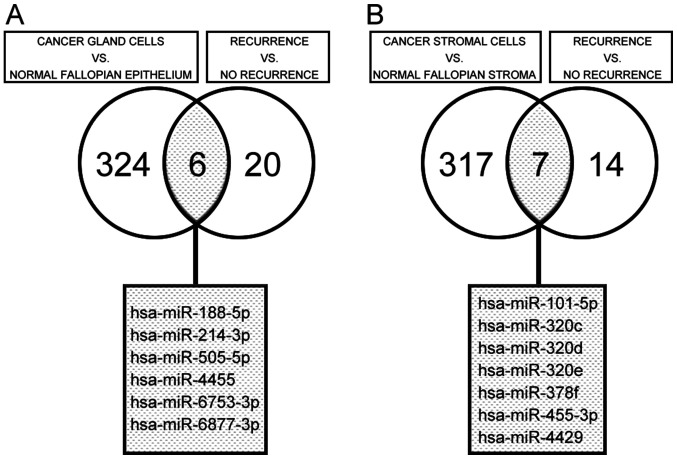
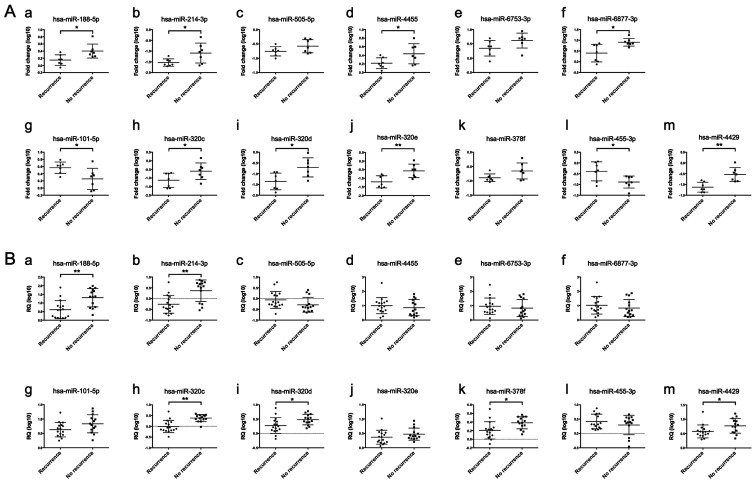
The molecular mechanisms responsible for the progression of ovarian cancer remain incompletely understood. By targeting multiple cancer-related genes, microRNAs (miRNAs) have been identified as key regulators of cancer development and progression. In addition, the microenvironment, which constitutes cancer glands and the surrounding stromal tissue at the invasive front, has an important role in cancer progression. Using array-based analysis of 14 cases (cohort 1), the aim of the present study was to evaluate global miRNA expression in cancerous glands and surrounding stromal tissues (isolated using a crypt isolation method), in order to identify potential prognostic markers of high-grade serous carcinoma (HGSC). Reverse transcription-quantitative PCR was also used to verify the results in cohort 1 (14 cases) and in 16 additional HGSC cases (cohort 2; verification cohort). Firstly, miRNA expression levels were compared between HGSC and normal samples among both the isolated cancer gland and stromal tissue samples. Secondly, miRNA expression was compared between HGSC cases with recurrence and those without recurrence among the isolated cancer gland and stromal tissue samples. The results revealed six and seven miRNAs identified in both of the aforementioned comparisons in isolated cancer glands and surrounding stromal tissue, respectively. Furthermore, downregulation of miRNA-214-3p in isolated cancer glands and downregulation of miRNA-320c in the corresponding stromal tissue were associated with a decrease in disease-free survival (without recurrence) in cohort 2. These findings indicated that specific miRNAs expressed in cancer cells and surrounding stromal cells of HGSC may be potential biomarkers predicting patient prognosis.
卵巢癌进展的分子机制仍未完全明确。通过靶向多个癌症相关基因,微小RNA(miRNA)已被确定为癌症发生和进展的关键调节因子。此外,由侵袭前沿的癌腺和周围基质组织构成的微环境在癌症进展中起着重要作用。本研究旨在通过对14例样本(队列1)进行基于芯片的分析,评估癌腺和周围基质组织(采用隐窝分离法分离)中的整体miRNA表达,以确定高级别浆液性癌(HGSC)的潜在预后标志物。还采用逆转录定量PCR在队列1(14例)和另外16例HGSC病例(队列2;验证队列)中验证结果。首先,在分离的癌腺和基质组织样本中比较HGSC与正常样本之间的miRNA表达水平。其次,在分离的癌腺和基质组织样本中比较有复发和无复发的HGSC病例之间的miRNA表达。结果显示,在分离的癌腺和周围基质组织中,上述两种比较分别鉴定出6种和7种miRNA。此外,队列2中,分离癌腺中miRNA-214-3p的下调以及相应基质组织中miRNA-320c的下调与无病生存期(无复发)的降低相关。这些发现表明,HGSC癌细胞和周围基质细胞中表达的特定miRNA可能是预测患者预后的潜在生物标志物。