Cui Jinfang, Song Yang, Han Xuejiao, Hu Jing, Chen Yanbo, Chen Xuesong, Xu Xiaomin, Xing Ying, Lu Hailing, Cai Li
The Fourth Department of Medical Oncology, Harbin Medical University Cancer Hospital, Harbin, China.
Department of Orthopedic Surgery, The Second Affiliated Hospital of Harbin Medical University, Harbin, China.
Front Oncol. 2020 Oct 5;10:542007. doi: 10.3389/fonc.2020.542007. eCollection 2020.
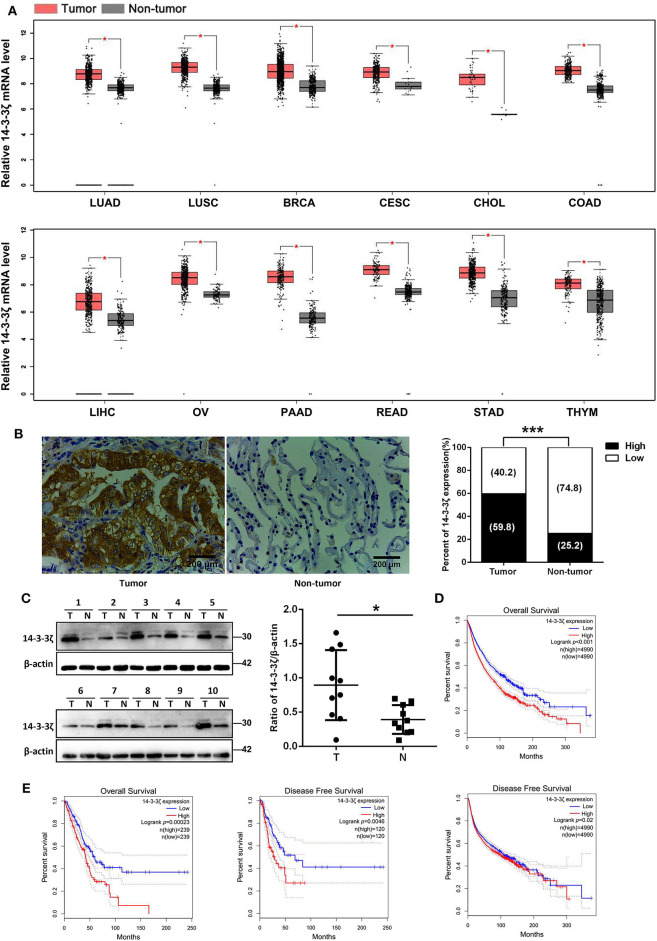
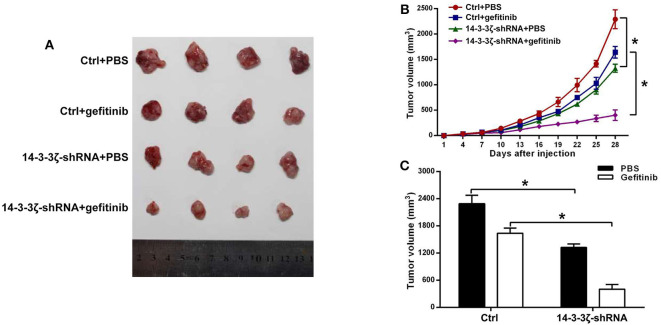
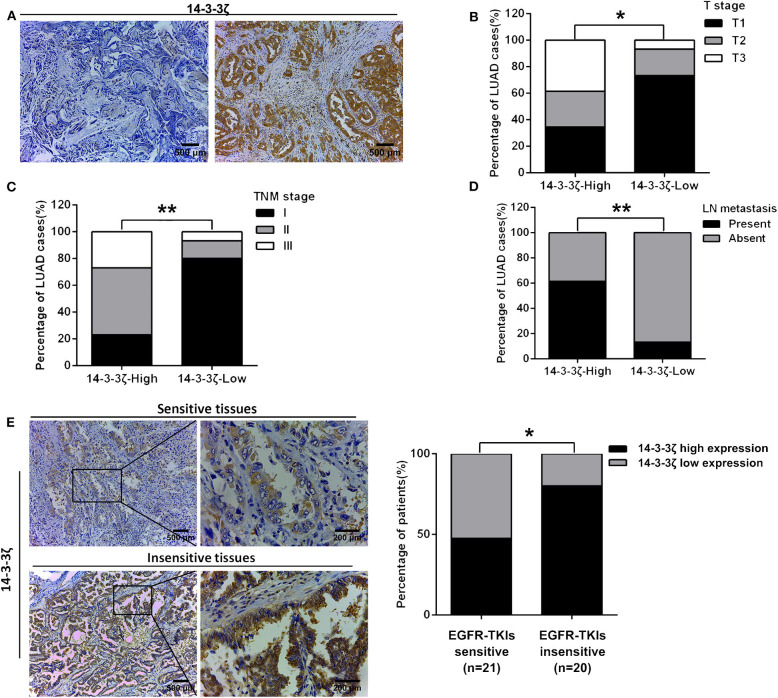
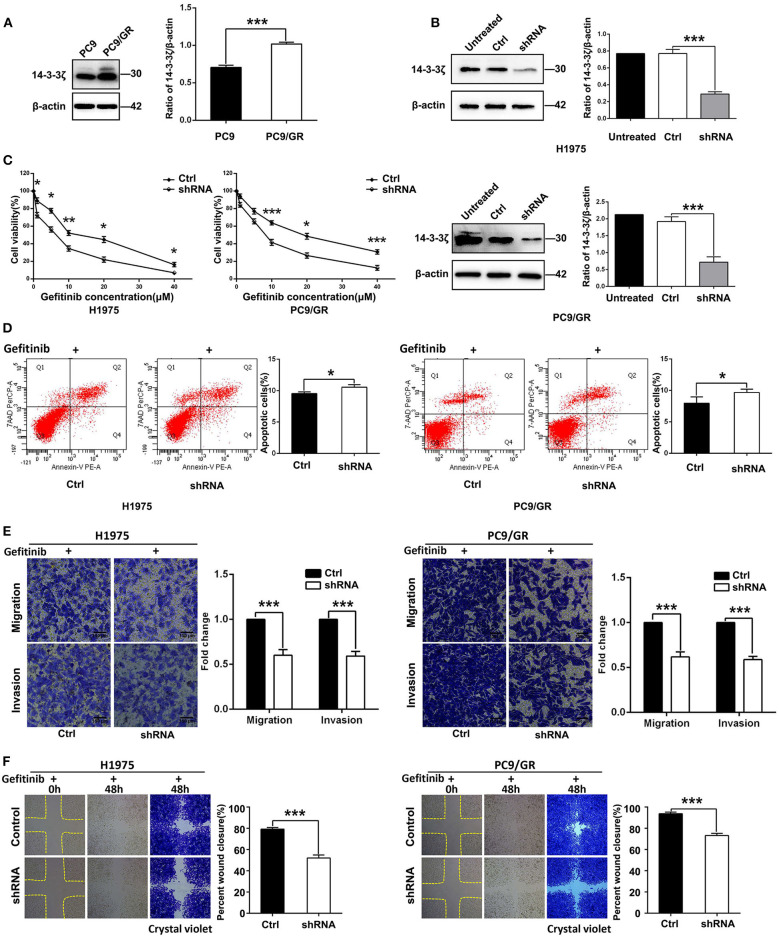
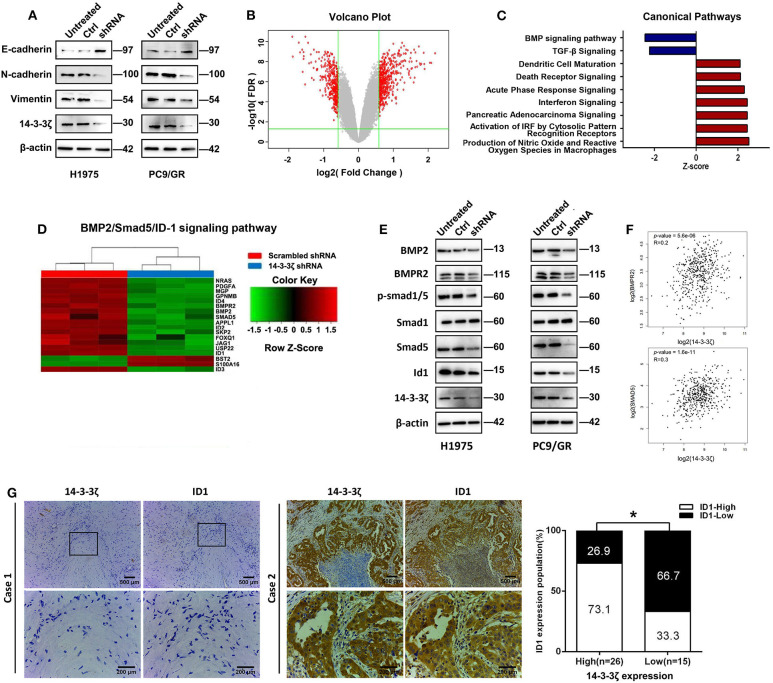
The 14-3-3ζ protein, which acts as a putative oncoprotein, has been found to promote the proliferation, metastasis, and chemoresistance of cancer cells in several cancers including lung adenocarcinoma (LUAD); however, its significance in epidermal growth factor receptor-tyrosine kinase inhibitor (EGFR-TKI) resistance remains unknown. The Cancer Genome Atlas (TCGA) database was used to determine 14-3-3ζ expression in pancancer and LUAD. 14-3-3ζ and ID1 expression was then examined in clinical LUAD samples by immunohistochemistry (IHC). Lentiviral transfection with 14-3-3ζ-specific small hairpin RNA (shRNA) was used to establish stable 14-3-3ζ knockdown gefitinib-resistant PC9 (PC9/GR) and H1975 cell lines. The effect of 14-3-3ζ knockdown on reversing EGFR-TKI resistance was determined by Cell Counting Kit-8 (CCK-8), wound healing, Transwell assays, and flow cytometry. A xenograft tumor model was established to evaluate the role of 14-3-3ζ in EGFR-TKI resistance. Microarray analysis results showed multiple pathways regulated by 14-3-3ζ-shRNA. In the present study, we demonstrated that based on the TCGA, pancancer and LUAD 14-3-3ζ expression was elevated and predicted unfavorable prognosis. In addition, high 14-3-3ζ expression was associated with advanced T stage, TNM stage, presence of lymph node metastasis and, importantly, poor treatment response to EGFR-TKIs in LUAD patients with EGFR-activating mutations. 14-3-3ζ shRNA sensitized EGFR-TKI-resistant human LUAD cells to gefitinib and reversed epithelial-to-mesenchymal transition (EMT). After 14-3-3ζ depletion, bone morphogenetic protein (BMP) signaling activation was decreased in EGFR-TKI-resistant cells in microarray analysis, which was further validated by Western blot analysis. Furthermore, the expression of 14-3-3ζ positively correlates with ID1 expression in human EGFR-mutant LUAD patient samples. , there was a reduction in the tumor burden in mice treated with 14-3-3ζ shRNA and gefitinib compared to mice treated with gefitinib alone. Our work uncovers a hitherto unappreciated role of 14-3-3ζ in EGFR-TKI resistance. This study might provide a potential therapeutic approach for treating LUAD patients harboring EGFR mutations.
14-3-3ζ蛋白作为一种假定的癌蛋白,已被发现在包括肺腺癌(LUAD)在内的多种癌症中可促进癌细胞的增殖、转移和化疗耐药性;然而,其在表皮生长因子受体-酪氨酸激酶抑制剂(EGFR-TKI)耐药中的意义仍不清楚。利用癌症基因组图谱(TCGA)数据库确定14-3-3ζ在泛癌和LUAD中的表达。然后通过免疫组织化学(IHC)检测临床LUAD样本中14-3-3ζ和ID1的表达。使用携带14-3-3ζ特异性小发夹RNA(shRNA)的慢病毒转染建立稳定敲低14-3-3ζ的吉非替尼耐药PC9(PC9/GR)和H1975细胞系。通过细胞计数试剂盒-8(CCK-8)、伤口愈合实验、Transwell实验和流式细胞术确定敲低14-3-3ζ对逆转EGFR-TKI耐药性的影响。建立异种移植肿瘤模型以评估14-3-3ζ在EGFR-TKI耐药中的作用。微阵列分析结果显示14-3-3ζ-shRNA调节多种信号通路。在本研究中,我们证明基于TCGA数据,泛癌和LUAD中14-3-3ζ的表达升高,并预示不良预后。此外,高14-3-3ζ表达与晚期T分期、TNM分期、淋巴结转移的存在相关,重要的是,与EGFR激活突变的LUAD患者对EGFR-TKIs的治疗反应差相关。14-3-3ζ shRNA使EGFR-TKI耐药的人LUAD细胞对吉非替尼敏感,并逆转上皮-间质转化(EMT)。在14-3-3ζ缺失后,微阵列分析显示EGFR-TKI耐药细胞中骨形态发生蛋白(BMP)信号激活降低,这通过蛋白质免疫印迹分析进一步得到验证。此外,在人EGFR突变的LUAD患者样本中,14-3-3ζ的表达与ID1的表达呈正相关。与单独用吉非替尼治疗的小鼠相比,用14-3-3ζ shRNA和吉非替尼治疗的小鼠肿瘤负担减轻。我们的工作揭示了14-3-3ζ在EGFR-TKI耐药中迄今未被认识的作用。这项研究可能为治疗携带EGFR突变的LUAD患者提供一种潜在的治疗方法。