Department of Radiation Oncology, Zhejiang Key Laboratory of Radiation Oncology, The Cancer Hospital of the University of Chinese Academy of Sciences (Zhejiang Cancer Hospital); Institute of Basic Medicine and Cancer (IBMC), Chinese Academy of Sciences, 1 Banshandong Road, 310022 hangzhou, Zhejiang, China.
Department of Radiation Oncology, Jiaotong University School of Medicine, 197 Ruijin Second Road, 200000 Shanghai, China.
Biomed Res Int. 2020 Oct 7;2020:9567846. doi: 10.1155/2020/9567846. eCollection 2020.
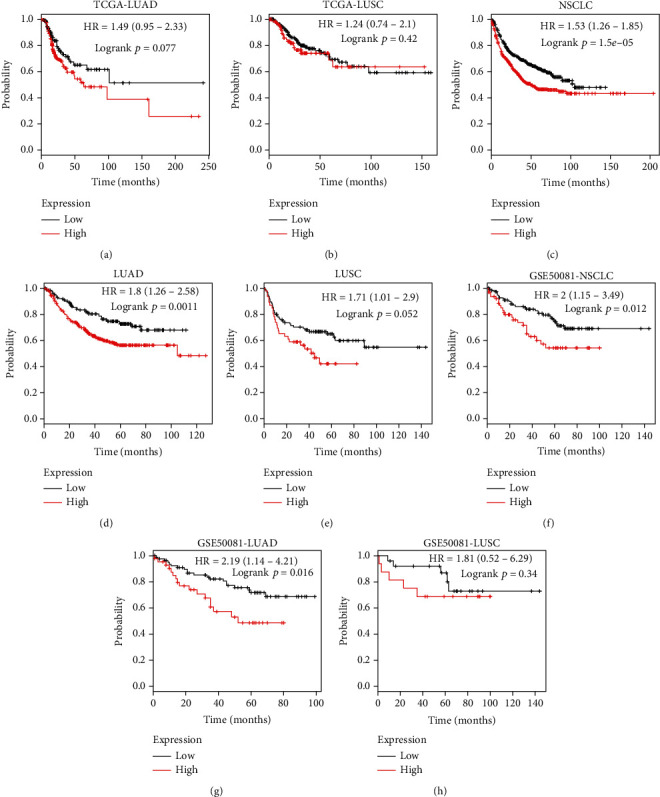
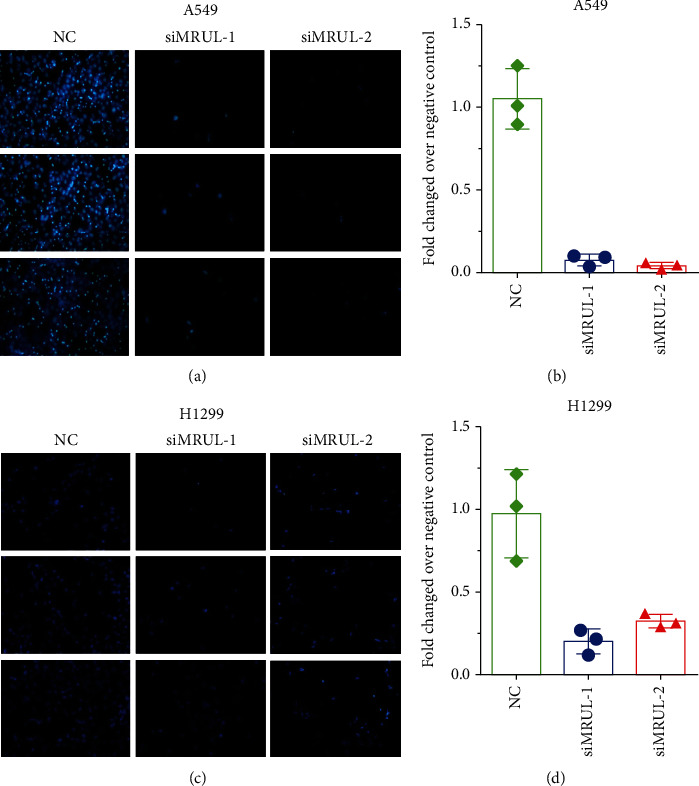
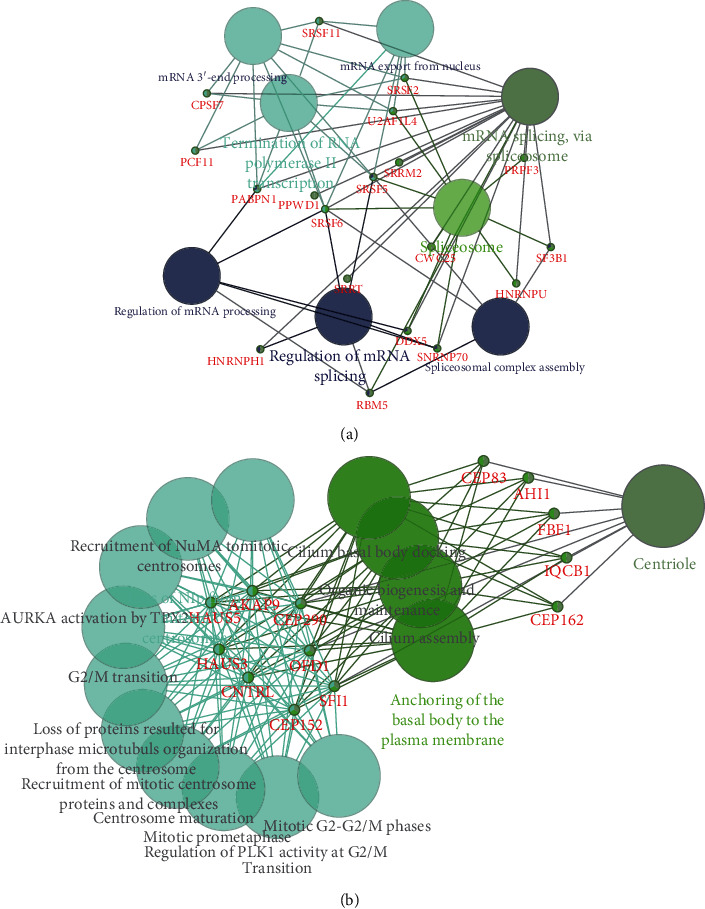
The two broad histological subtypes of lung cancer are small cell lung cancer (SCLC) and non-small cell lung cancer (NSCLC), which are the leading causes of cancer-related death in the world. Long noncoding RNAs (lncRNAs) have been verified to be critical in the regulation of cancer development. The present study identified and elucidated the regulatory roles of a novel lncRNA MRUL in NSCLC. The results showed that MRUL was overexpressed in NSCLC samples and correlated with the poor prognosis of patients who had NSCLC. Moreover, this research has for the first time demonstrated that MRUL acted as an oncogenetic lncRNA in NSCLC. Knockdown of MRUL considerably repressed NSCLC cell proliferation, invasion, and migration. The bioinformatics analysis showed that MRUL was involved in regulating multiple RNA splicing and proliferation-related biological processes, such as mRNA splicing, RNA splicing, mRNA processing, mRNA 3'-end processing, mRNA splice site selection, and DNA replication. By combining bioinformatics analysis and experimental validation, we found that MRUL regulated NSCLC progression through promoting SRSF2 by sponging miR-17 in NSCLC cells. The discoveries indicated that MRUL could be a therapeutic target and a potential diagnostic for NSCLC.
肺癌的两种主要组织学亚型是小细胞肺癌 (SCLC) 和非小细胞肺癌 (NSCLC),它们是全球癌症相关死亡的主要原因。长链非编码 RNA (lncRNA) 已被证实在癌症发展的调控中具有重要作用。本研究鉴定并阐明了新型 lncRNA MRUL 在 NSCLC 中的调控作用。结果表明,MRUL 在 NSCLC 样本中过表达,并与 NSCLC 患者的不良预后相关。此外,这项研究首次表明 MRUL 在 NSCLC 中作为一种致癌 lncRNA 发挥作用。MRUL 的敲低显著抑制了 NSCLC 细胞的增殖、侵袭和迁移。生物信息学分析表明,MRUL 参与调节多种 RNA 剪接和增殖相关的生物学过程,如 mRNA 剪接、RNA 剪接、mRNA 加工、mRNA 3'-末端加工、mRNA 剪接位点选择和 DNA 复制。通过结合生物信息学分析和实验验证,我们发现 MRUL 通过在 NSCLC 细胞中海绵吸附 miR-17 来促进 SRSF2 的表达,从而调控 NSCLC 的进展。这些发现表明,MRUL 可以作为 NSCLC 的治疗靶点和潜在的诊断标志物。