Department of Radiation Oncology, The Fourth Affiliated Hospital of China Medical University, Shenyang, Liaoning 110032, P.R. China.
Oncol Rep. 2020 Dec;44(6):2678-2690. doi: 10.3892/or.2020.7824. Epub 2020 Oct 23.
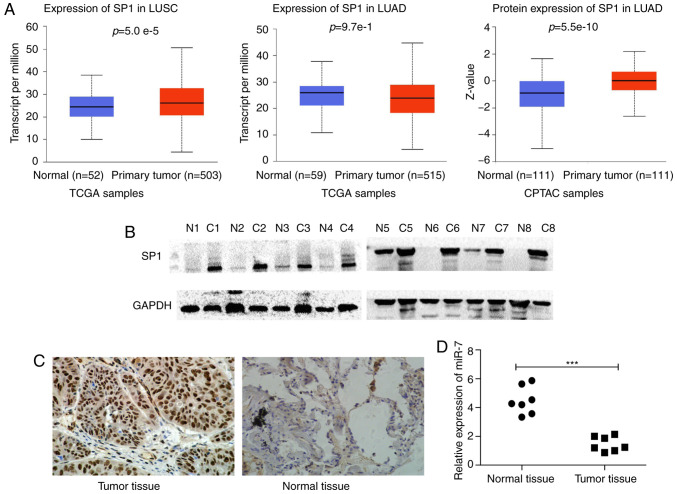
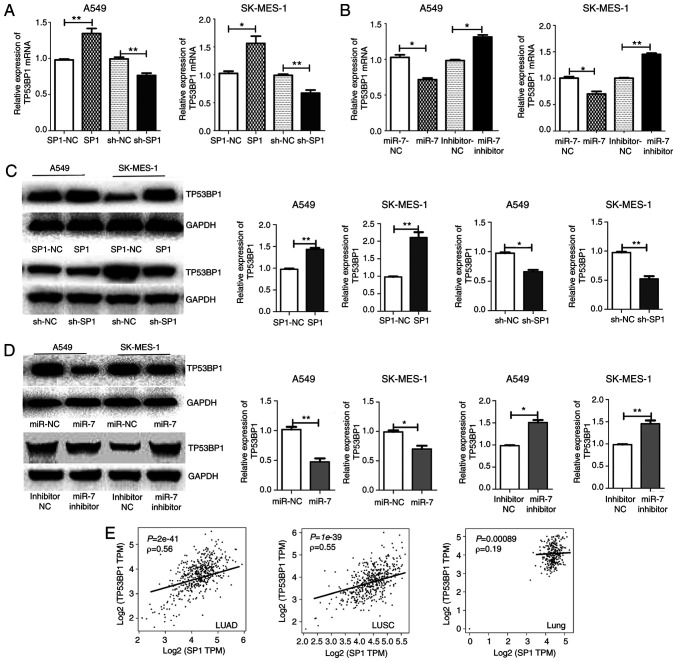
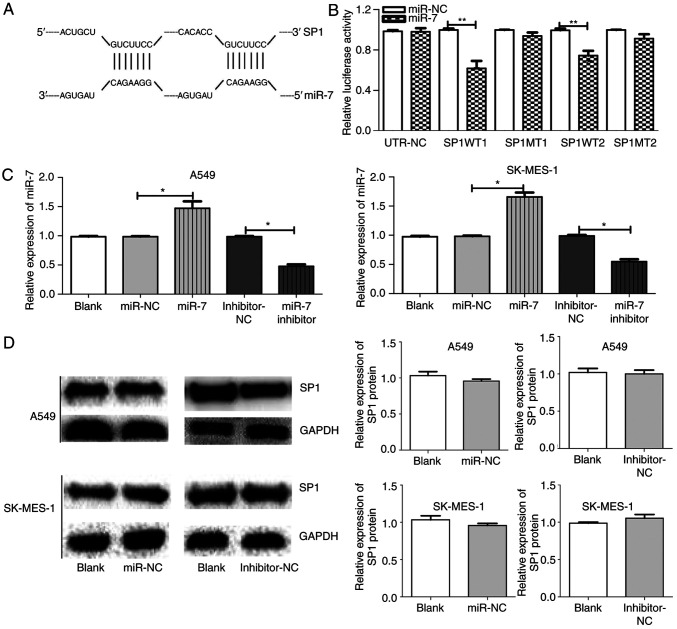
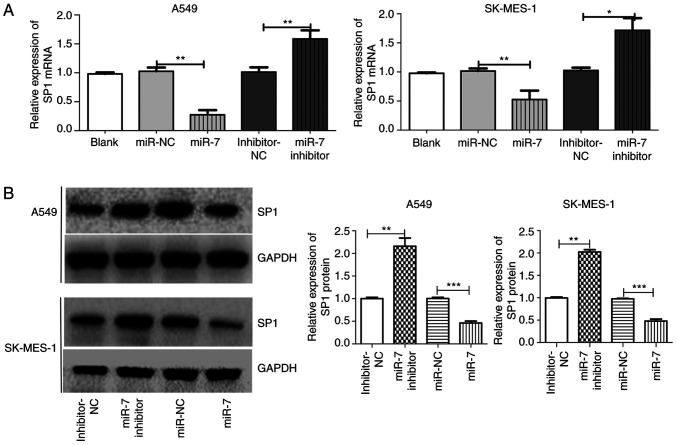
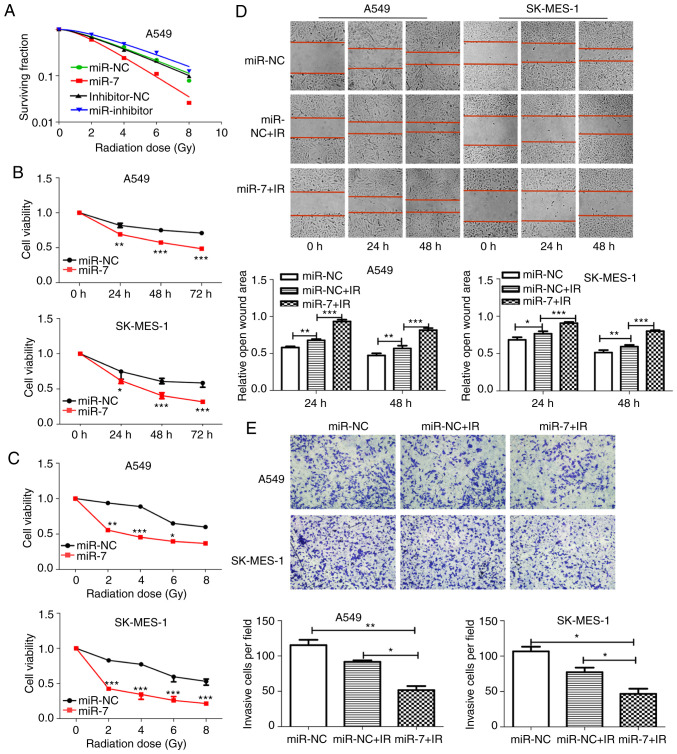
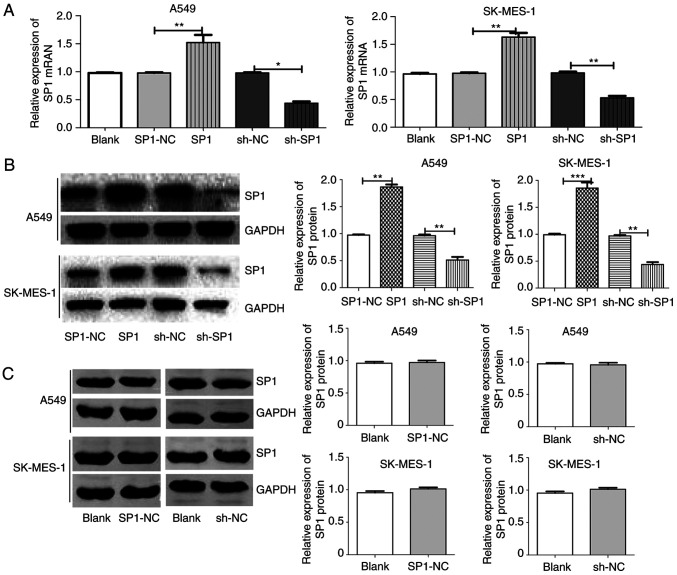
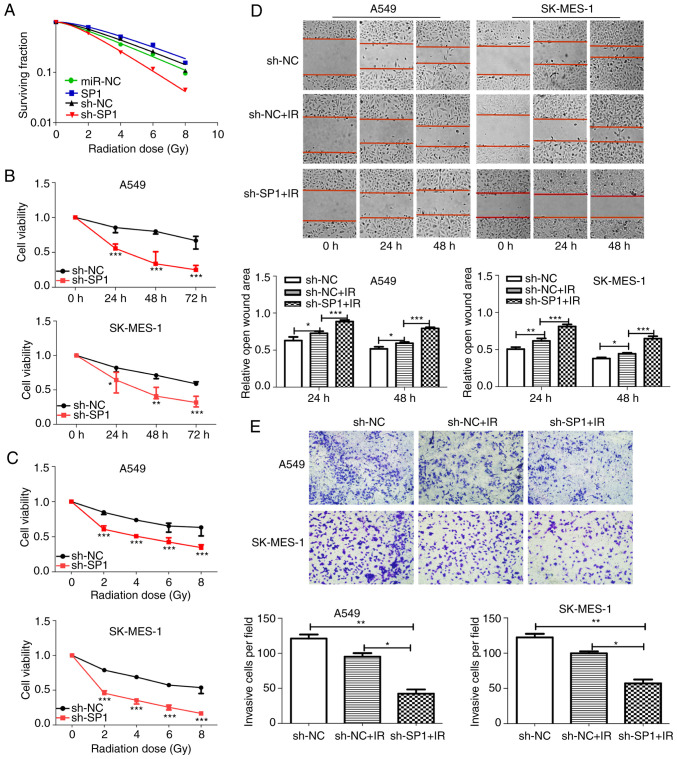
MicroRNA‑7 (miR‑7) has been identified as a tumor suppressor in non‑small cell lung cancer (NSCLC) and a radiosensitivity regulator. Numerous studies have revealed that specific protein 1 (SP1) plays a critical role in the tumorigenesis of various types of cancers and regulates radiosensitivity and tumor suppressor p53‑binding protein 1 (TP53BP1), which plays an essential role in DNA repair. However, it is not clear whether miR‑7 has a regulatory effect on SP1 and TP53BP1 in NSCLC. In the present study it was revealed that miR‑7 directly binds to the 3'UTR of SP1, thereby suppressing SP1 expression to regulate radiosensitivity. Overexpression of miR‑7 and SP1 and knockdown of miR‑7 and SP1 were performed using lentiviral transfection. Protein and mRNA abundance of SP1 and TP53BP1 were determined using western blotting and RT‑qPCR, respectively, while miR‑7 binding to SP1 was validated using a luciferase reporter assay. Biological function analysis indicated that miR‑7 negatively regulated SP1 and inhibited cell proliferation, migration, and invasion when combined with radiation. It was also revealed that the expression of TP53BP1 was positively regulated by SP1 or negatively regulated by miR‑7. In conclusion, SP1 was a target of miR‑7, and the decreased expression of SP1 resulting from miR‑7 overexpression in NSCLC was vital for improving radiosensitivity in NSCLC cells. Moreover, SP1 expression was detected in 95 paired NSCLC and adjacent normal tissues, and it was determined that SP1 was significantly upregulated in NSCLC tissues and that its upregulation was correlated with the degree of tissue differentiation. Thus, SP1 and/or miR‑7 may be potential molecular targets in NSCLC radiotherapy.
微小 RNA-7(miR-7)已被鉴定为非小细胞肺癌(NSCLC)中的肿瘤抑制因子和放射敏感性调节剂。许多研究表明,特定蛋白 1(SP1)在各种类型癌症的肿瘤发生中起关键作用,并调节放射敏感性和肿瘤抑制因子 p53 结合蛋白 1(TP53BP1),后者在 DNA 修复中起重要作用。然而,miR-7 是否对 NSCLC 中的 SP1 和 TP53BP1 具有调节作用尚不清楚。在本研究中发现,miR-7 可直接与 SP1 的 3'UTR 结合,从而抑制 SP1 的表达以调节放射敏感性。通过慢病毒转染进行 miR-7 和 SP1 的过表达以及 miR-7 和 SP1 的敲低。使用 Western blot 和 RT-qPCR 分别测定 SP1 和 TP53BP1 的蛋白和 mRNA 丰度,并用荧光素酶报告基因测定验证 miR-7 与 SP1 的结合。生物学功能分析表明,miR-7 负调控 SP1,并与放射结合时抑制细胞增殖、迁移和侵袭。还揭示了 SP1 的表达受 TP53BP1 的正调控或 miR-7 的负调控。总之,SP1 是 miR-7 的靶标,在 NSCLC 中 miR-7 过表达导致 SP1 表达降低对于改善 NSCLC 细胞的放射敏感性至关重要。此外,在 95 对 NSCLC 和相邻正常组织中检测到 SP1 的表达,并且确定 SP1 在 NSCLC 组织中明显上调,并且其上调与组织分化程度相关。因此,SP1 和/或 miR-7 可能是 NSCLC 放射治疗的潜在分子靶标。