Department of Pharmacology and Toxicology, Faculty of Pharmacy, Cairo University, Cairo, Egypt.
Int J Neuropsychopharmacol. 2021 Feb 15;24(2):158-169. doi: 10.1093/ijnp/pyaa078.
Endotoxin-induced neuroinflammation plays a crucial role in the pathogenesis and progression of various neurodegenerative diseases. A growing body of evidence supports that incretin-acting drugs possess various neuroprotective effects that can improve learning and memory impairments in Alzheimer's disease models. Thus, the present study aimed to investigate whether alogliptin, a dipeptidyl peptidase-4 inhibitor, has neuroprotective effects against lipopolysaccharide (LPS)-induced neuroinflammation and cognitive impairment in mice as well as the potential mechanisms underlying these effects.
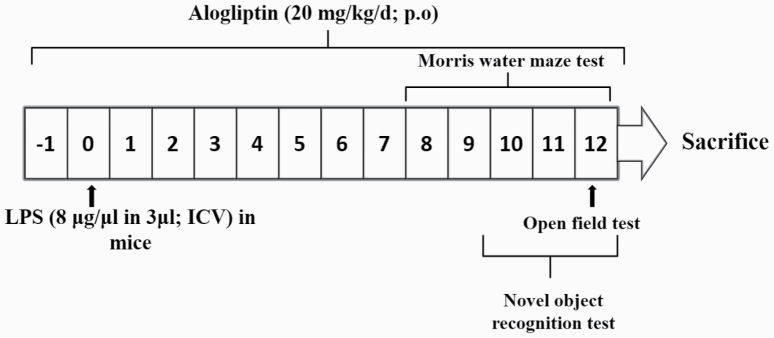
Mice were treated with alogliptin (20 mg/kg/d; p.o.) for 14 days, starting 1 day prior to intracerebroventricular LPS injection (8 μg/μL in 3 μL).
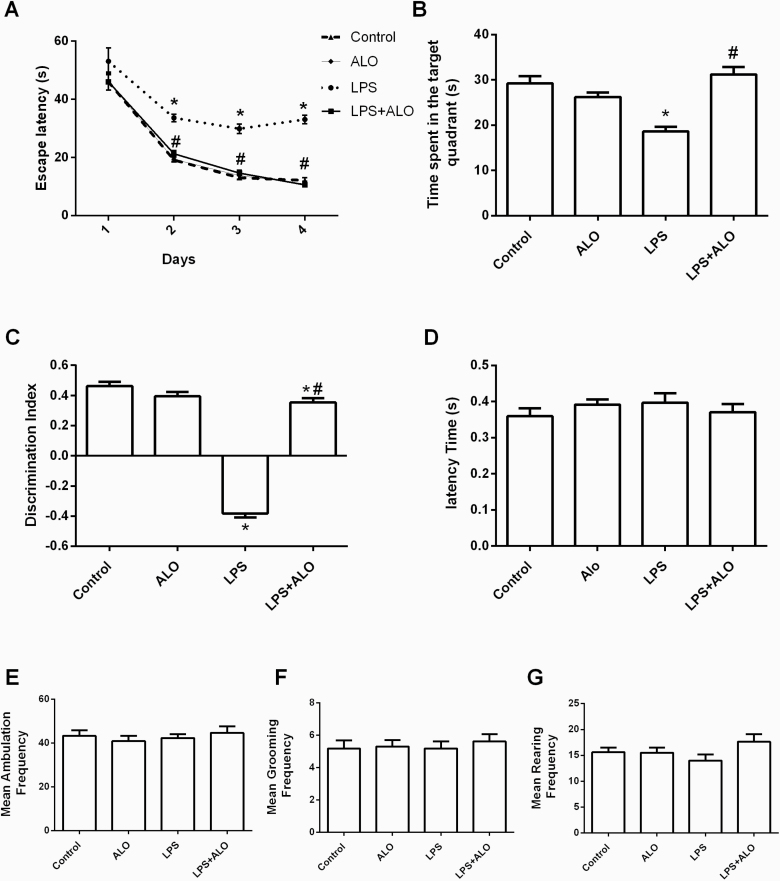
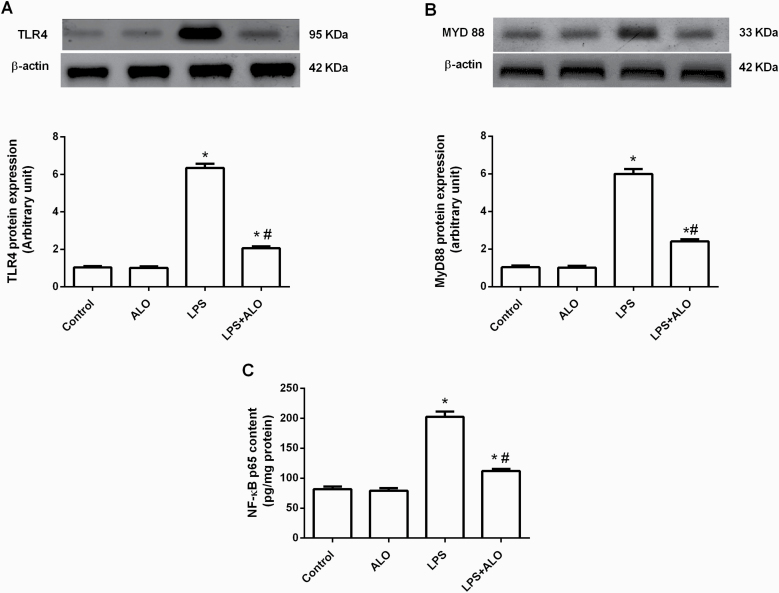
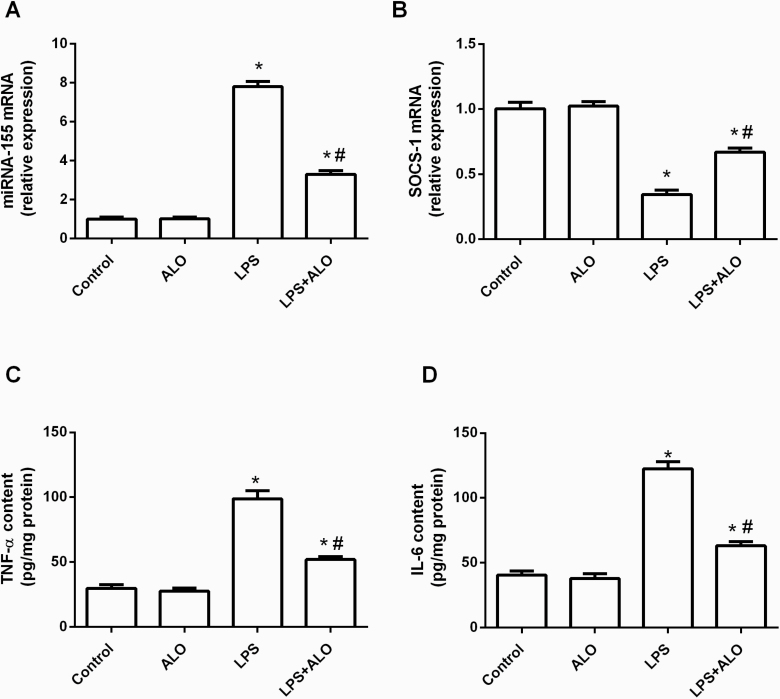
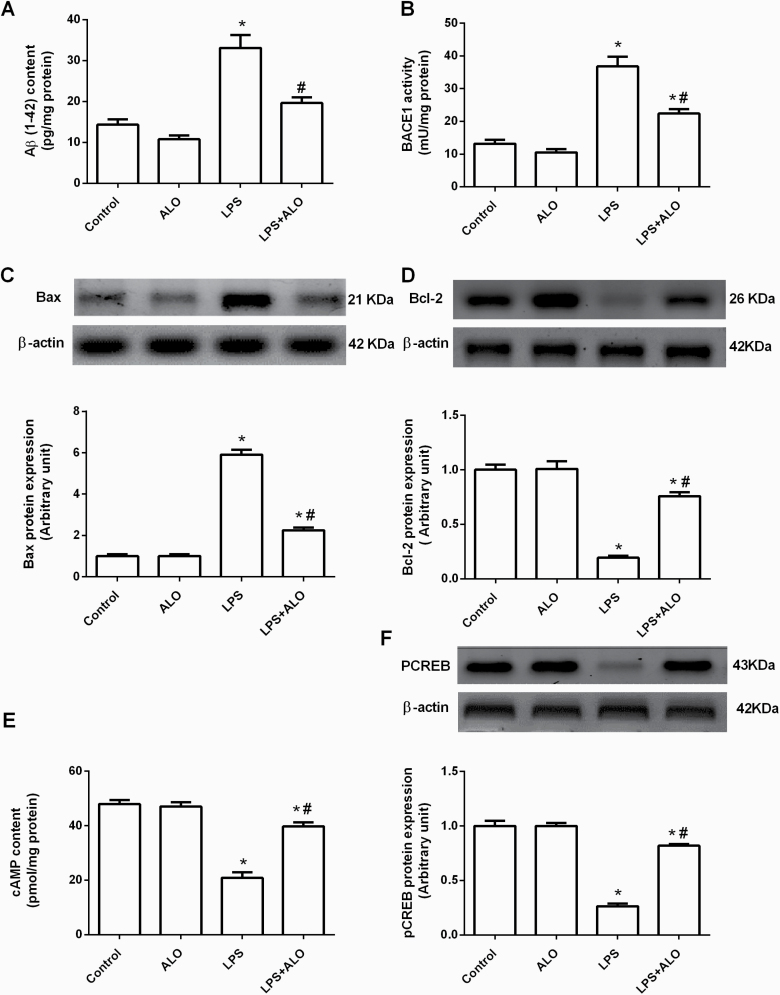
Alogliptin treatment alleviated LPS-induced cognitive impairment as assessed by Morris water maze and novel object recognition tests. Moreover, alogliptin reversed LPS-induced increases in toll-like receptor 4 and myeloid differentiation primary response 88 protein expression, nuclear factor-κB p65 content, and microRNA-155 gene expression. It also rescued LPS-induced decreases in suppressor of cytokine signaling gene expression, cyclic adenosine monophosphate (cAMP) content, and phosphorylated cAMP response element binding protein expression in the brain.
The present study sheds light on the potential neuroprotective effects of alogliptin against intracerebroventricular LPS-induced neuroinflammation and its associated memory impairment via inhibition of toll-like receptor 4/ myeloid differentiation primary response 88/ nuclear factor-κB signaling, modulation of microRNA-155/suppressor of cytokine signaling-1 expression, and enhancement of cAMP/phosphorylated cAMP response element binding protein signaling.
内毒素诱导的神经炎症在各种神经退行性疾病的发病机制和进展中起着关键作用。越来越多的证据表明,肠促胰岛素作用药物具有多种神经保护作用,可以改善阿尔茨海默病模型中的学习和记忆障碍。因此,本研究旨在探讨二肽基肽酶-4 抑制剂阿格列汀是否对脂多糖(LPS)诱导的小鼠神经炎症和认知障碍具有神经保护作用,以及这些作用的潜在机制。
小鼠用阿格列汀(20mg/kg/d;po)治疗 14 天,在侧脑室 LPS 注射前 1 天(8μg/μL,3μL)开始。
阿格列汀治疗减轻了 LPS 诱导的认知障碍,通过 Morris 水迷宫和新物体识别测试评估。此外,阿格列汀逆转了 LPS 诱导的 Toll 样受体 4 和髓样分化初级反应 88 蛋白表达、核因子-κB p65 含量和 microRNA-155 基因表达的增加。它还挽救了 LPS 诱导的抑制细胞因子信号基因表达、环腺苷酸(cAMP)含量和磷酸化 cAMP 反应元件结合蛋白表达的降低。
本研究阐明了阿格列汀通过抑制 Toll 样受体 4/髓样分化初级反应 88/核因子-κB 信号、调节 microRNA-155/抑制细胞因子信号-1 表达以及增强 cAMP/磷酸化 cAMP 反应元件结合蛋白信号对侧脑室 LPS 诱导的神经炎症及其相关记忆障碍的潜在神经保护作用。