Liu Xian, Zhang Haijing, Zhang Huan, Guo Mengzhuo, Gao Yuanchao, Du Chunyan
Department of Anesthesiology, Beijing Tsinghua Changgung Hospital, School of Clinical Medicine, Tsinghua University, Beijing 102218, PR China.
Medicine (Baltimore). 2020 Oct 30;99(44):e22674. doi: 10.1097/MD.0000000000022674.
Inconsistent results have been obtained regarding postoperative pain control using local infiltration and epidural analgesia for patients after total knee or hip arthroplasty (TKA and THA). We therefore conducted a meta-analysis of randomized controlled trials (RCTs) to assess the efficacy and safety of local infiltration vs epidural analgesia for TKA and THA.
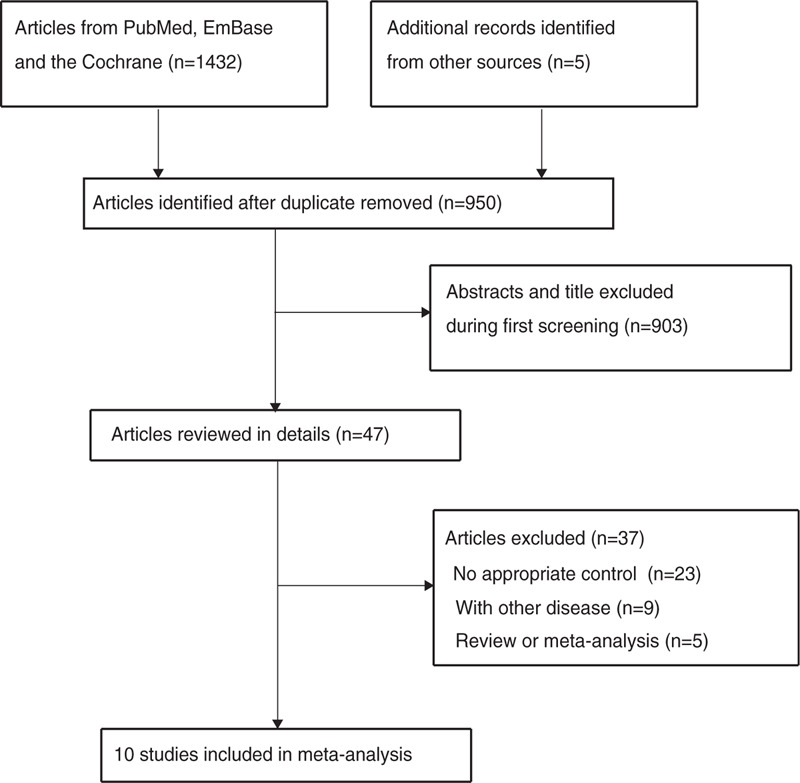
Electronic searches were conducted on PubMed, EmBase, and the Cochrane library to identify eligible RCTs conducted up to February 2020. Weighted mean difference (WMD) and relative risk with 95% confidence interval (95%CI) were applied to calculate pooled effect estimates between local infiltration and epidural analgesia using the random-effects model.
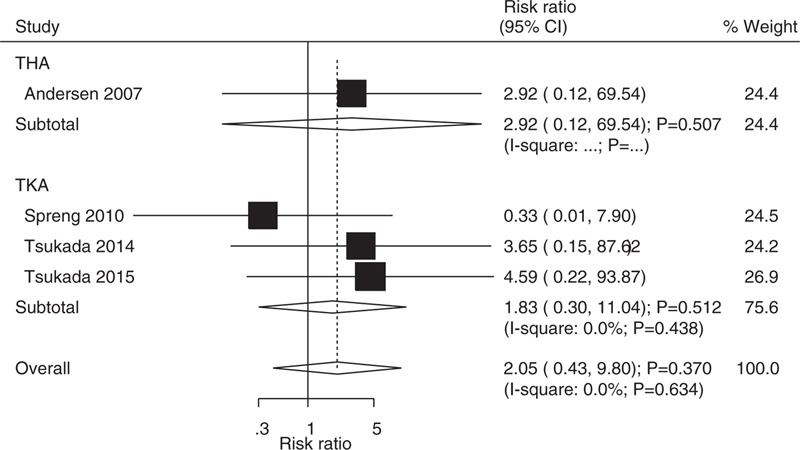
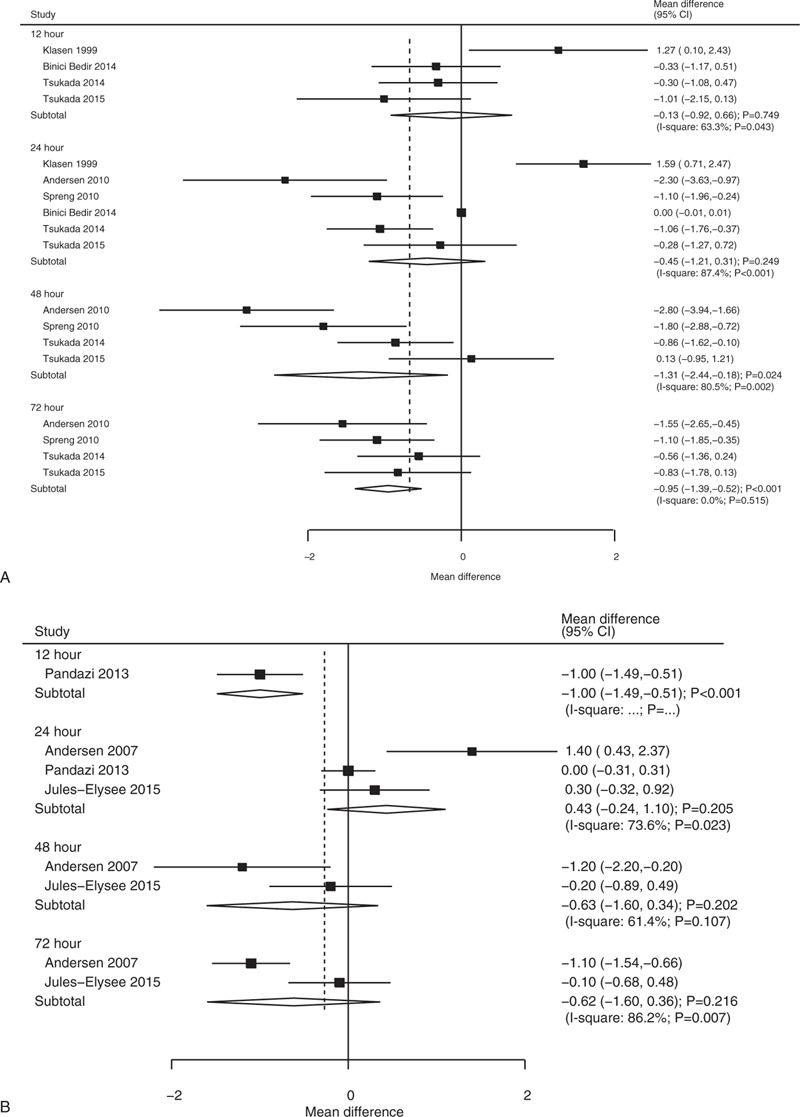
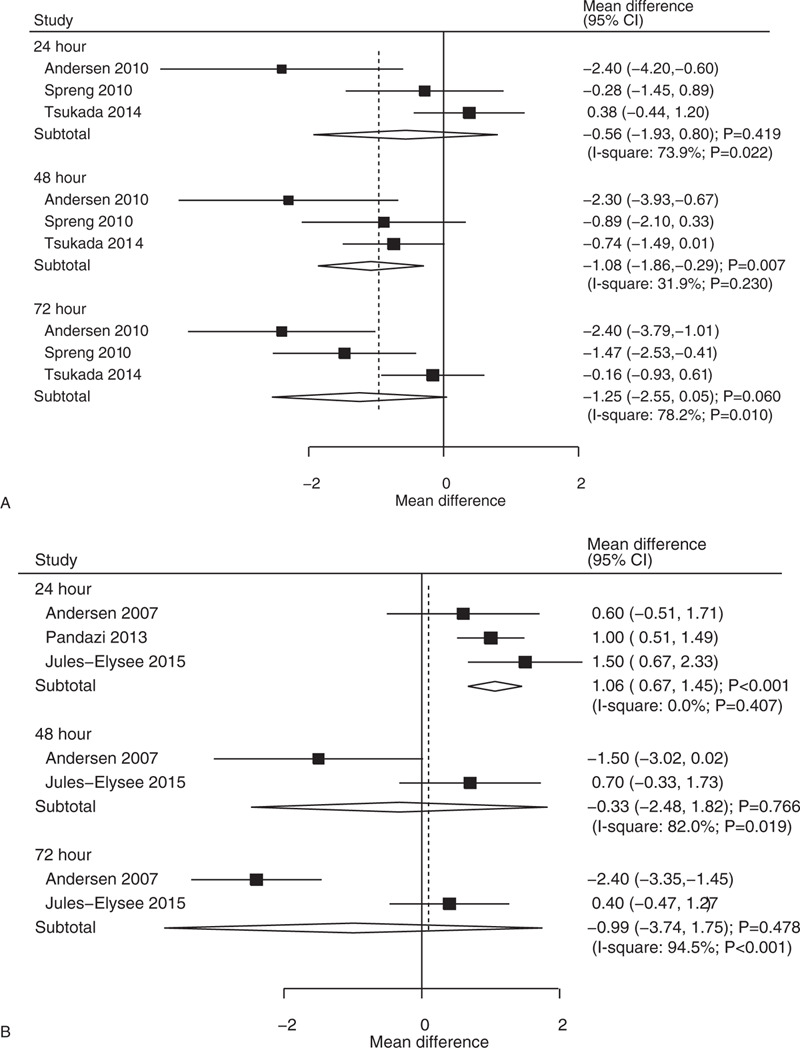
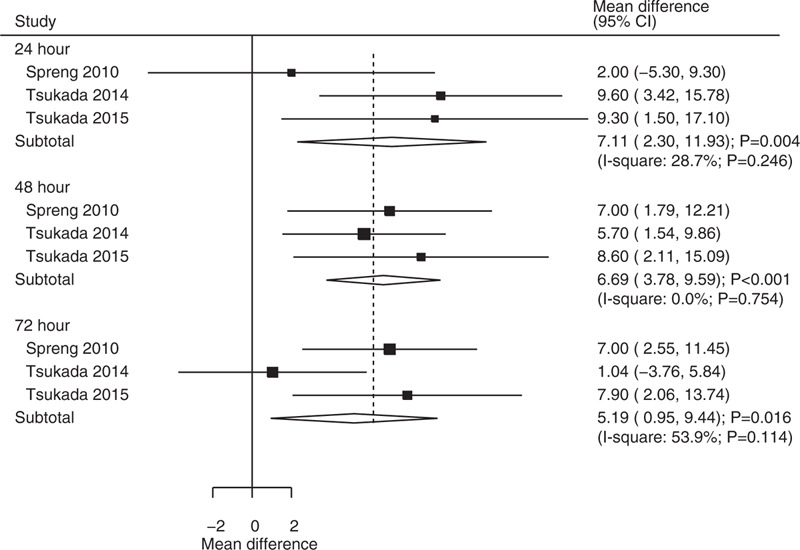
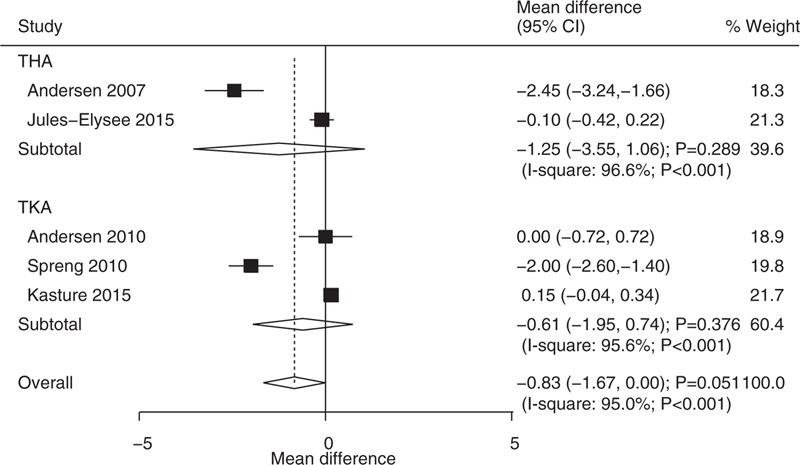
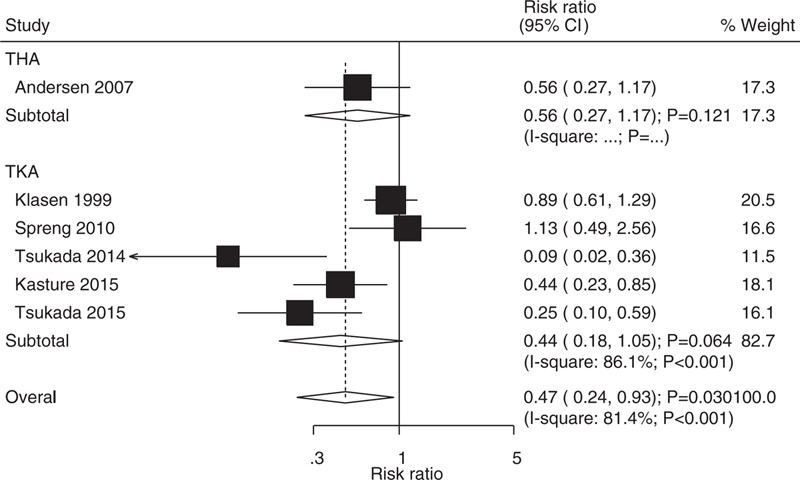
Seven RCTs including a total of 412 TKA patients, and three RCTs including a total of 200 THA patients were selected for this meta-analysis. We noted that local infiltration was associated with lower visual analog scale (VAS) scores at rest after 48 hours (WMD: -1.31; 95%CI: -2.44 to -0.18; P = .024) and 72 hours (WMD: -0.95; 95%CI: -1.39 to -0.52; P < .001) for patients with TKA, while local infiltration significantly reduced VAS scores at rest after 12 hours for patients with THA (WMD: -1.00; 95%CI: -1.49 to -0.51; P < .001). Moreover, local infiltration was associated with lower VAS scores during movement after 48 hours in TKA patients (WMD: -1.08; 95%CI: -1.86 to -0.29; P = .007), while there were higher VAS scores during movement after 24 hours for patients with THA (WMD: 1.06; 95%CI: 0.67 to 1.45; P < .001). Furthermore, we noted that local infiltration was associated with higher flexion angles compared with epidural analgesia after 24 hours (WMD: 7.11; 95%CI: 2.30-11.93; P = .004), 48 hours (WMD: 6.69; 95%CI: 3.78 to 9.59; P < .001), and 72 hours (WMD: 5.19; 95%CI: 0.95-9.44; P = .016). There were no significant differences between local infiltration and epidural analgesia for the length of hospital stay, nausea, or wound infection.
Local infiltration is superior to epidural analgesia for postoperative pain control after TKA, whereas for THA patients inconsistent results were obtained at various times.
对于全膝关节置换术(TKA)或全髋关节置换术(THA)患者,采用局部浸润镇痛和硬膜外镇痛进行术后疼痛控制的结果并不一致。因此,我们进行了一项随机对照试验(RCT)的荟萃分析,以评估局部浸润镇痛与硬膜外镇痛用于TKA和THA的有效性和安全性。
在PubMed、EmBase和Cochrane图书馆进行电子检索,以确定截至2020年2月开展的符合条件的RCT。采用加权平均差(WMD)和95%置信区间(95%CI)的相对危险度,使用随机效应模型计算局部浸润镇痛和硬膜外镇痛之间的合并效应估计值。
本荟萃分析选取了7项RCT(共412例TKA患者)和3项RCT(共200例THA患者)。我们注意到,TKA患者在48小时(WMD:-1.31;95%CI:-2.44至-0.18;P = 0.024)和72小时(WMD:-0.95;95%CI:-1.39至-0.52;P < 0.001)静息时,局部浸润镇痛与较低的视觉模拟评分(VAS)相关;而THA患者在12小时静息时,局部浸润镇痛显著降低了VAS评分(WMD:-1.00;95%CI:-1.49至-0.51;P < 0.001)。此外,TKA患者在48小时活动时,局部浸润镇痛与较低的VAS评分相关(WMD:-1.08;95%CI:-1.86至-0.29;P = 0.007),而THA患者在24小时活动时VAS评分较高(WMD:1.06;95%CI:0.67至1.45;P < 0.001)。此外,我们注意到,与硬膜外镇痛相比,局部浸润镇痛在24小时(WMD:7.11;95%CI:2.30 - 11.93;P = 0.004)、48小时(WMD:6.69;95%CI:3.78至9.59;P < 0.001)和72小时(WMD:5.19;95%CI:0.95 - 9.44;P = 0.016)后的屈曲角度更大。局部浸润镇痛和硬膜外镇痛在住院时间、恶心或伤口感染方面无显著差异。
对于TKA术后疼痛控制,局部浸润镇痛优于硬膜外镇痛,而对于THA患者,在不同时间点结果不一致。