Department of Chemical and Petroleum Engineering, Sharif University of Technology, Azadi Ave., Tehran 11155-9465, Iran.
Department of Chemistry, McGill University, 801 Sherbrooke St. West, Montréal, QC H3A 0B8, Canada.
Int J Mol Sci. 2020 Oct 28;21(21):8019. doi: 10.3390/ijms21218019.
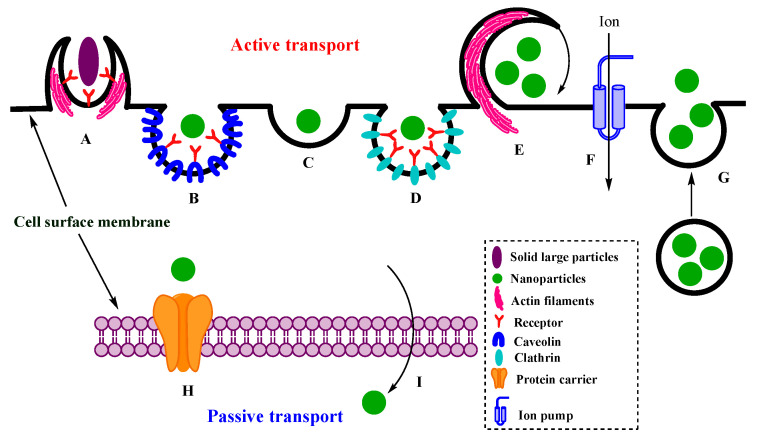
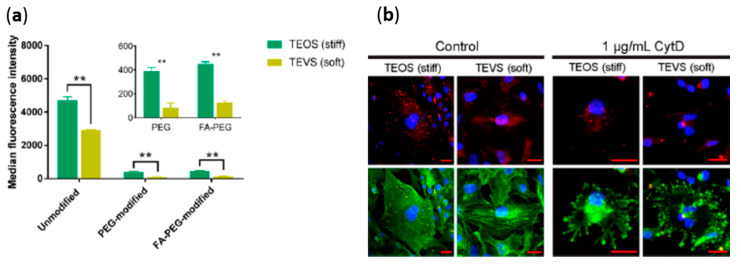
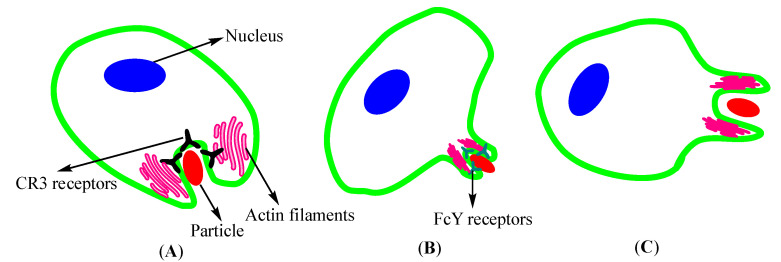
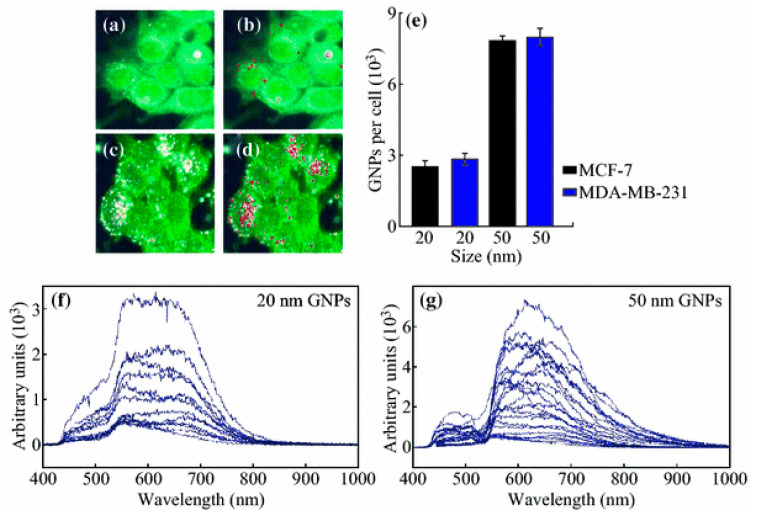
Cellular internalization of inorganic, lipidic and polymeric nanoparticles is of great significance in the quest to develop effective formulations for the treatment of high morbidity rate diseases. Understanding nanoparticle-cell interactions plays a key role in therapeutic interventions, and it continues to be a topic of great interest to both chemists and biologists. The mechanistic evaluation of cellular uptake is quite complex and is continuously being aided by the design of nanocarriers with desired physico-chemical properties. The progress in biomedicine, including enhancing the rate of uptake by the cells, is being made through the development of structure-property relationships in nanoparticles. We summarize here investigations related to transport pathways through active and passive mechanisms, and the role played by physico-chemical properties of nanoparticles, including size, geometry or shape, core-corona structure, surface chemistry, ligand binding and mechanical effects, in influencing intracellular delivery. It is becoming clear that designing nanoparticles with specific surface composition, and engineered physical and mechanical characteristics, can facilitate their internalization more efficiently into the targeted cells, as well as enhance the rate of cellular uptake.
细胞内吞无机、脂质和聚合物纳米颗粒对于开发治疗高发病率疾病的有效制剂具有重要意义。了解纳米颗粒与细胞的相互作用在治疗干预中起着关键作用,它一直是化学家与生物学家都非常感兴趣的主题。细胞摄取的机制评估非常复杂,通过设计具有所需物理化学性质的纳米载体,不断得到辅助。通过研究纳米颗粒中的结构-性能关系,在生物医学方面取得了进展,包括提高细胞摄取率。我们在这里总结了与主动和被动机制的运输途径有关的研究,以及纳米颗粒的物理化学性质(包括尺寸、几何形状或形状、核-壳结构、表面化学、配体结合和机械效应)在影响细胞内递送上所起的作用。越来越明显的是,设计具有特定表面组成和工程物理机械特性的纳米颗粒可以更有效地将其内化到靶细胞中,并提高细胞摄取率。