UCIBIO, Department of Life Sciences, Faculdade de Ciências e Tecnologia, Universidade NOVA de Lisboa, 2829-516 Caparica, Portugal.
Int J Mol Sci. 2020 Oct 28;21(21):8017. doi: 10.3390/ijms21218017.
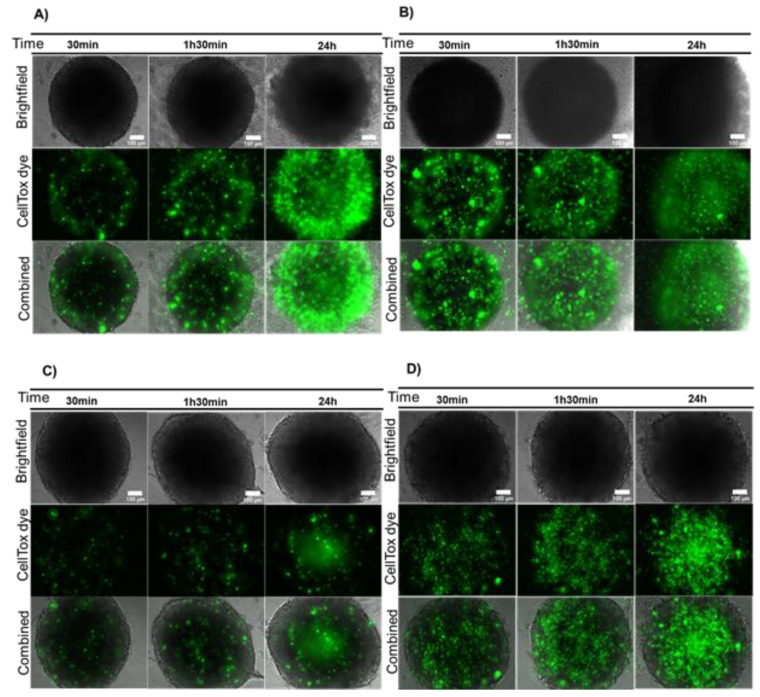
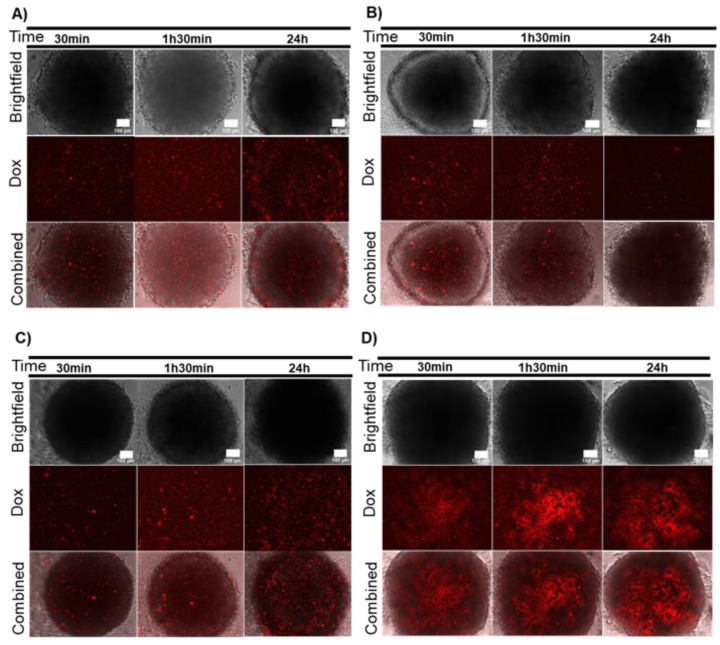
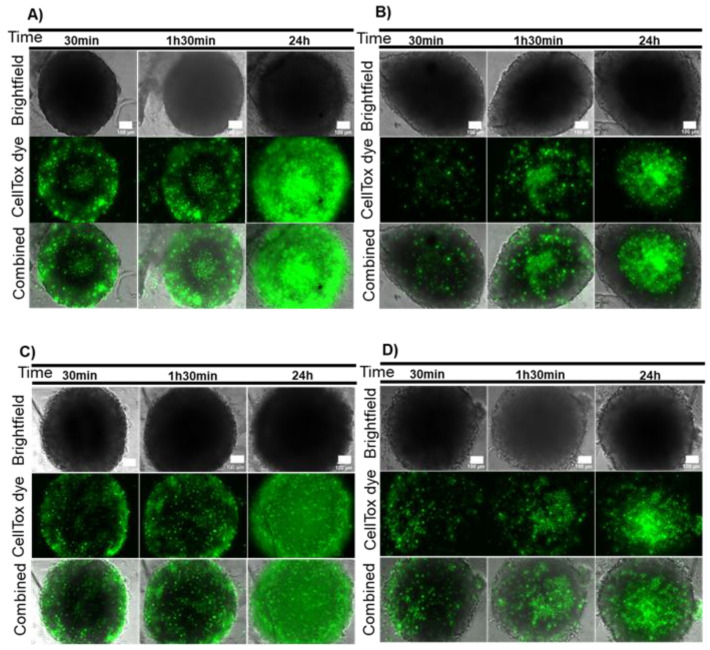
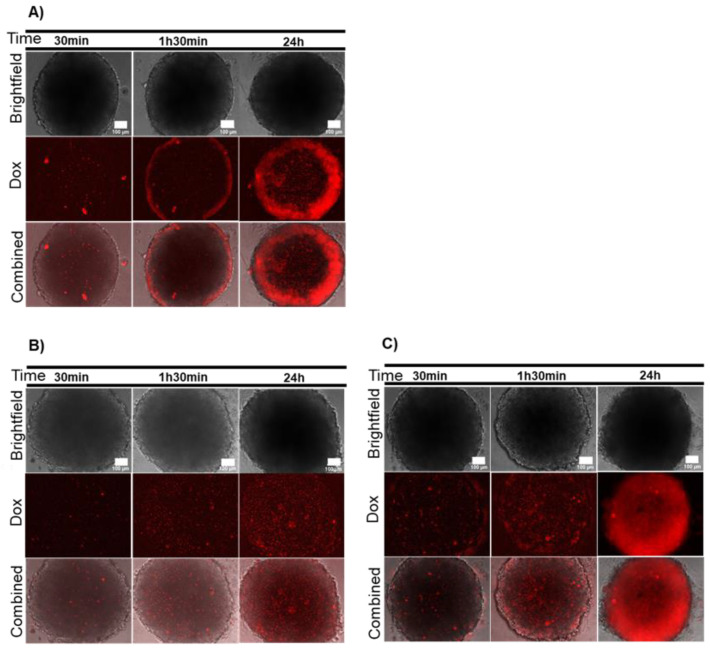
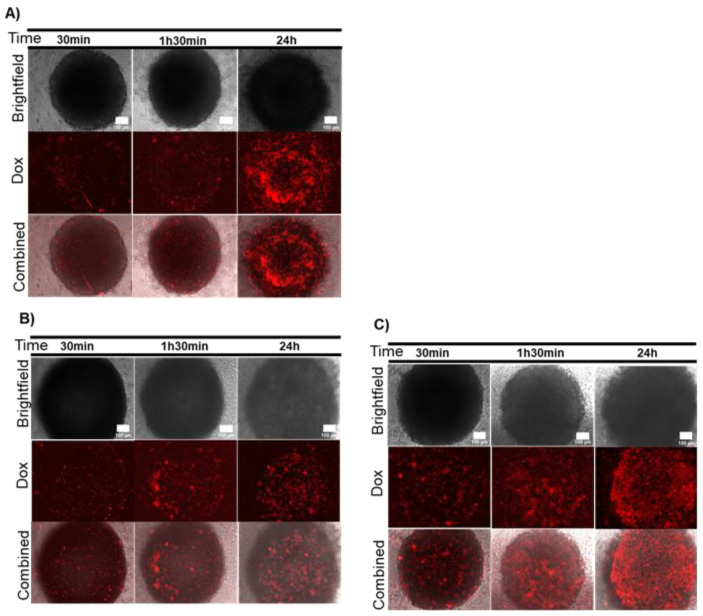
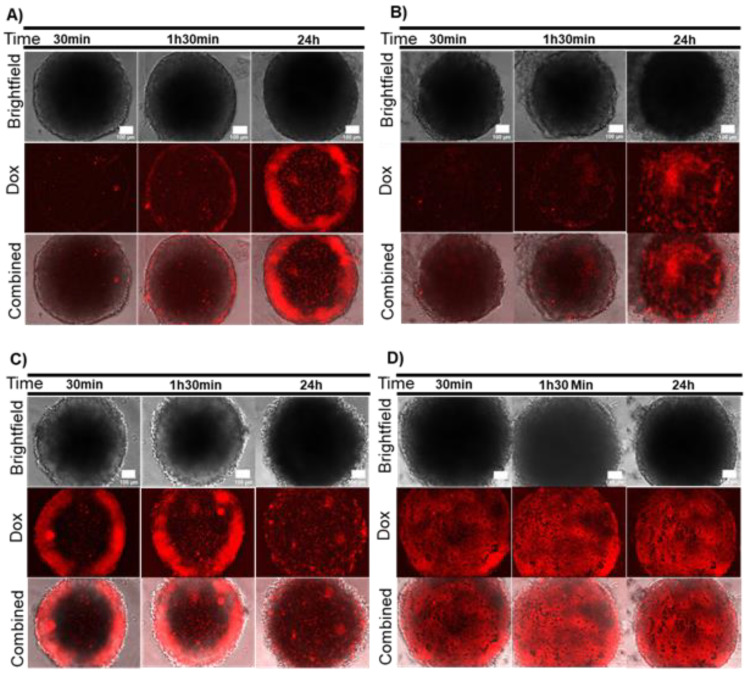
Current cancer therapies are frequently ineffective and associated with severe side effects and with acquired cancer drug resistance. The development of effective therapies has been hampered by poor correlations between pre-clinical and clinical outcomes. Cancer cell-derived spheroids are three-dimensional (3D) structures that mimic layers of tumors in terms of oxygen and nutrient and drug resistance gradients. Gold nanoparticles (AuNP) are promising therapeutic agents which permit diminishing the emergence of secondary effects and increase therapeutic efficacy. In this work, 3D spheroids of Doxorubicin (Dox)-sensitive and -resistant colorectal carcinoma cell lines (HCT116 and HCT116-DoxR, respectively) were used to infer the potential of the combination of chemotherapy and Au-nanoparticle photothermy in the visible (green laser of 532 nm) to tackle drug resistance in cancer cells. Cell viability analysis of 3D tumor spheroids suggested that AuNPs induce cell death in the deeper layers of spheroids, further potentiated by laser irradiation. The penetration of Dox and earlier spheroid disaggregation is potentiated in combinatorial therapy with Dox, AuNP functionalized with polyethylene glycol (AuNP@PEG) and irradiation. The time point of Dox administration and irradiation showed to be important for spheroids destabilization. In HCT116-sensitive spheroids, pre-irradiation induced earlier disintegration of the 3D structure, while in HCT116 Dox-resistant spheroids, the loss of spheroid stability occurred almost instantly in post-irradiated spheroids, even with lower Dox concentrations. These results point towards the application of new strategies for cancer therapeutics, reducing side effects and resistance acquisition.
当前的癌症疗法常常无效,并且伴随着严重的副作用和获得性癌症药物耐药性。临床前和临床结果之间的相关性较差,阻碍了有效疗法的发展。癌细胞衍生的球体是三维(3D)结构,在氧气、营养物质和药物耐药性梯度方面模拟肿瘤的层次。金纳米粒子(AuNP)是很有前途的治疗剂,可以减少二次效应的出现并提高治疗效果。在这项工作中,使用阿霉素(Dox)敏感和耐药结直肠癌细胞系(HCT116 和 HCT116-DoxR)的 3D 球体来推断化疗和 Au-纳米粒子光热疗法联合使用的潜力在可见光(532nm 绿色激光)中对抗癌细胞的耐药性。3D 肿瘤球体的细胞活力分析表明,AuNPs 在球体的深层诱导细胞死亡,激光照射进一步增强了这种作用。在与 Dox、聚乙二醇功能化的 AuNP(AuNP@PEG)和照射联合治疗时,Dox 的穿透性和早期球体解聚得到增强。组合治疗中 Dox 的给药和照射时间点对于球体失稳非常重要。在 HCT116 敏感球体中,预照射会导致 3D 结构更早地解体,而在 HCT116 Dox 耐药球体中,即使 Dox 浓度较低,后照射的球体也几乎立即失去球体稳定性。这些结果表明,需要应用新的癌症治疗策略,减少副作用和耐药性的产生。