Department of Radiation Oncology, University of Michigan, Ann Arbor, Michigan; Section of Thoracic Surgery, Department of Surgery, University of Michigan, Ann Arbor, Michigan.
Section of Thoracic Surgery, Department of Surgery, University of Michigan, Ann Arbor, Michigan.
Cell Mol Gastroenterol Hepatol. 2021;11(2):449-464. doi: 10.1016/j.jcmgh.2020.10.012. Epub 2020 Oct 31.
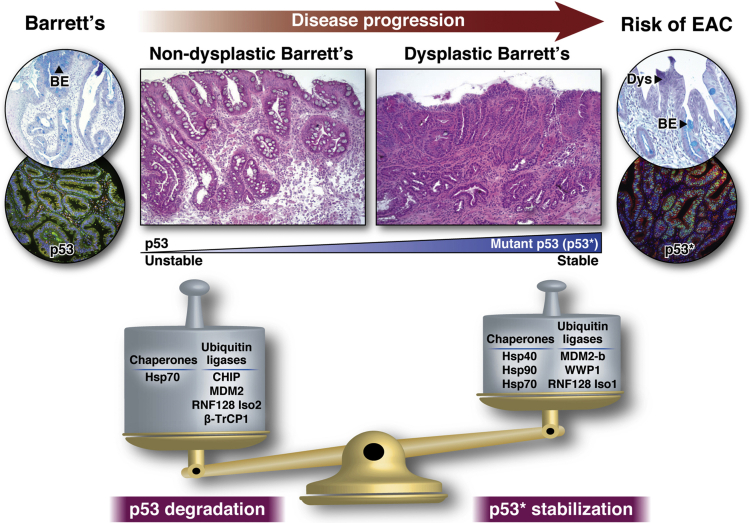
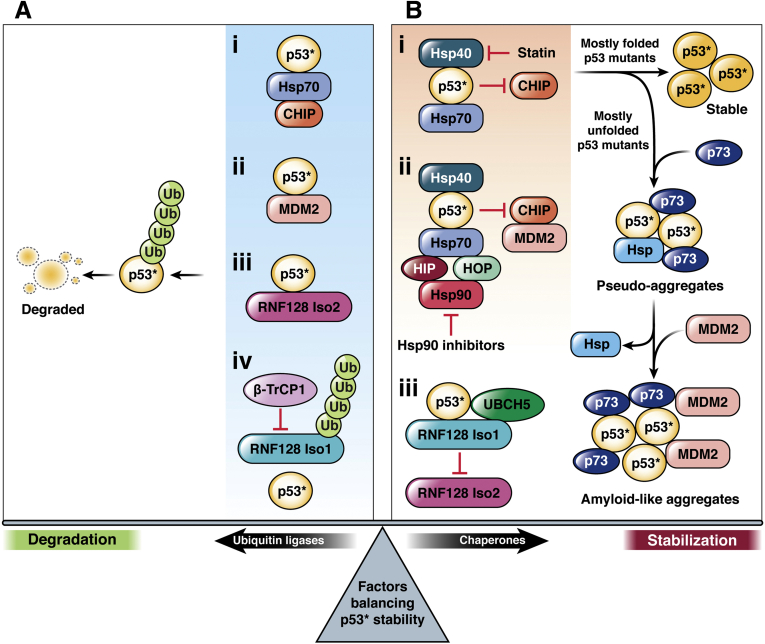
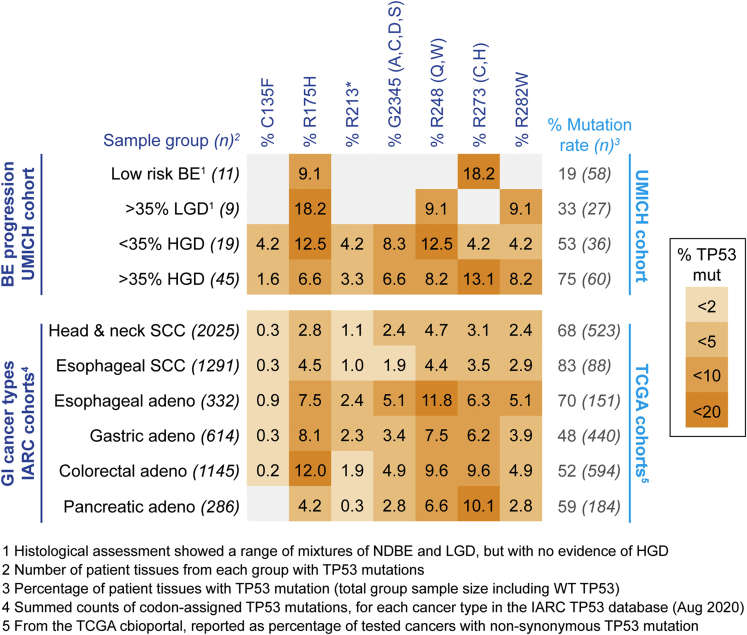
The incidence of esophageal adenocarcinoma (EAC) and other gastrointestinal (GI) cancers have risen dramatically, thus defining the oncogenic drivers to develop effective therapies are necessary. Patients with Barrett's Esophagus (BE), have an elevated risk of developing EAC. Around 70%-80% of BE cases that progress to dysplasia and cancer have detectable TP53 mutations. Similarly, in other GI cancers higher rates of TP53 mutation are reported, which provide a significant survival advantage to dysplastic/cancer cells. Targeting molecular chaperones that mediate mutant p53 stability may effectively induce mutant p53 degradation and improve cancer outcomes. Statins can achieve this via disrupting the interaction between mutant p53 and the chaperone DNAJA1, promoting CHIP-mediated degradation of mutant p53, and statins are reported to significantly reduce the risk of BE progression to EAC. However, statins demonstrated sub-optimal efficacy depending on cancer types and TP53 mutation specificity. Besides the well-established role of MDM2 in p53 stability, we reported that individual isoforms of the E3 ubiquitin ligase GRAIL (RNF128) are critical, tissue-specific regulators of mutant p53 stability in BE progression to EAC, and targeting the interaction of mutant p53 with these isoforms may help mitigate EAC development. In this review, we discuss the critical ubiquitin-proteasome and chaperone regulation of mutant p53 stability in EAC and other GI cancers with future insights as to how to affect mutant p53 stability, further noting how the precise p53 mutation may influence the efficacy of treatment strategies and identifying necessary directions for further research in this field.
食管腺癌 (EAC) 和其他胃肠道 (GI) 癌症的发病率急剧上升,因此确定开发有效疗法的致癌驱动因素是必要的。患有 Barrett 食管 (BE) 的患者患 EAC 的风险增加。大约 70%-80% 进展为异型增生和癌症的 BE 病例可检测到 TP53 突变。同样,在其他 GI 癌症中,报道了更高的 TP53 突变率,这为异型增生/癌细胞提供了显著的生存优势。靶向介导突变 p53 稳定性的分子伴侣可能有效地诱导突变 p53 降解并改善癌症结果。他汀类药物可以通过破坏突变 p53 与伴侣蛋白 DNAJA1 之间的相互作用来实现这一点,促进 CHIP 介导的突变 p53 降解,并且他汀类药物被报道可显著降低 BE 进展为 EAC 的风险。然而,他汀类药物的疗效取决于癌症类型和 TP53 突变特异性,效果并不理想。除了 MDM2 在 p53 稳定性中的既定作用外,我们还报告了 E3 泛素连接酶 GRAIL(RNF128)的个体同工型在 BE 进展为 EAC 中突变 p53 稳定性的关键、组织特异性调节作用,靶向突变 p53 与这些同工型的相互作用可能有助于减轻 EAC 的发展。在这篇综述中,我们讨论了 EAC 和其他 GI 癌症中突变 p53 稳定性的关键泛素 - 蛋白酶体和伴侣调节,并对如何影响突变 p53 稳定性的未来有了深入的了解,进一步指出了精确的 p53 突变可能如何影响治疗策略的疗效,并确定了该领域进一步研究的必要方向。