Jia Tong, Yao Yushan, Guo Tingyan, Wang Ruihong, Chai Baofeng
Shanxi Key Laboratory of Ecological Restoration on Loess Plateau, Institute of Loess Plateau, Shanxi University, Taiyuan, China.
Front Microbiol. 2020 Sep 29;11:556002. doi: 10.3389/fmicb.2020.556002. eCollection 2020.
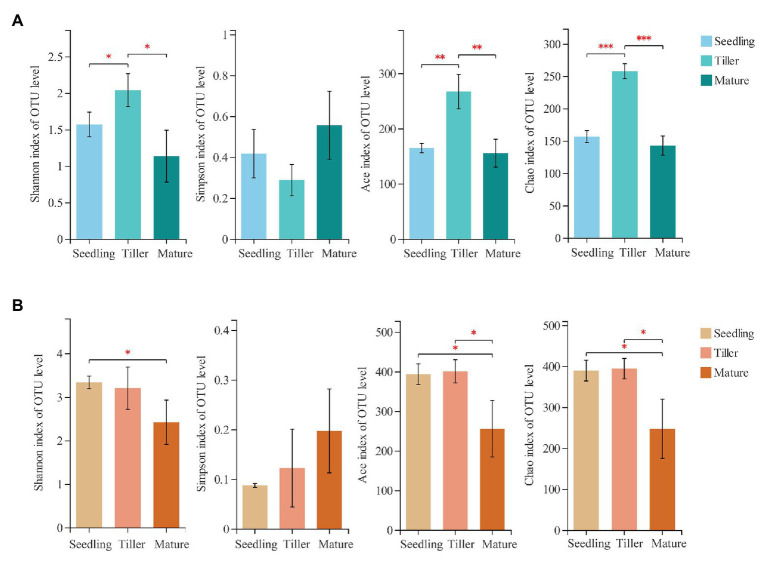
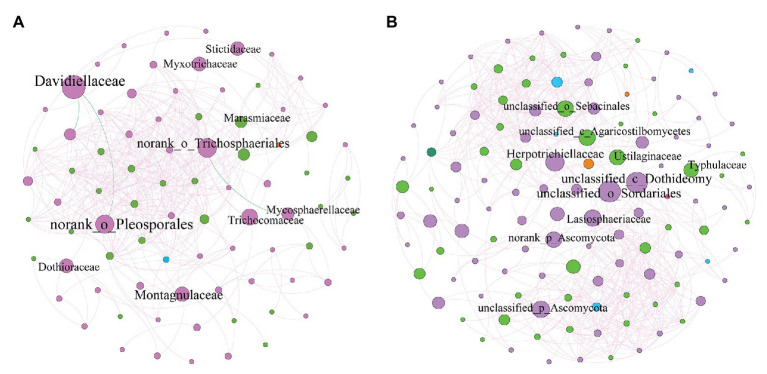
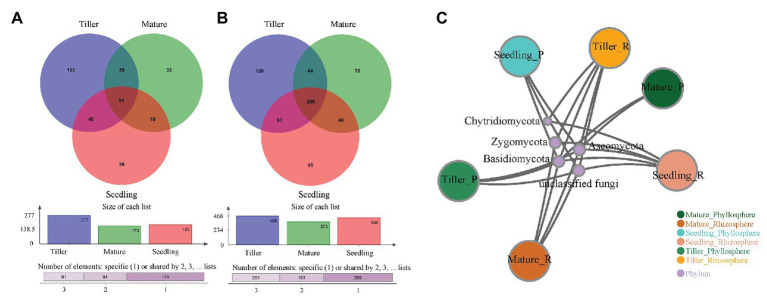
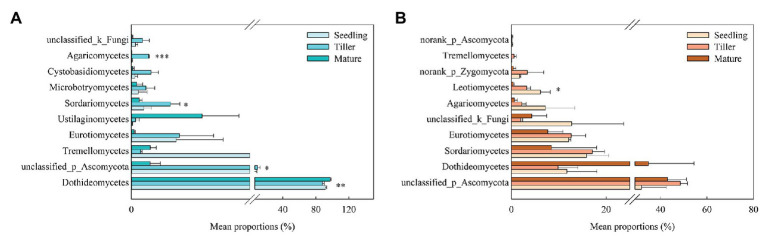
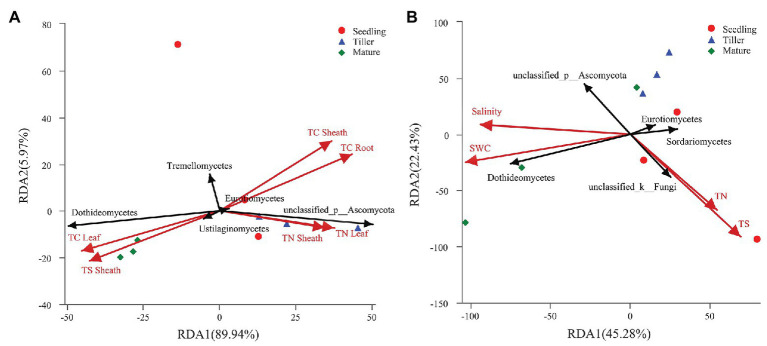
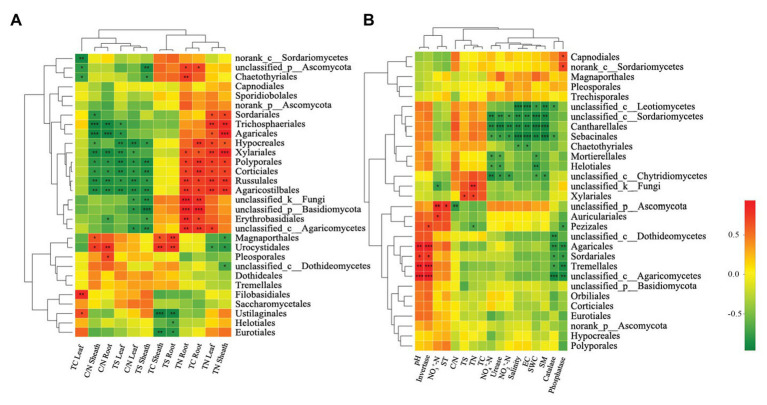
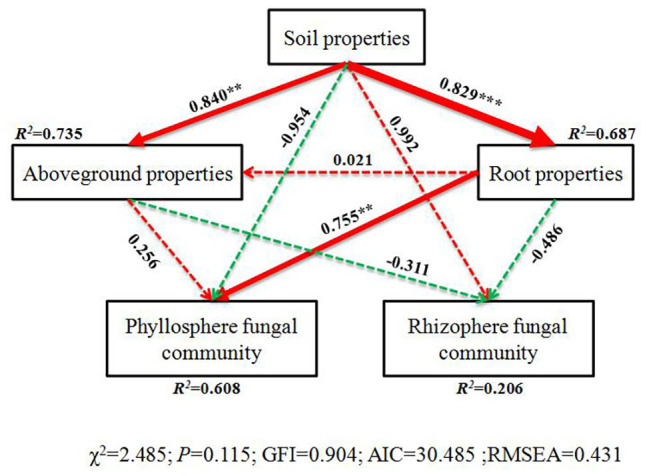
Interactions between plants and microbes can affect ecosystem functions, and many studies have demonstrated that plant properties influence mutualistic microorganisms. Here, high-throughput sequencing was used to investigate rhizosphere and phyllosphere fungal communities during different plant development stages. Results demonstrated that phyllosphere and rhizosphere fungal community structures were distinct during all developmental stages while they were mediated separately by plant carbon and soil sulfur. Comparatively, the effect of root properties on phyllosphere fungal diversity was greater than soil properties. Moreover, rhizosphere fungal networks of were more complex than phyllosphere fungal networks. This study demonstrated that the effect of plant and soil traits on phyllosphere and rhizosphere fungal communities could potentially be significant, depending on the applicable environmental condition and plant development stage. Although links between phyllosphere and rhizosphere communities have been established, further studies on functional fungal groups during phytoremediation processes are necessary. This study comprehensively analyzed dynamic relationships between phyllosphere and rhizosphere fungal communities during different plant development stages in a polluted environment. These fungal communities were determined to be expedient to the development and utilization of beneficial microbial communities during different development stages, which could more effectively help to stabilize and reclaim contaminated copper tailings soil.
植物与微生物之间的相互作用会影响生态系统功能,许多研究表明植物特性会影响互利微生物。在此,利用高通量测序研究不同植物发育阶段根际和叶际真菌群落。结果表明,在所有发育阶段,叶际和根际真菌群落结构均不同,同时它们分别由植物碳和土壤硫介导。相比之下,根系特性对叶际真菌多样性的影响大于土壤特性。此外,根际真菌网络比叶际真菌网络更复杂。本研究表明,植物和土壤特性对叶际和根际真菌群落的影响可能很大,这取决于适用的环境条件和植物发育阶段。虽然已经建立了叶际和根际群落之间的联系,但在植物修复过程中对功能性真菌类群进行进一步研究是必要的。本研究全面分析了污染环境中不同植物发育阶段叶际和根际真菌群落之间的动态关系。这些真菌群落被确定有利于不同发育阶段有益微生物群落的开发和利用,这可以更有效地帮助稳定和修复受污染的铜尾矿土壤。