Salazar-Flores Joel, Pacheco-Moisés Fermín P, Ortiz Genaro G, Torres-Jasso Juan H, Romero-Rentería Odette, Briones-Torres Ana L, Torres-Sánchez Erandis D
Department of Medical Sciences and Life, CUCIENEGA, University of Guadalajara, Ocotlan, Jalisco Mexico.
Department of Chemistry, CUCEI, University of Guadalajara, Guadalajara, Jalisco Mexico.
J Occup Med Toxicol. 2020 Oct 28;15:32. doi: 10.1186/s12995-020-00283-y. eCollection 2020.
The region of La Cienega in Jalisco Mexico, is an important agricultural reference for the production of corn, sorghum and wheat, among other grains, so the use of pesticides for pest control is high. However, in this rural area there are no toxicological studies that assess the occupational risk of pesticide use. Therefore, this study is the first to determine the oxidative stress levels markers (GSH, GSSG, carbonyl groups, nitric oxide metabolites and lipid peroxides) as well as alteration of the mitochondrial membrane fluidity caused by occupational exposure to organophosphorus and carbamates in farmers of this region. This occupational risk can increase cellular oxidation, which explains the high prevalence of neurodegenerative diseases and cancer in Cienega settlers to be analyzed in future studies.
Comparative cross-sectional study was performed using two groups: one not exposed group ( = 93) and another one with occupational exposure ( = 113). The latter group was sub-divided into 4 groups based on duration of use/exposure to pesticides. Oxidative stress levels and membrane fluidity were assessed using spectrophotometric methods. Statistical analyses were performed using SPSS software ver. 19.0 for windows.
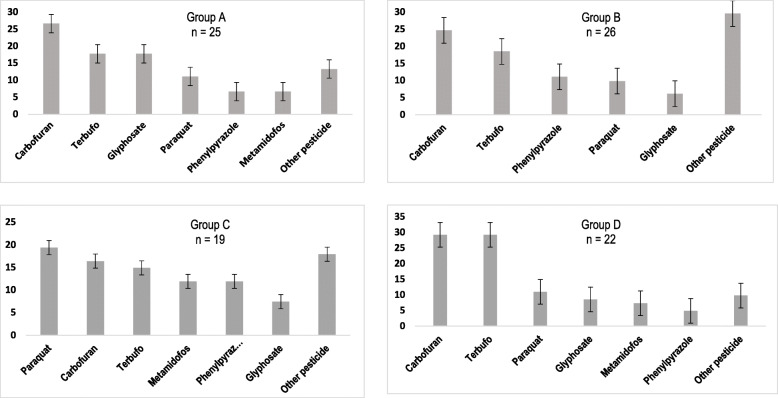
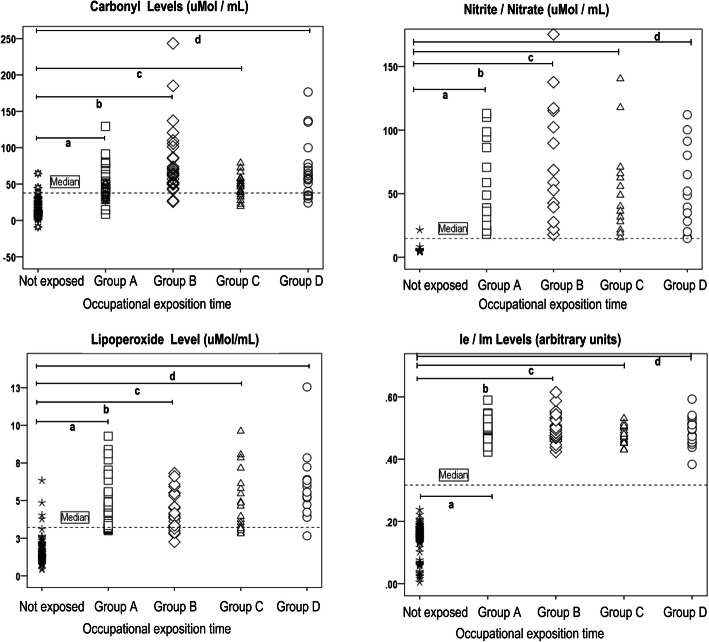
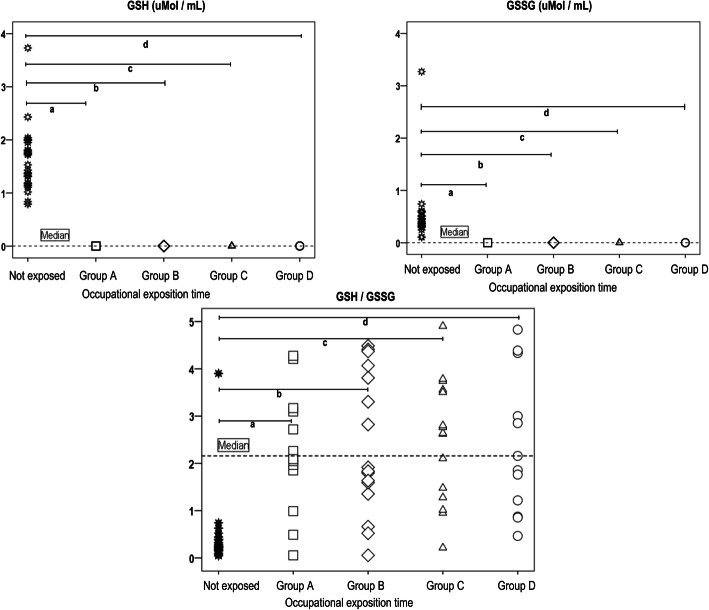
The most commonly used pesticides were organophosphorus, carbamates, herbicide-type glyphosate and paraquat, with an average occupational exposure time of 35.3 years. There were statistically significant differences in markers of oxidative stress between exposed farmers and not exposed group ( = 0.000). However, in most cases, no significant differences were found in markers of oxidative stress among the 4 exposure sub-groups ( > 0.05).
In the Cienega region, despite the indiscriminate use of organophosphorus and carbamates, there are no previous studies of levels oxidative stress. The results show increased levels of oxidative stress in occupationally exposed farmers, particularly membrane fluidity levels increased three times in contrast to not exposed group.
墨西哥哈利斯科州的拉谢内加地区是玉米、高粱和小麦等多种谷物生产的重要农业参考地区,因此用于害虫防治的农药使用量很高。然而,在这个农村地区,没有毒理学研究评估农药使用的职业风险。因此,本研究首次确定了该地区农民因职业接触有机磷和氨基甲酸盐而导致的氧化应激水平标志物(谷胱甘肽、氧化型谷胱甘肽、羰基、一氧化氮代谢物和脂质过氧化物)以及线粒体膜流动性的改变。这种职业风险会增加细胞氧化,这也解释了未来研究中将分析的谢内加定居者中神经退行性疾病和癌症的高患病率。
采用两组进行比较横断面研究:一组为未暴露组(n = 93),另一组为职业暴露组(n = 113)。后一组根据农药使用/暴露持续时间分为4组。使用分光光度法评估氧化应激水平和膜流动性。使用适用于Windows的SPSS软件19.0进行统计分析。
最常用的农药是有机磷、氨基甲酸盐、除草剂型草甘膦和百草枯,平均职业暴露时间为35.3年。暴露农民与未暴露组之间氧化应激标志物存在统计学显著差异(P = 0.000)。然而,在大多数情况下,4个暴露亚组之间的氧化应激标志物未发现显著差异(P>0.05)。
在谢内加地区,尽管有机磷和氨基甲酸盐使用不当,但以前没有氧化应激水平的研究。结果表明,职业暴露农民的氧化应激水平升高,特别是与未暴露组相比,膜流动性水平增加了三倍。