Olayode Oladotun A, Daniyan Michael Oluwatoyin, Olayiwola Gbola
Department of Pharmacology, Faculty of Pharmacy, Obafemi Awolowo University, Ile-Ife, Osun State, Nigeria.
Department of Clinical Pharmacy and Pharmacy Administration, Faculty of Pharmacy, Obafemi Awolowo University, Ile-Ife, Osun State, Nigeria.
J Tradit Complement Med. 2019 May 16;10(6):544-554. doi: 10.1016/j.jtcme.2019.05.001. eCollection 2020 Nov.
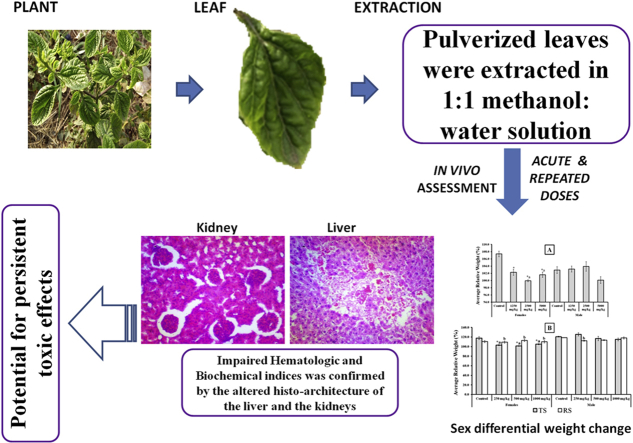
The many pharmacological potentials of (L.C. Rich) Vahl, especially in managing central nervous system disorders, hypertension, diabetes and infections, have made it a subject of abuse, necessitating the need to ascertain its safety. This study therefore investigated the toxic effects of the leaf extract of in rats following acute and 28-day repeated doses in male and female rats.
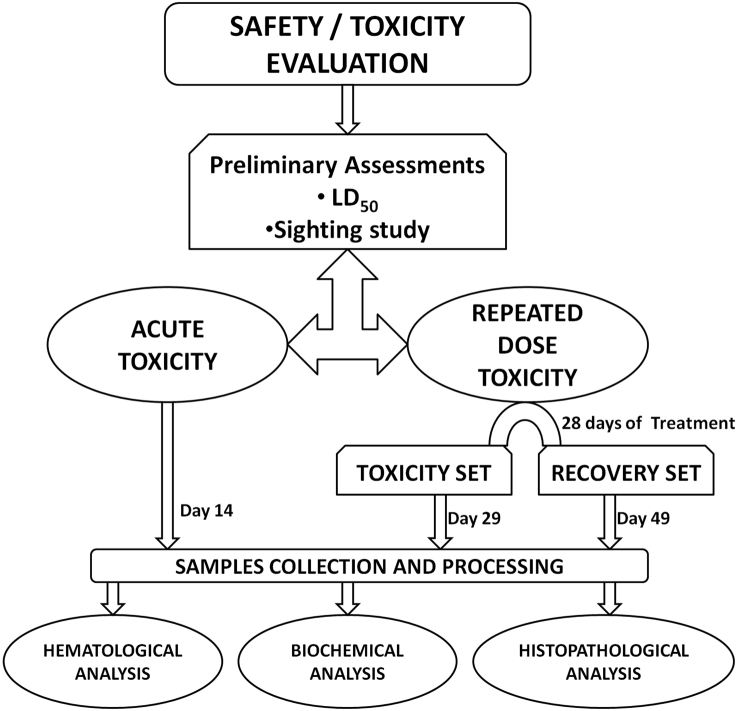
Acute and repeated dose studies were conducted in male and female groups of rats (135-150 g), using OECD 423 and 407 Tests guidelines respectively. Functional observational battery, and body weights were monitored. Blood samples were analysed for haematological and plasma biochemical indices. Organs (brain, kidneys and liver) specimen were collected and weighed. Kidney and liver specimen were subjected to histopathological analysis.
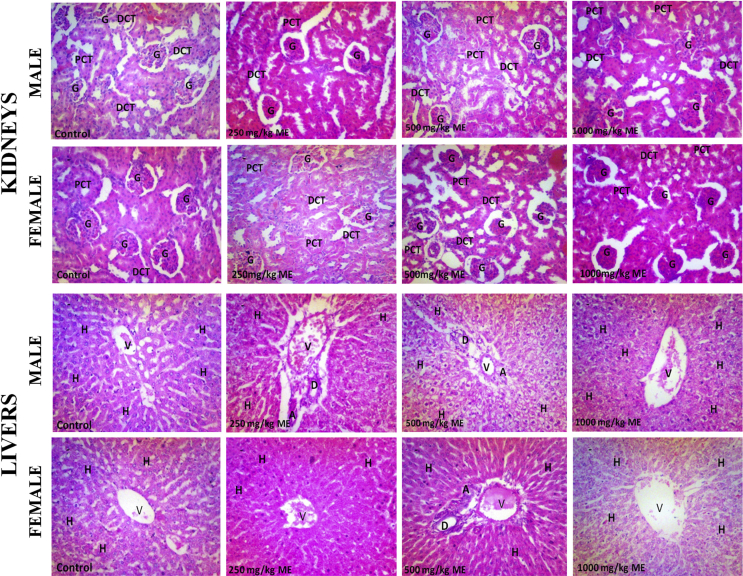
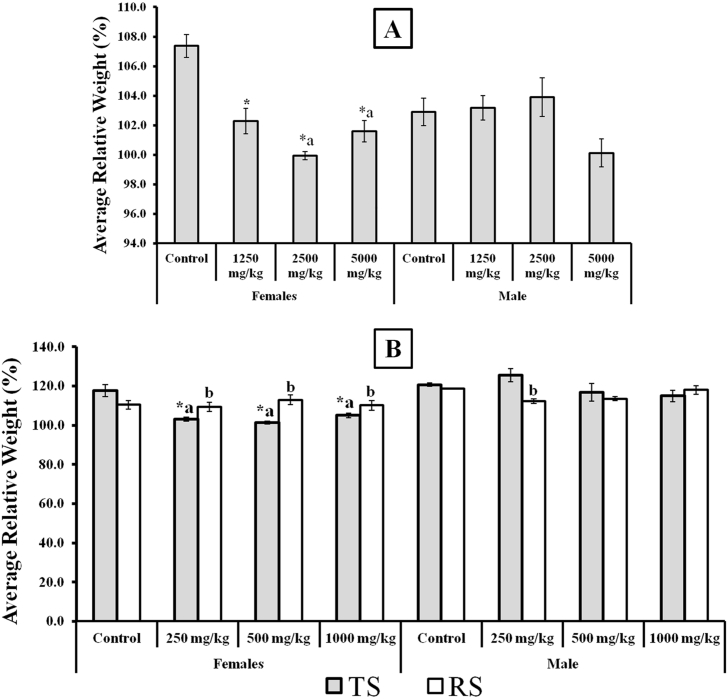
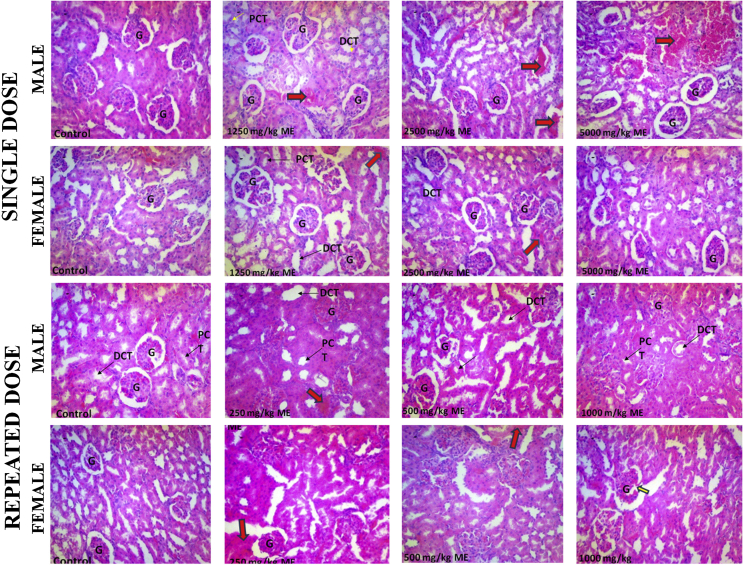
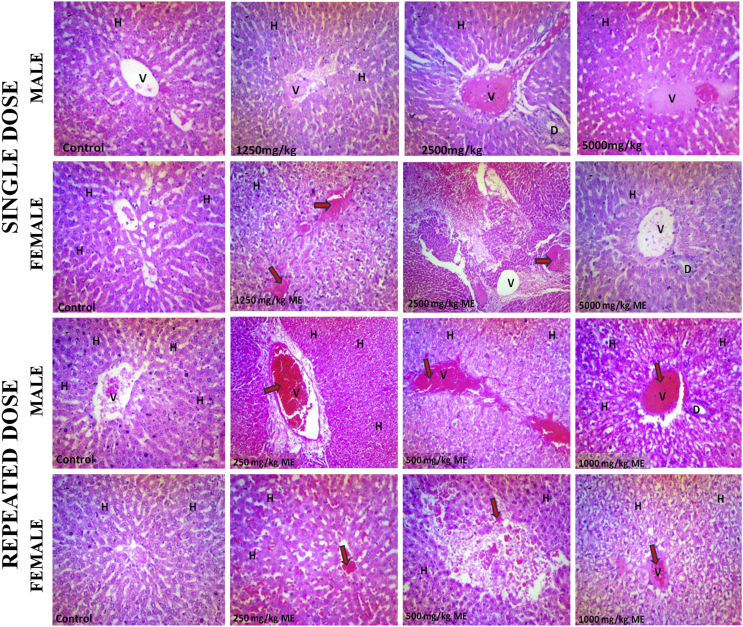
The LD of the extract was greater than 5000 mg/kg, p.o. (24 h) suggesting that the extract may be non-toxic. However, following single and repeated doses, the results revealed varying degree of significant (p < 0.05) changes in biochemical and heamatological indices, as well as in relative body weight and organ-body and organ-brain weight ratios. Also, histological assessment revealed evidence of liver and kidney toxicities and recovery was incomplete, as signs of toxicities were still evident after 21 days of recovery. Therefore, the extract is potentially harmful to vital organs with evidence of sex differential adverse effects and non-reversible forms of toxicity, especially with repeated usage, necessitating the need to avoid indiscriminate use.
(L.C. Rich)瓦尔的多种药理潜力,尤其是在治疗中枢神经系统疾病、高血压、糖尿病和感染方面,使其成为滥用的对象,因此有必要确定其安全性。本研究因此调查了该植物叶提取物在雄性和雌性大鼠中急性和28天重复给药后的毒性作用。
分别按照经合组织423和407试验指南,在雄性和雌性大鼠组(135 - 150克)中进行急性和重复剂量研究。监测功能观察组合和体重。分析血样的血液学和血浆生化指标。收集并称重器官(脑、肾和肝)标本。对肾和肝标本进行组织病理学分析。
提取物的半数致死量大于5000毫克/千克,经口给药(24小时),表明该提取物可能无毒。然而,单次和重复给药后,结果显示生化和血液学指标、相对体重以及器官 - 体重和器官 - 脑重比均有不同程度的显著(p < 0.05)变化。此外,组织学评估显示有肝肾毒性的证据,且恢复不完全,因为在恢复21天后毒性迹象仍然明显。因此,该提取物对重要器官可能有害,有性别差异的不良反应和不可逆毒性形式的证据,尤其是重复使用时,有必要避免滥用。