Nordgreen Janicke, Edwards Sandra A, Boyle Laura Ann, Bolhuis J Elizabeth, Veit Christina, Sayyari Amin, Marin Daniela E, Dimitrov Ivan, Janczak Andrew M, Valros Anna
Department of Paraclinical Sciences, Faculty of Veterinary Medicine, Norwegian University of Life Sciences, Oslo, Norway.
School of Natural and Environmental Sciences, Newcastle University, Newcastle upon Tyne, United Kingdom.
Front Vet Sci. 2020 Oct 2;7:646. doi: 10.3389/fvets.2020.00646. eCollection 2020.
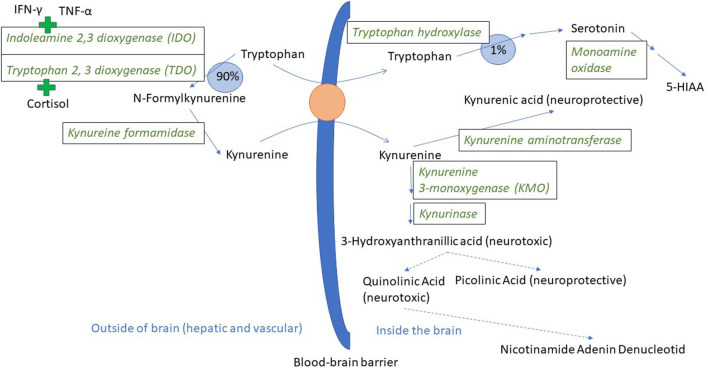
Sickness can change our mood for the worse, leaving us sad, lethargic, grumpy and less socially inclined. This mood change is part of a set of behavioral symptoms called sickness behavior and has features in common with core symptoms of depression. Therefore, the physiological changes induced by immune activation, for example following infection, are in the spotlight for explaining mechanisms behind mental health challenges such as depression. While humans may take a day off and isolate themselves until they feel better, farm animals housed in groups have only limited possibilities for social withdrawal. We suggest that immune activation could be a major factor influencing social interactions in pigs, with outbreaks of damaging behavior such as tail biting as a possible result. The hypothesis presented here is that the effects of several known risk factors for tail biting are mediated by pro-inflammatory cytokines, proteins produced by the immune system, and their effect on neurotransmitter systems. We describe the background for and implications of this hypothesis.
疾病会使我们的情绪恶化,让我们变得悲伤、慵懒、暴躁,社交意愿降低。这种情绪变化是一组被称为疾病行为的行为症状的一部分,并且与抑郁症的核心症状有共同特征。因此,免疫激活所引发的生理变化,比如在感染后出现的变化,成为了解释诸如抑郁症等心理健康问题背后机制的焦点。人类可能会休息一天并自我隔离,直到感觉好转,而群居的农场动物进行社交退缩的可能性有限。我们认为免疫激活可能是影响猪社交互动的一个主要因素,可能会导致诸如咬尾等有害行为的爆发。这里提出的假设是,几种已知的咬尾风险因素的影响是由促炎细胞因子介导的,促炎细胞因子是免疫系统产生的蛋白质,它们会对神经递质系统产生影响。我们描述了这一假设的背景及影响。