Department of Pathology and Immunology, Faculty of Medicine, University of Geneva, Geneva, Switzerland.
Department of Neuroscience, Faculty of Health and Medical Sciences, University of Copenhagen, Blegdamsvej 3B, 2200 Copenhagen, Denmark.
Cardiovasc Res. 2022 Jan 7;118(1):141-155. doi: 10.1093/cvr/cvaa311.
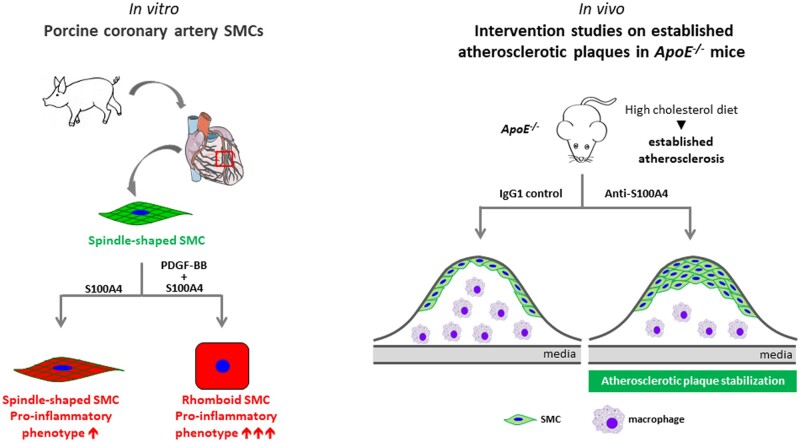
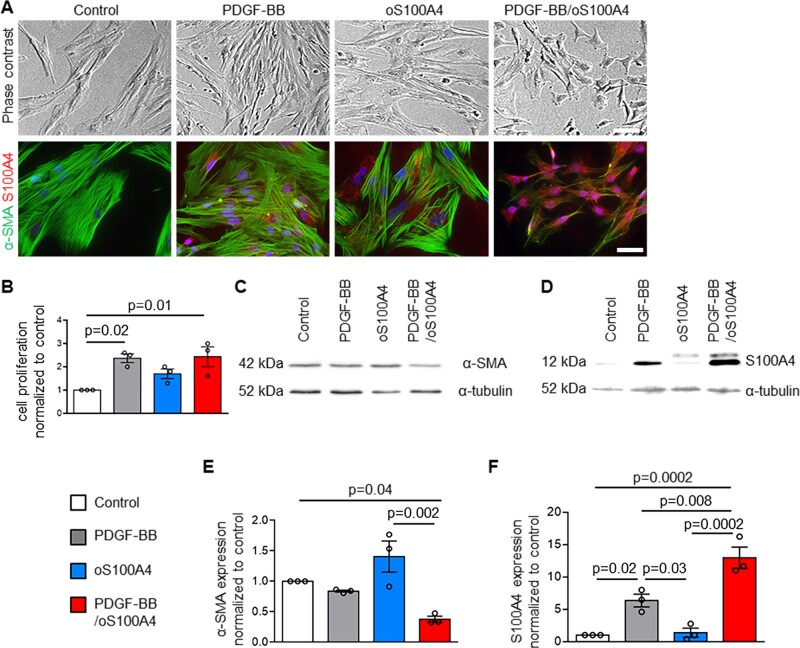
During atherosclerosis, smooth muscle cells (SMCs) accumulate in the intima where they switch from a contractile to a synthetic phenotype. From porcine coronary artery, we isolated spindle-shaped (S) SMCs exhibiting features of the contractile phenotype and rhomboid (R) SMCs typical of the synthetic phenotype. S100A4 was identified as a marker of R-SMCs in vitro and intimal SMCs, in pig and man. S100A4 exhibits intra- and extracellular functions. In this study, we investigated the role of extracellular S100A4 in SMC phenotypic transition.
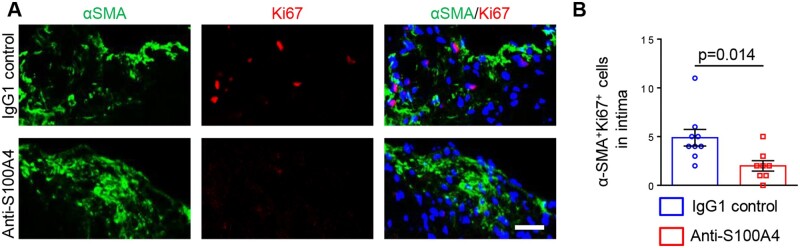
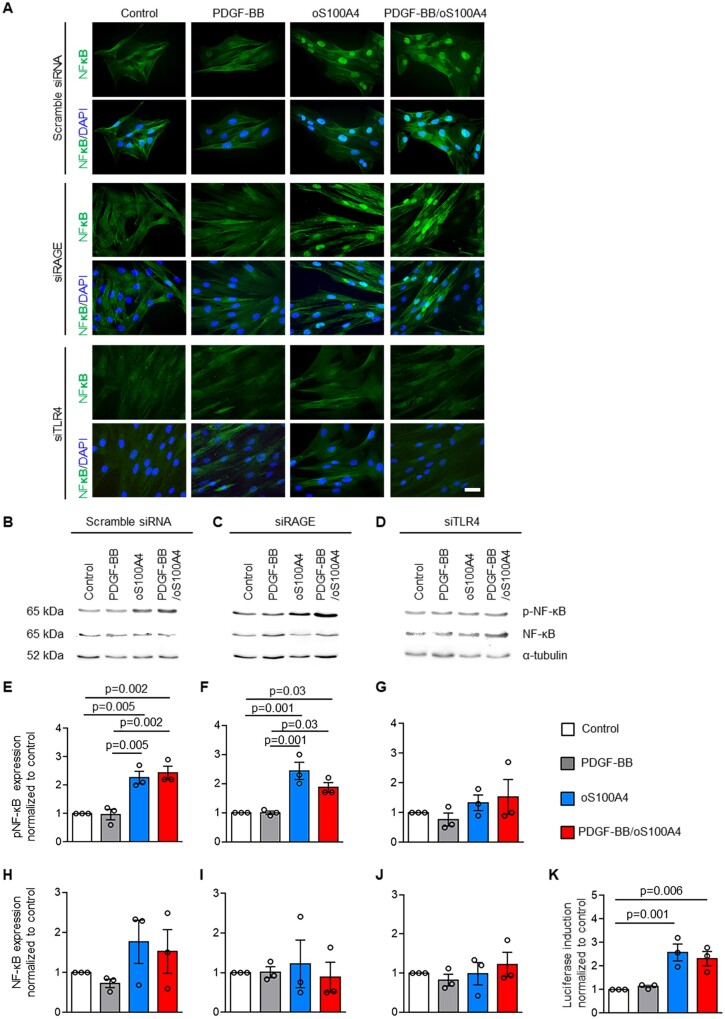
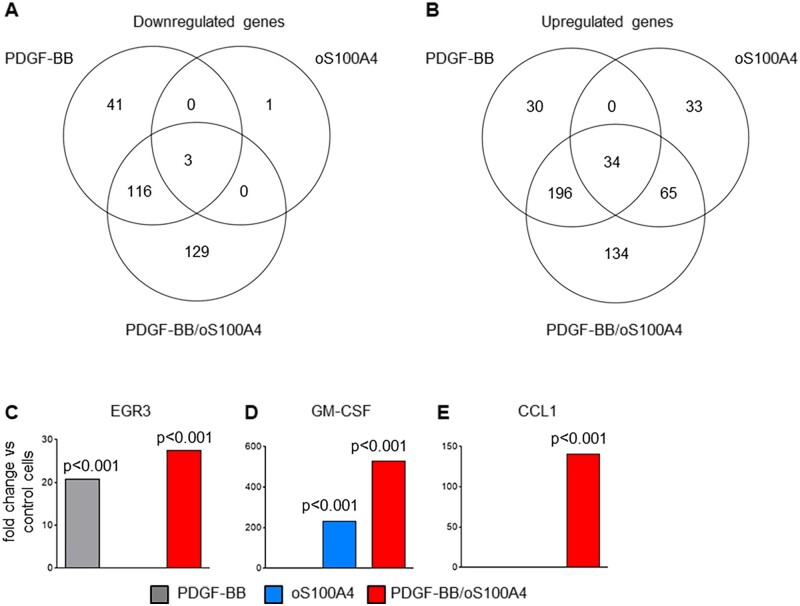
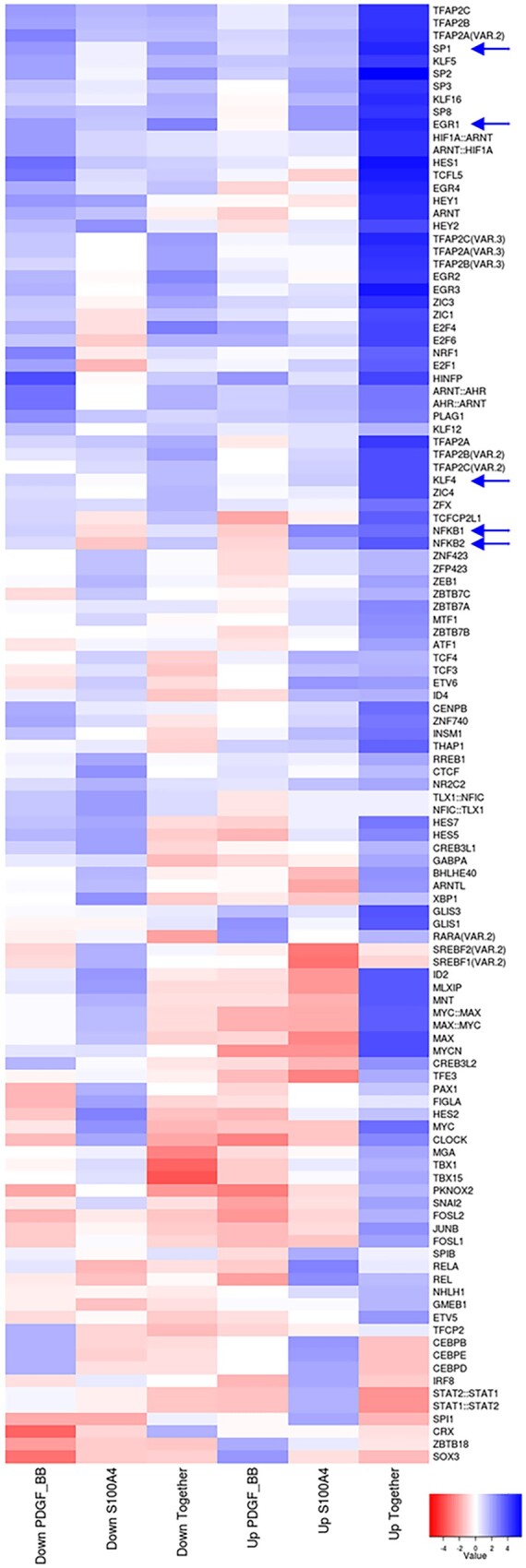
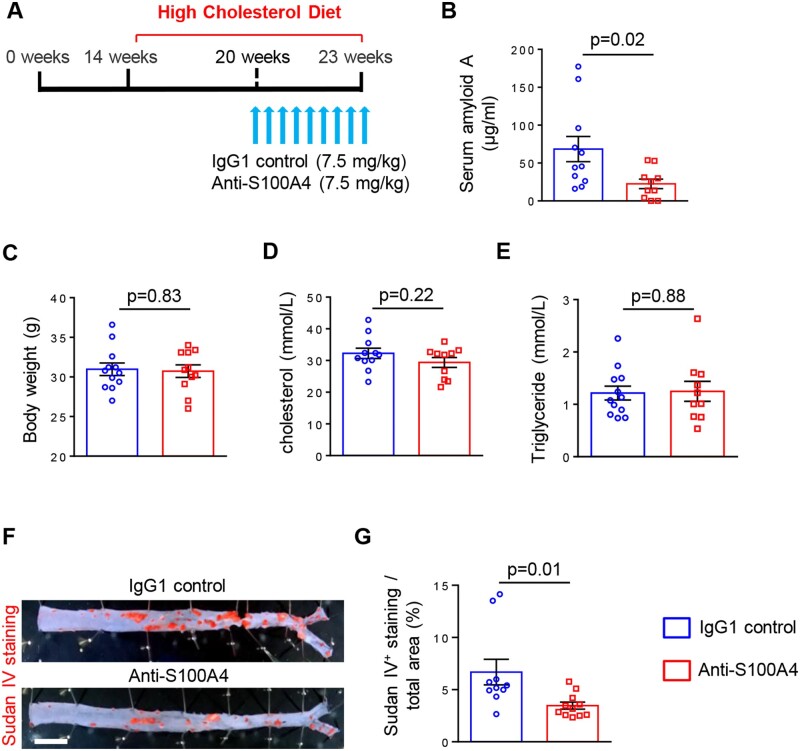
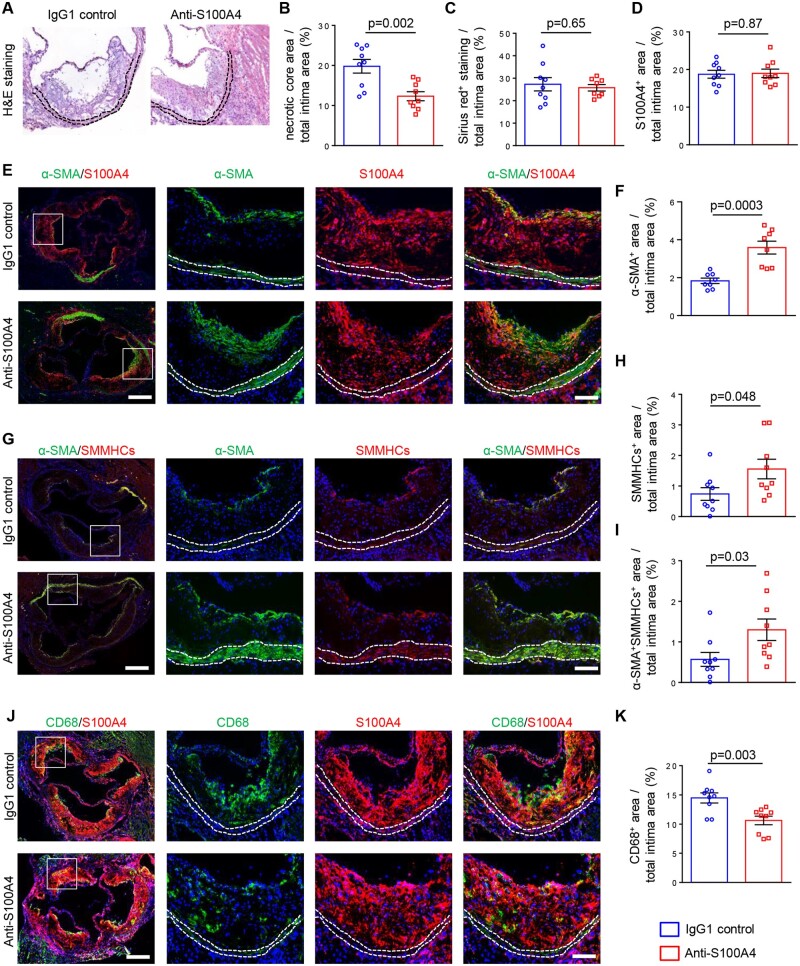
S-SMCs were treated with oligomeric recombinant S100A4 (oS100A4), which induced nuclear factor (NF)-κB activation. Treatment of S-SMCs with oS100A4 in combination with platelet-derived growth factor (PDGF)-BB induced a complete SMC transition towards a pro-inflammatory R-phenotype associated with NF-κB activation, through toll-like receptor-4. RNA sequencing of cells treated with oS100A4/PDGF-BB revealed a strong up-regulation of pro-inflammatory genes and enrichment of transcription factor binding sites essential for SMC phenotypic transition. In a mouse model of established atherosclerosis, neutralization of extracellular S100A4 decreased area of atherosclerotic lesions, necrotic core, and CD68 expression and increased α-smooth muscle actin and smooth muscle myosin heavy chain expression.
We suggest that the neutralization of extracellular S100A4 promotes the stabilization of atherosclerotic plaques. Extracellular S100A4 could be a new target to influence the evolution of atherosclerotic plaques.
在动脉粥样硬化过程中,平滑肌细胞(SMC)在内膜中积累,从而从收缩表型转变为合成表型。我们从猪冠状动脉中分离出呈梭形(S)的SMC,其具有收缩表型的特征,以及呈菱形(R)的SMC,其具有合成表型的特征。S100A4 在体外和猪与人的内膜中被鉴定为 R-SMC 的标志物。S100A4 具有细胞内和细胞外功能。在这项研究中,我们研究了细胞外 S100A4 在 SMC 表型转变中的作用。
用寡聚重组 S100A4(oS100A4)处理 S-SMC,诱导核因子(NF)-κB 激活。用 oS100A4 联合血小板衍生生长因子(PDGF)-BB 处理 S-SMC 可诱导 SMC 向促炎的 R 表型完全转变,这与 NF-κB 激活有关,是通过 Toll 样受体-4 介导的。用 oS100A4/PDGF-BB 处理的细胞的 RNA 测序显示,促炎基因的表达强烈上调,并富集了转录因子结合位点,这些位点对于 SMC 表型转变至关重要。在已建立的动脉粥样硬化小鼠模型中,中和细胞外 S100A4 可减少动脉粥样硬化病变、坏死核心和 CD68 的表达,并增加α-平滑肌肌动蛋白和平滑肌肌球蛋白重链的表达。
我们认为中和细胞外 S100A4 可促进动脉粥样硬化斑块的稳定。细胞外 S100A4 可能成为影响动脉粥样硬化斑块演变的新靶点。