National Institute for Health Research (NIHR) Nottingham Biomedical Research Centre, Nottingham, UK.
Hearing Sciences Section, Division of Clinical Neuroscience, School of Medicine, University of Nottingham, Nottingham, UK.
Int J Audiol. 2021 Apr;60(sup1):S30-S41. doi: 10.1080/14992027.2020.1825839. Epub 2020 Nov 1.
To (i) assess the delivery, accessibility, usability, acceptability, and adherence, and (ii) identify suitable outcome measures, for a mobile-enhanced multimedia educational programme (m2Hear) in first-time hearing aid users.
A prospective, single-centre feasibility study.
First-time hearing aid users (n = 59), recruited at their initial hearing assessment. Evaluations were made at 1-week and at 10-12 weeks post-hearing aid fitting.
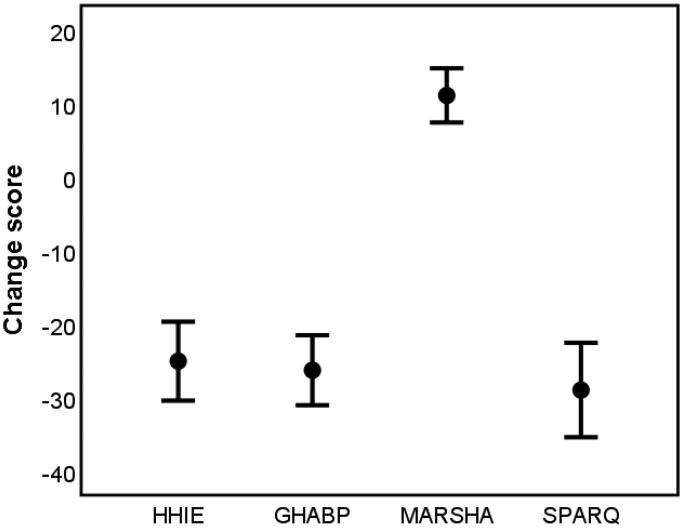
m2Hear was most commonly accessed via tablets (42.3%). Usability was high for the System Usability Scale (88.5%), and the uMARS, particularly for the Information (M = 4.7), Functionality (M = 4.5) and Aesthetics (M = 4.2) subscales (maximum score = 5). Participant feedback was positive, with a high percent agreeing that m2Hear aided understanding of hearing aids (98%), held their interest (86%), improved confidence to use hearing aids and communicate (84%), and provided additional information to audiologist's advice (82%). Learnings about practical hearing aid handling/maintenance skills and how to communicate with others were reportedly used equally in participant's everyday lives. m2Hear was convenient to use, clear, concise and comprehensive. Outcome measures of social participation resulted in large effect sizes (Cohen's > 1.6).
A theoretically-driven, personalised and co-designed educational m-health intervention is feasible and beneficial for use in the self-management of hearing loss and hearing aids.
(i)评估移动增强型多媒体教育计划(m2Hear)在初次使用助听器的用户中的交付、可及性、可用性、可接受性和依从性,以及(ii)确定合适的结果测量指标。
前瞻性、单中心可行性研究。
初次使用助听器的用户(n=59),在他们的初始听力评估时招募。评估在佩戴助听器后 1 周和 10-12 周进行。
m2Hear 最常通过平板电脑访问(42.3%)。系统可用性量表(88.5%)和 uMARS 的可用性较高,特别是在信息(M=4.7)、功能(M=4.5)和美学(M=4.2)分量表(最高得分为 5)。参与者的反馈是积极的,有很高的百分比同意 m2Hear 有助于他们理解助听器(98%)、吸引他们的兴趣(86%)、增强他们使用助听器和交流的信心(84%),并提供了助听器验配师建议之外的其他信息(82%)。据说参与者在日常生活中同样会使用有关实际助听器处理/维护技能以及与他人交流的学习内容。m2Hear 使用方便、清晰、简洁和全面。社会参与的结果测量指标产生了较大的效应量(Cohen's >1.6)。
一种基于理论、个性化和共同设计的教育性移动健康干预措施在听力损失和助听器的自我管理中是可行且有益的。