Department of Microbiology and Immunology, Peter Doherty Institute for Infection and Immunity, University of Melbourne, Melbourne, Victoria, Australia.
Melbourne Sexual Health Clinic and Infectious Diseases Department, Alfred Hospital, Monash University Central Clinical School, Carlton, Victoria, Australia.
PLoS One. 2020 Nov 2;15(11):e0241649. doi: 10.1371/journal.pone.0241649. eCollection 2020.
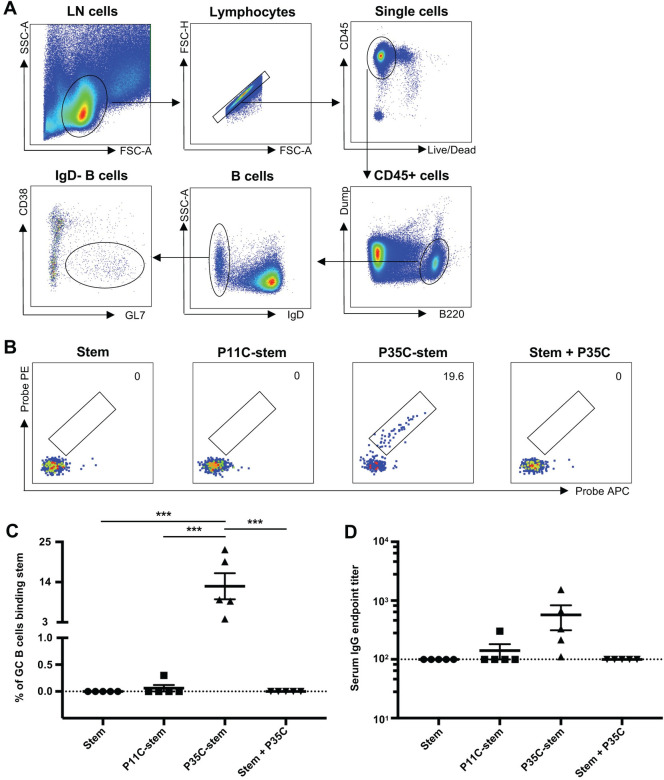
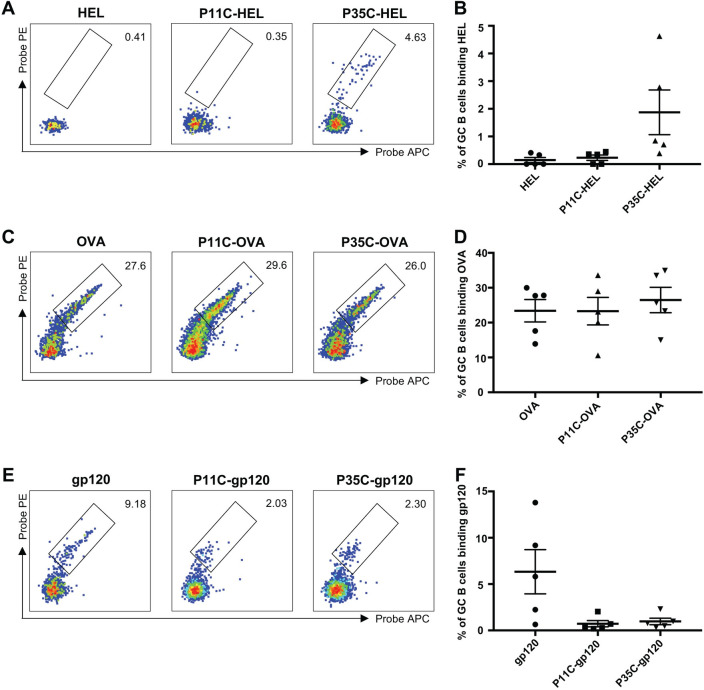
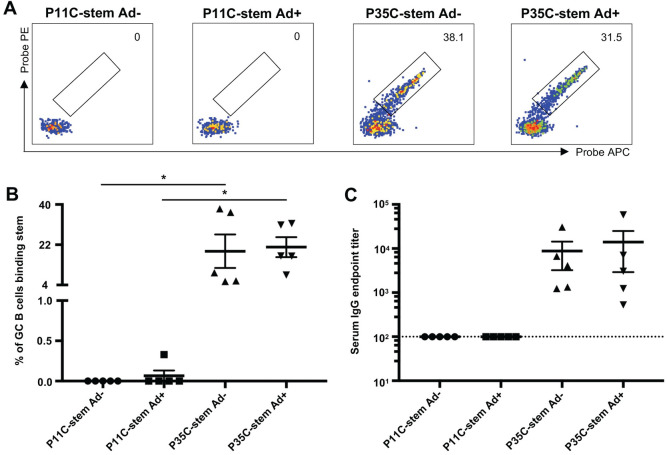
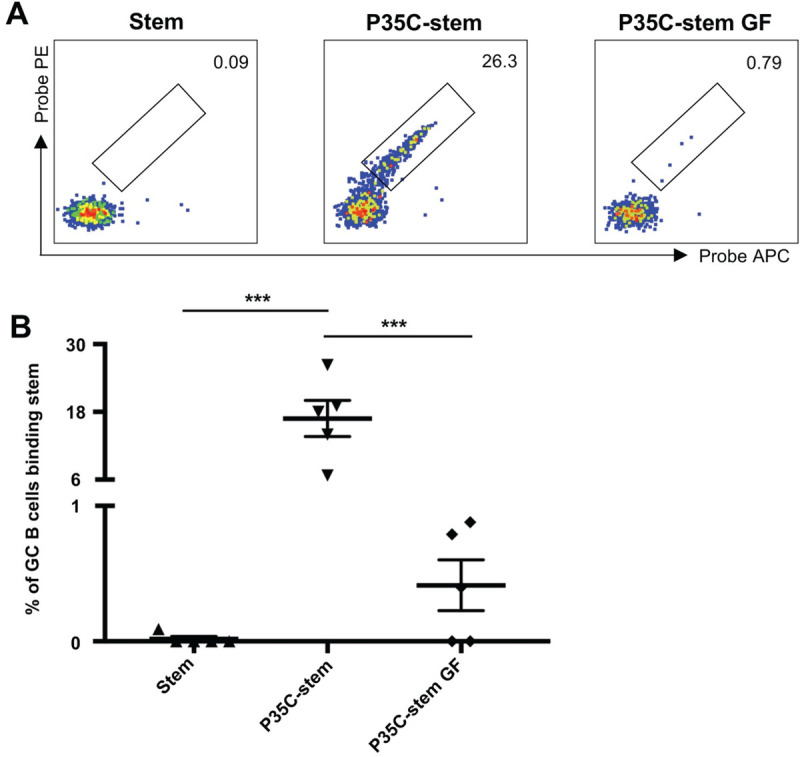
Influenza virus infection is a global public health threat. Current seasonal influenza vaccines are efficacious only when vaccine strains are matched with circulating strains. There is a critical need for developing "universal" vaccines that protect against all influenza viruses. HA stem is a promising target for developing broad-spectrum influenza vaccines due to its relatively conserved feature. However, HA stem is weakly immunogenic when administered alone in a soluble form. Several approaches have been employed to improve the immunogenicity of HA stem, including conjugation of HA stem with a highly immunogenic carrier protein or displaying HA stem on a nanoparticle scaffold. Converting a weakly immunologic protein into a multimer through aggregation can significantly enhance its immunogenicity, with some multimeric protein aggregates previously shown to be more immunogenic than their soluble counterparts in animal models. Here, we show that a chemically coupling a peptide derived from the head domain of PR8 HA (P35) with the poorly immunogenic HA stem protein results in aggregation of the HA stem which significantly increases stem-specific B cell responses following vaccination. Importantly, vaccination with this conjugate in the absence of adjuvant still induced robust B cell responses against stem in vivo. Improving HA stem immunogenicity by aggregation provides an alternative avenue to conjugation with exotic carrier proteins or nanoparticle formulation.
流感病毒感染是一个全球性的公共卫生威胁。当前的季节性流感疫苗只有在疫苗株与流行株匹配时才有效。因此,迫切需要开发能够预防所有流感病毒的“通用”疫苗。HA 茎是开发广谱流感疫苗的有前途的靶标,因为它具有相对保守的特征。然而,当以可溶性形式单独给药时,HA 茎的免疫原性较弱。已经采用了几种方法来提高 HA 茎的免疫原性,包括将 HA 茎与高度免疫原性的载体蛋白缀合或在纳米颗粒支架上展示 HA 茎。通过聚集将弱免疫原性蛋白转化为多聚体可以显著提高其免疫原性,一些多聚体蛋白聚集体以前在动物模型中显示比其可溶性对应物具有更高的免疫原性。在这里,我们表明,通过化学偶联来自 PR8 HA(P35)头部结构域的肽与免疫原性较弱的 HA 茎蛋白,导致 HA 茎的聚集,这大大增加了疫苗接种后的茎特异性 B 细胞反应。重要的是,在没有佐剂的情况下,用这种缀合物进行疫苗接种仍然可以在体内诱导针对茎的强烈 B 细胞反应。通过聚集提高 HA 茎的免疫原性为与外来载体蛋白或纳米颗粒制剂缀合提供了另一种途径。