Andersen Marc Malmdorf, Schjoedt Uffe, Price Henry, Rosas Fernando E, Scrivner Coltan, Clasen Mathias
Interacting Minds Centre, Aarhus University.
School of Culture and Society, Aarhus University.
Psychol Sci. 2020 Dec;31(12):1497-1510. doi: 10.1177/0956797620972116. Epub 2020 Nov 2.
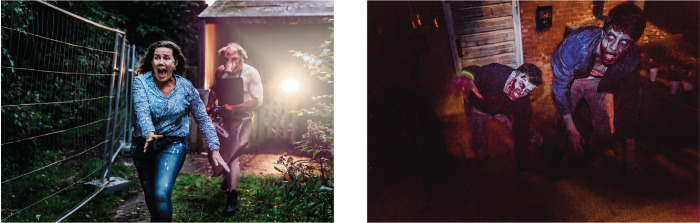
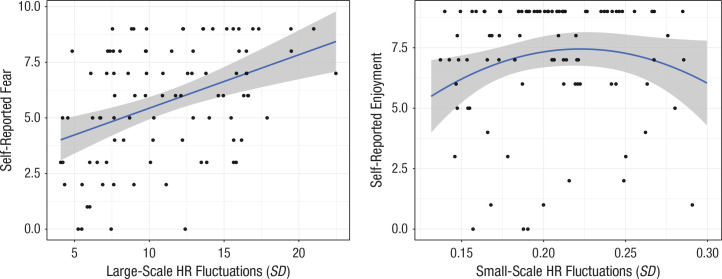
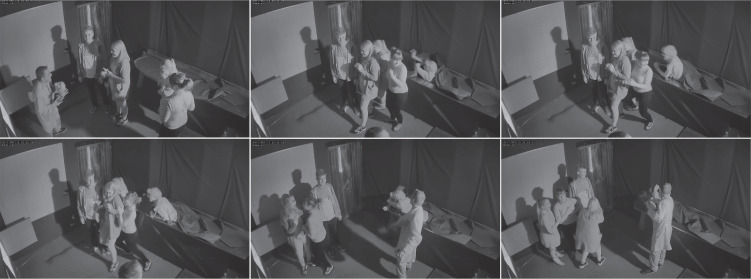
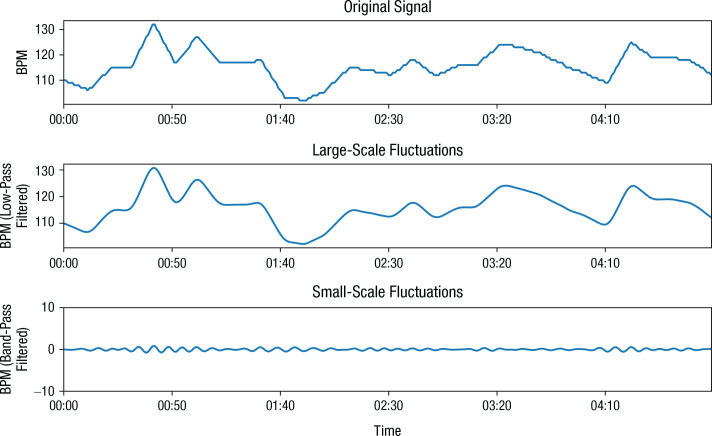
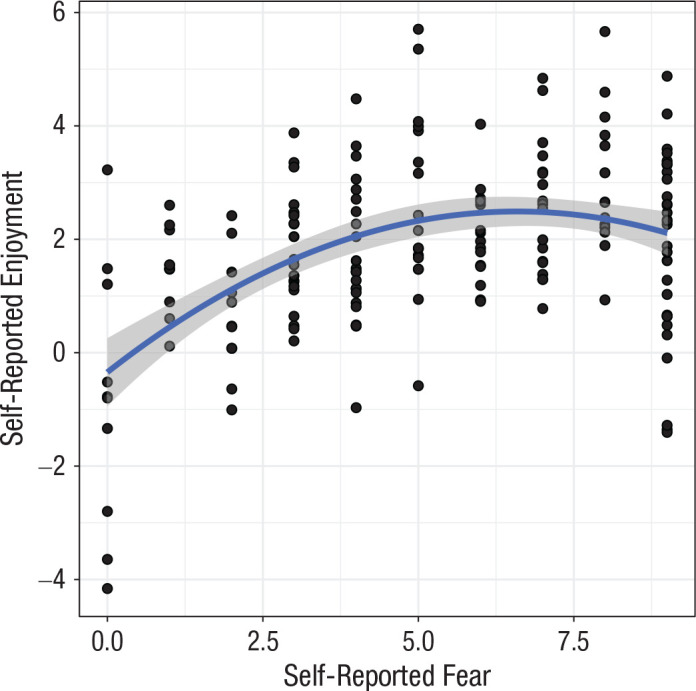
Haunted attractions are illustrative examples of recreational fear in which people voluntarily seek out frightening experiences in pursuit of enjoyment. We present findings from a field study at a haunted-house attraction where visitors between the ages of 12 and 57 years ( = 110) were equipped with heart rate monitors, video-recorded at peak scare points during the attraction, and asked to report on their experience. Our results show that enjoyment has an inverted-U-shaped relationship with fear across repeated self-reported measures. Moreover, results from physiological data demonstrate that the experience of being frightened is a linear function of large-scale heart rate fluctuations, whereas there is an inverted-U-shaped relationship between participant enjoyment and small-scale heart rate fluctuations. These results suggest that enjoyment is related to forms of arousal dynamics that are "just right." These findings shed light on how fear and enjoyment can coexist in recreational horror.
鬼屋景点是娱乐性恐惧的典型例子,人们会自愿寻求可怕的体验以追求乐趣。我们展示了一项在鬼屋景点进行的实地研究结果,该景点的游客年龄在12至57岁之间(n = 110),他们配备了心率监测器,在景点的高峰惊吓点进行录像,并被要求报告他们的体验。我们的结果表明,在多次自我报告的测量中,乐趣与恐惧呈倒U形关系。此外,生理数据结果表明,受惊吓的体验是大规模心率波动的线性函数,而参与者的乐趣与小规模心率波动之间呈倒U形关系。这些结果表明,乐趣与“恰到好处”的唤醒动态形式有关。这些发现揭示了恐惧和乐趣如何在娱乐性恐怖中并存。