Laboratory of Structural Biochemistry, Freie Universität Berlin, D-14195, Berlin, Germany.
MRC Laboratory of Molecular Biology, Cambridge Biomedical Campus, Cambridge, CB2 0QH, UK.
Nat Commun. 2020 Nov 2;11(1):5535. doi: 10.1038/s41467-020-19221-x.
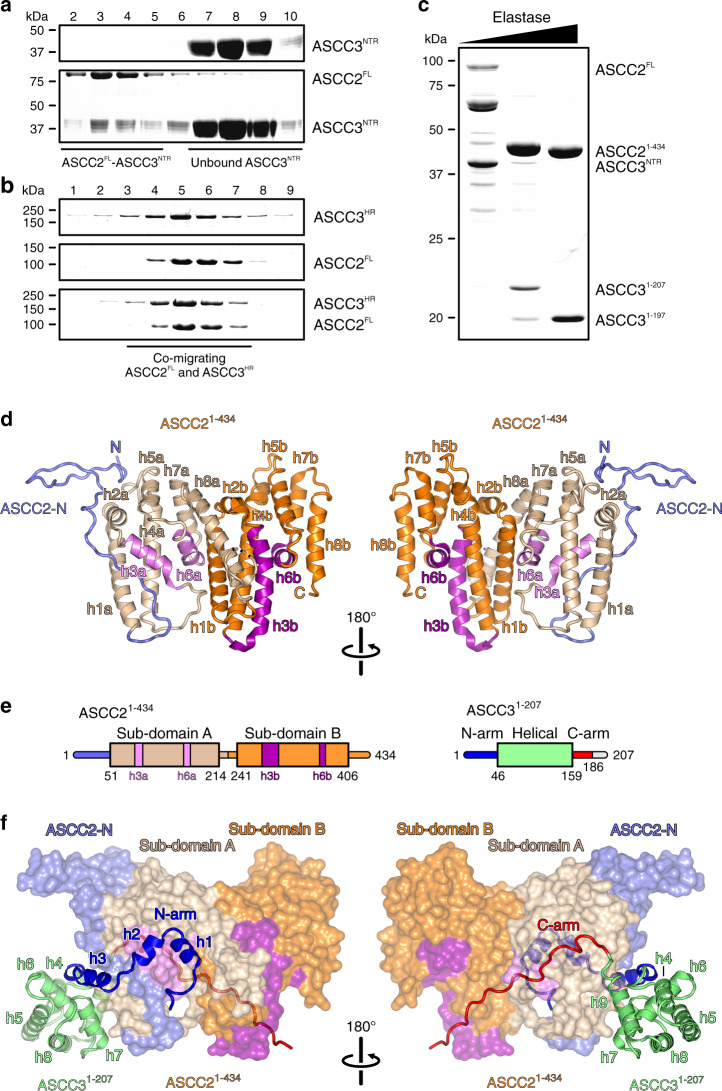
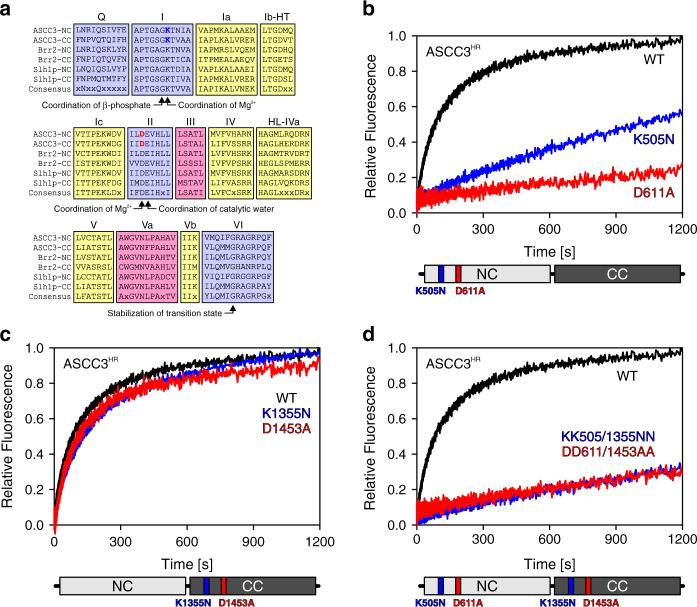
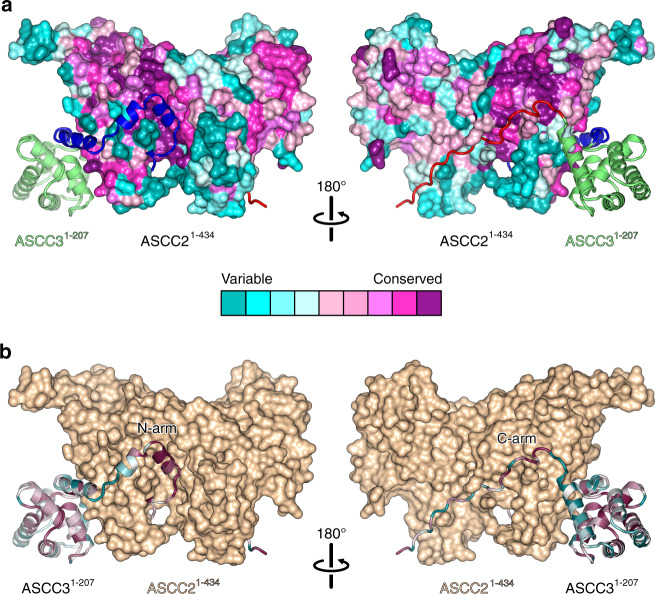
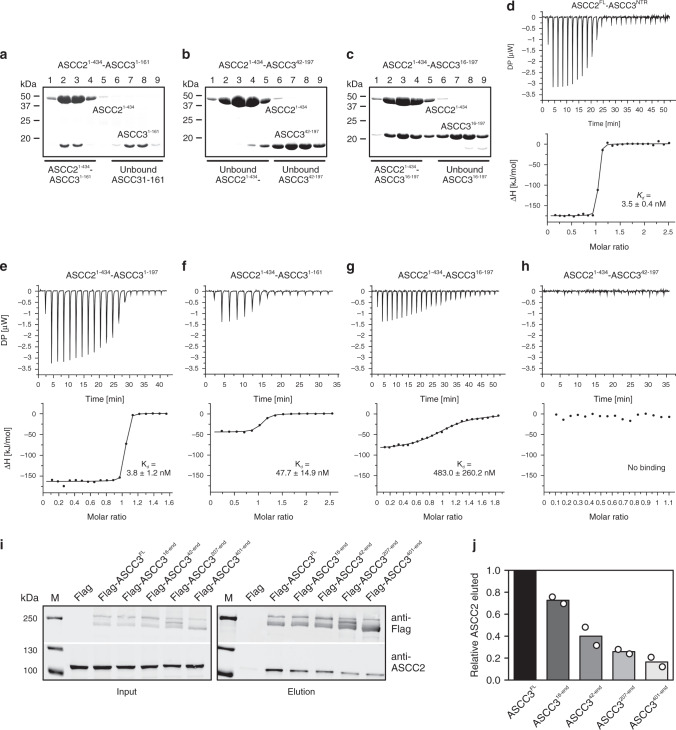
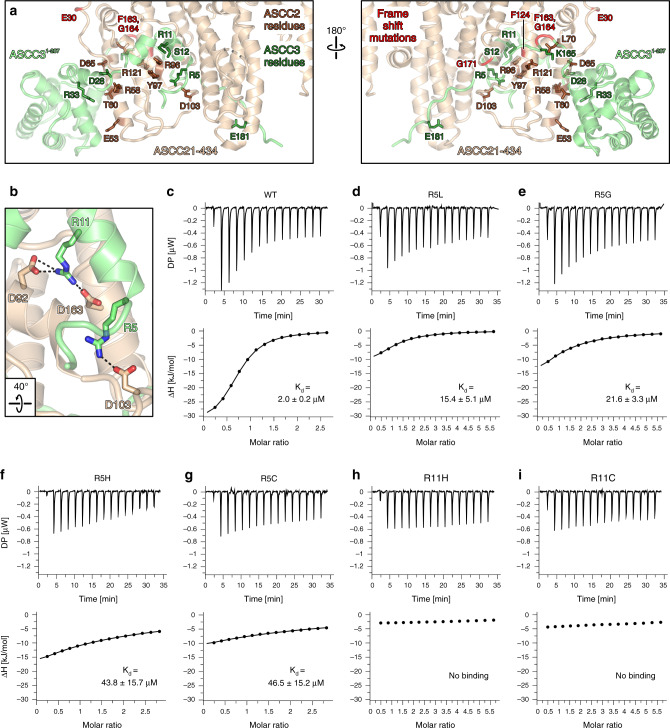
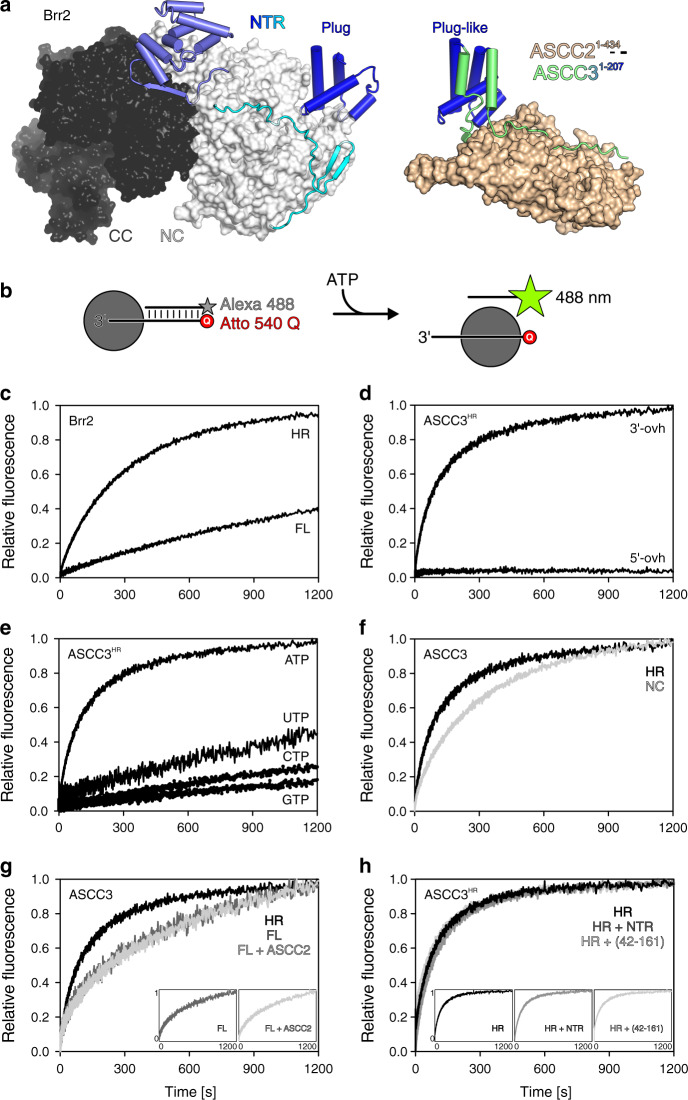
The ASCC3 subunit of the activating signal co-integrator complex is a dual-cassette Ski2-like nucleic acid helicase that provides single-stranded DNA for alkylation damage repair by the α-ketoglutarate-dependent dioxygenase AlkBH3. Other ASCC components integrate ASCC3/AlkBH3 into a complex DNA repair pathway. We mapped and structurally analyzed interacting ASCC2 and ASCC3 regions. The ASCC3 fragment comprises a central helical domain and terminal, extended arms that clasp the compact ASCC2 unit. ASCC2-ASCC3 interfaces are evolutionarily highly conserved and comprise a large number of residues affected by somatic cancer mutations. We quantified contributions of protein regions to the ASCC2-ASCC3 interaction, observing that changes found in cancers lead to reduced ASCC2-ASCC3 affinity. Functional dissection of ASCC3 revealed similar organization and regulation as in the spliceosomal RNA helicase Brr2. Our results delineate functional regions in an important DNA repair complex and suggest possible molecular disease principles.
激活信号共整合复合物的 ASCC3 亚基是一种双盒 Ski2 样核酸解旋酶,通过依赖α-酮戊二酸的双氧酶 AlkBH3 为烷基化损伤修复提供单链 DNA。其他 ASCC 组件将 ASCC3/AlkBH3 整合到一个复杂的 DNA 修复途径中。我们对相互作用的 ASCC2 和 ASCC3 区域进行了作图和结构分析。ASCC3 片段包含一个中央螺旋结构域和末端延伸臂,这些延伸臂扣紧紧凑的 ASCC2 单元。ASCC2-ASCC3 界面在进化上高度保守,包含大量受体细胞癌突变影响的残基。我们量化了蛋白质区域对 ASCC2-ASCC3 相互作用的贡献,观察到癌症中发现的变化导致 ASCC2-ASCC3 亲和力降低。ASCC3 的功能剖析揭示了与剪接体 RNA 解旋酶 Brr2 相似的组织和调控方式。我们的研究结果描绘了一个重要的 DNA 修复复合物中的功能区域,并提出了可能的分子疾病原理。