Gao Xiaoyu, Chang Songlin, Liu Shuangfeng, Peng Lei, Xie Jing, Dong Wenming, Tian Yang, Sheng Jun
Engineering Research Center of Development and Utilization of Food and Drug Homologous Resources, Ministry of Education, Yunnan Agricultural University, Kunming, Yunnan, People's Republic of China.
Yunnan Provincial Key Laboratory of Biological Big Data, Yunnan Agricultural University, Kunming, Yunnan, People's Republic of China.
mSystems. 2020 Nov 3;5(6):e00391-20. doi: 10.1128/mSystems.00391-20.
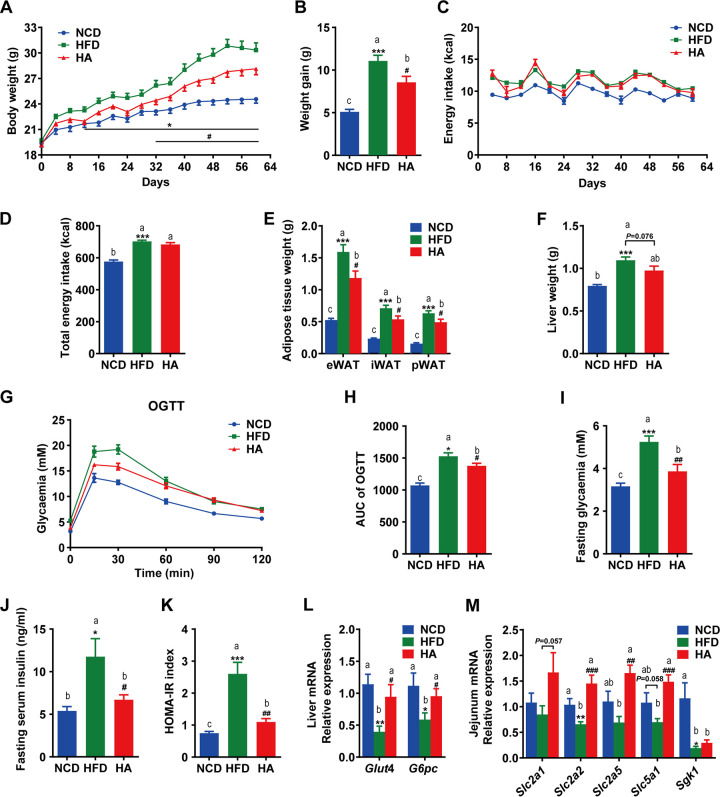
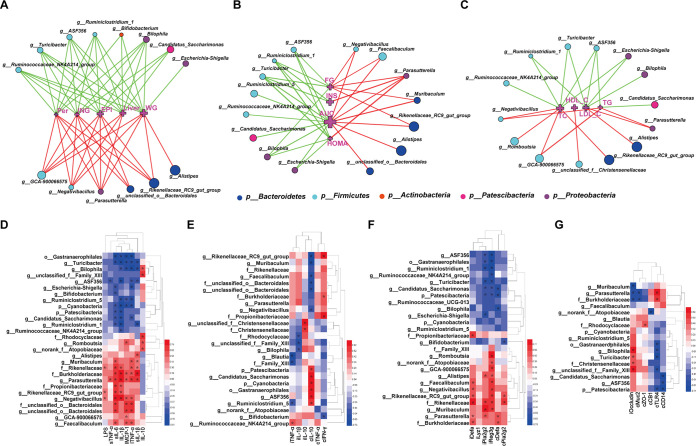
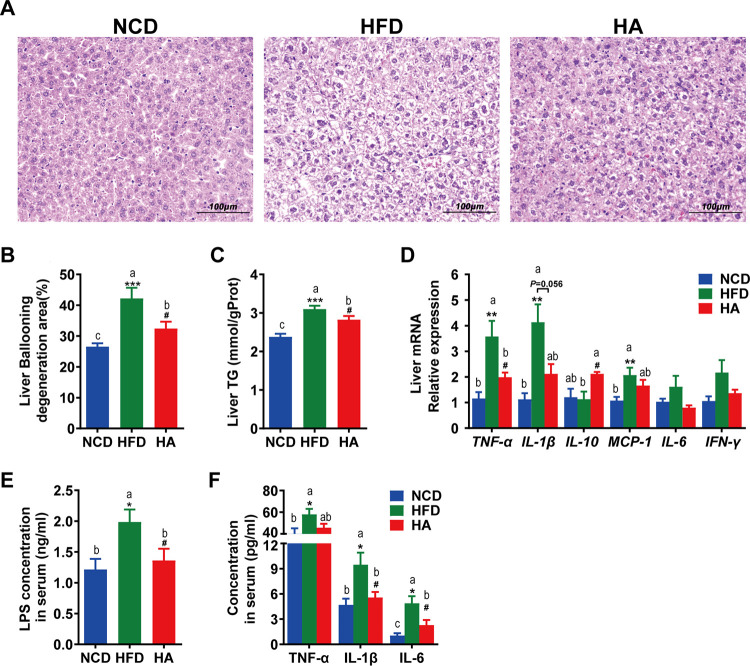
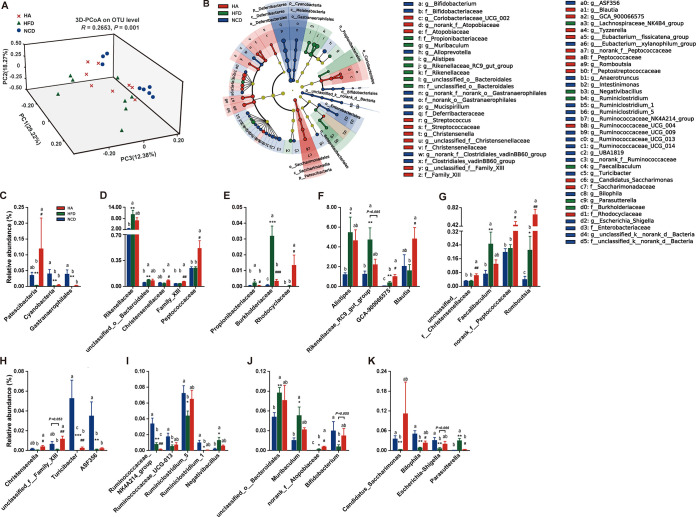
Previous studies have shown that α-linolenic acid (ALA) has a significant regulatory effect on related disorders induced by high-fat diets (HFDs), but little is known regarding the correlation between the gut microbiota and disease-related multitissue homeostasis. We systematically investigated the effects of ALA on the body composition, glucose homeostasis, hyperlipidemia, metabolic endotoxemia and systemic inflammation, white adipose tissue (WAT) homeostasis, liver homeostasis, intestinal homeostasis, and gut microbiota of mice fed an HFD (HFD mice). We found that ALA improved HFD-induced multitissue metabolic disorders and gut microbiota disorders to various degrees. Importantly, we established a complex but clear network between the gut microbiota and host parameters. Several specific differential bacteria were significantly associated with improved host parameters. _RC9_gut_group and were positively correlated with HFD-induced "harmful indicators" and negatively correlated with "beneficial indicators." Intriguingly, showed a strong negative correlation with HFD-induced multitissue metabolic disorders and a significant positive correlation with most beneficial indicators, which is different from its previous characterization as a "potentially harmful genus." might be the key beneficial bacterium for ALA-improved metabolic endotoxemia, while might play an important role in ALA-improved gut barrier integrity and anti-inflammatory effects. The results suggested that the gut microbiota, especially some specific bacteria, played an important role in the process of ALA-improved multitissue homeostasis in HFD mice, and different bacteria might have different divisions of regulation. Insufficient intake of -3 polyunsaturated fatty acids is an important issue in modern Western-style diets. A large amount of evidence now suggests that a balanced intestinal microecology is considered an important part of health. Our results show that α-linolenic acid administration significantly improved the host metabolic phenotype and gut microbiota of mice fed a high-fat diet, and there was a correlation between the improved gut microbiota and metabolic phenotype. Some specific bacteria may play a unique regulatory role. Here, we have established correlation networks between gut microbiota and multitissue homeostasis, which may provide a new basis for further elucidating the relationship between the gut microbiota and host metabolism.
先前的研究表明,α-亚麻酸(ALA)对高脂饮食(HFD)诱导的相关疾病具有显著的调节作用,但关于肠道微生物群与疾病相关的多组织稳态之间的相关性知之甚少。我们系统地研究了ALA对喂食HFD的小鼠(HFD小鼠)的身体组成、葡萄糖稳态、高脂血症、代谢性内毒素血症和全身炎症、白色脂肪组织(WAT)稳态、肝脏稳态、肠道稳态和肠道微生物群的影响。我们发现ALA在不同程度上改善了HFD诱导的多组织代谢紊乱和肠道微生物群紊乱。重要的是,我们在肠道微生物群和宿主参数之间建立了一个复杂但清晰的网络。几种特定的差异细菌与改善的宿主参数显著相关。_RC9_gut_group与HFD诱导的“有害指标”呈正相关,与“有益指标”呈负相关。有趣的是,与HFD诱导的多组织代谢紊乱呈强烈负相关,与大多数有益指标呈显著正相关,这与其先前被描述为“潜在有害属”不同。可能是ALA改善代谢性内毒素血症的关键有益细菌,而可能在ALA改善肠道屏障完整性和抗炎作用中发挥重要作用。结果表明,肠道微生物群,尤其是一些特定细菌,在ALA改善HFD小鼠多组织稳态的过程中发挥了重要作用,不同细菌可能有不同的调节分工。-3多不饱和脂肪酸摄入不足是现代西式饮食中的一个重要问题。现在大量证据表明,平衡的肠道微生态被认为是健康的重要组成部分。我们的结果表明,给予α-亚麻酸显著改善了喂食高脂饮食小鼠的宿主代谢表型和肠道微生物群,并且改善的肠道微生物群与代谢表型之间存在相关性。一些特定细菌可能发挥独特的调节作用。在这里,我们建立了肠道微生物群与多组织稳态之间的相关网络,这可能为进一步阐明肠道微生物群与宿主代谢之间的关系提供新的基础。