Department of Microbiology and Molecular Genetics, McGovern Medical School, The University of Texas Health Science Center at Houston, Houston, Texas, USA.
MD Anderson Cancer Center UTHealth Graduate School of Biomedical Sciences, Houston, Texas, USA.
mBio. 2020 Nov 3;11(6):e02123-20. doi: 10.1128/mBio.02123-20.
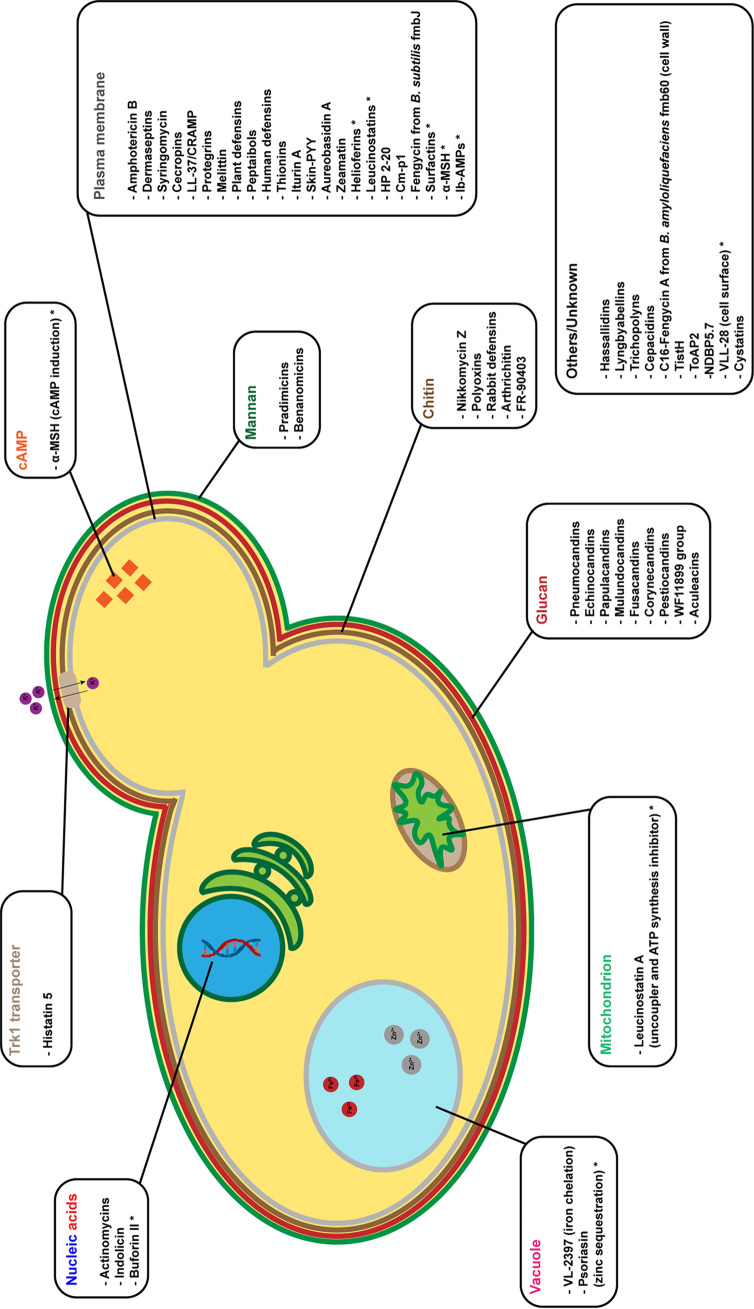
Invasive fungal infections in humans are generally associated with high mortality, making the choice of antifungal drug crucial for the outcome of the patient. The limited spectrum of antifungals available and the development of drug resistance represent the main concerns for the current antifungal treatments, requiring alternative strategies. Antimicrobial peptides (AMPs), expressed in several organisms and used as first-line defenses against microbial infections, have emerged as potential candidates for developing new antifungal therapies, characterized by negligible host toxicity and low resistance rates. Most of the current literature focuses on peptides with antibacterial activity, but there are fewer studies of their antifungal properties. This review focuses on AMPs with antifungal effects, including their and activities, with the biological repercussions on the fungal cells, when known. The classification of the peptides is based on their mode of action: although the majority of AMPs exert their activity through the interaction with membranes, other mechanisms have been identified, including cell wall inhibition and nucleic acid binding. In addition, antifungal compounds with unknown modes of action are also described. The elucidation of such mechanisms can be useful to identify novel drug targets and, possibly, to serve as the templates for the synthesis of new antimicrobial compounds with increased activity and reduced host toxicity.
人体真菌感染通常与高死亡率相关,因此抗真菌药物的选择对患者的预后至关重要。现有抗真菌药物的作用范围有限,且耐药性的出现是当前抗真菌治疗的主要关注点,这需要替代策略。抗菌肽(AMPs)在多种生物体中表达,并被用作抵御微生物感染的第一道防线,已成为开发新的抗真菌疗法的潜在候选物,其具有宿主毒性低和耐药率低的特点。目前的大部分文献都集中在具有抗菌活性的肽上,但对其抗真菌特性的研究较少。本文重点介绍了具有抗真菌作用的 AMPs,包括它们的杀菌和抑菌活性,以及已知的对真菌细胞的生物学影响。肽的分类基于其作用模式:尽管大多数 AMP 通过与膜相互作用发挥其活性,但已经确定了其他机制,包括细胞壁抑制和核酸结合。此外,还描述了具有未知作用模式的抗真菌化合物。阐明这些机制有助于确定新的药物靶点,并可能为合成具有更高活性和更低宿主毒性的新型抗菌化合物提供模板。