Institute for Maternal and Child Health, IRCCS Burlo Garofolo, Trieste, Italy.
Institute for Maternal and Child Health, IRCCS Burlo Garofolo, Trieste, Italy.
Clin Microbiol Infect. 2021 Jan;27(1):36-46. doi: 10.1016/j.cmi.2020.10.007. Epub 2020 Nov 2.
Previous outbreaks of severe acute respiratory syndrome coronavirus 1 (SARS-CoV-1) and Middle East respiratory syndrome coronavirus (MERS-CoV) have been associated with unfavourable pregnancy outcomes. SARS-CoV-2 belongs to the human coronavirus family, and since this infection shows a pandemic trend it will involve many pregnant women.
This systematic review and meta-analysis aimed to assess the impact of coronavirus disease 19 (COVID-19) on maternal and neonatal outcomes.
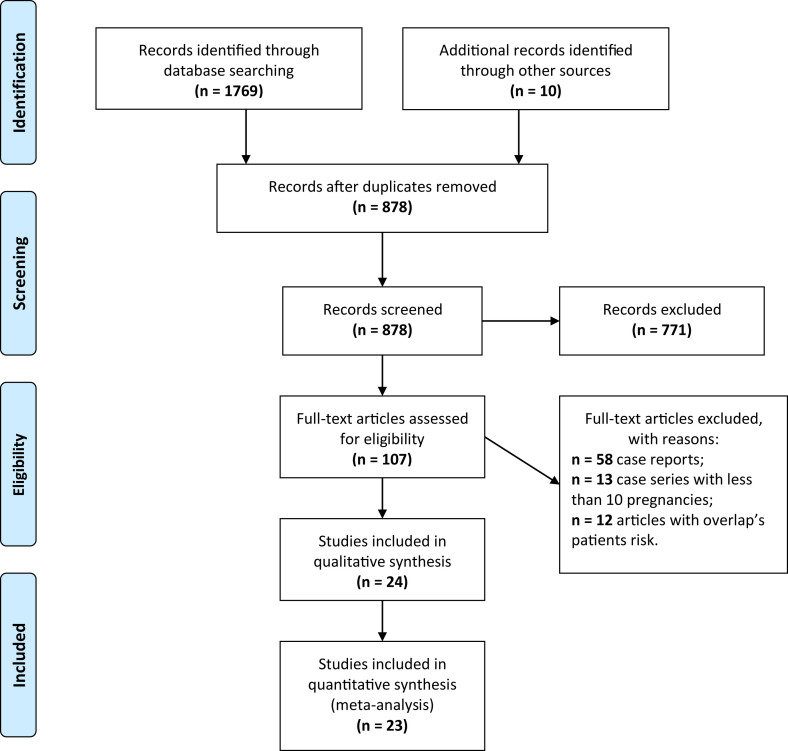
PubMed, EMBASE, MedRxiv, Scholar, Scopus, and Web of Science databases were searched up to 8th May 2020. Articles focusing on pregnancy and perinatal outcomes of COVID-19 were eligible. Participants were pregnant women with COVID-19.
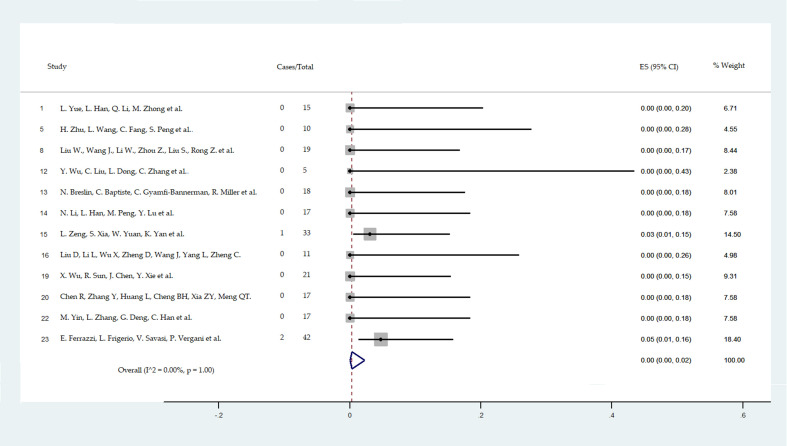
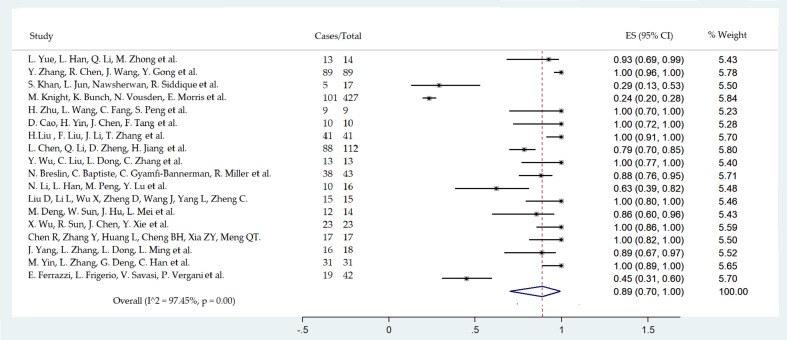
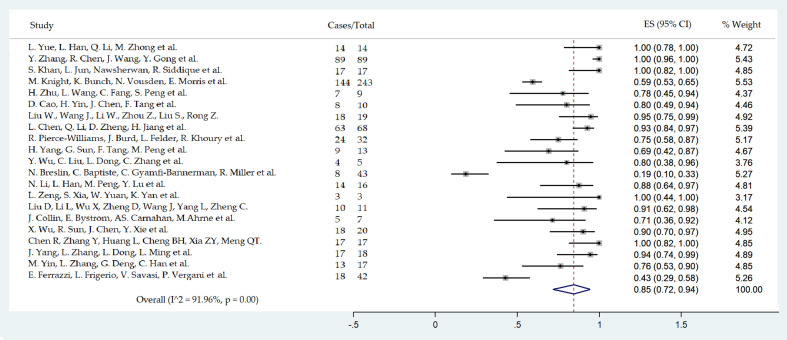
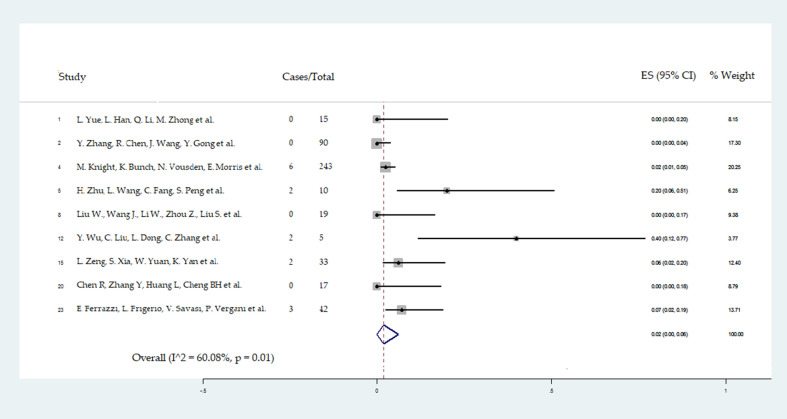
The meta-analysis was conducted following the PRISMA and MOOSE reporting guidelines. Bias risk was assessed using the Joanna Briggs Institute (JBI) manual. The protocol was registered with PROSPERO (CRD42042020184752). Twenty-four articles, including 1100 pregnancies, were selected. The pooled prevalence of pneumonia was 89% (95%CI 70-100), while the prevalence of women admitted to the intensive care unit was 8% (95%CI 1-20). Three stillbirths and five maternal deaths were reported. A pooled prevalence of 85% (95%CI 72-94) was observed for caesarean deliveries. There were three neonatal deaths. The prevalence of COVID-19-related admission to the neonatal intensive care unit was 2% (95%CI 0-6). Nineteen out of 444 neonates were positive for SARS-CoV-2 RNA at birth. Elevated levels of IgM and IgG Serum antibodies were reported in one case, but negative swab.
Although adverse outcomes such as ICU admission or patient death can occur, the clinical course of COVID-19 in most women is not severe, and the infection does not significantly influence the pregnancy. A high caesarean delivery rate is reported, but there is no clinical evidence supporting this mode of delivery. Indeed, in most cases the disease does not threaten the mother, and vertical transmission has not been clearly demonstrated. Therefore, COVID-19 should not be considered as an indication for elective caesarean section.
严重急性呼吸综合征冠状病毒 1(SARS-CoV-1)和中东呼吸综合征冠状病毒(MERS-CoV)的先前暴发与不良妊娠结局有关。SARS-CoV-2 属于人类冠状病毒家族,由于这种感染呈大流行趋势,将涉及许多孕妇。
本系统评价和荟萃分析旨在评估 2019 年冠状病毒病(COVID-19)对产妇和新生儿结局的影响。
截至 2020 年 5 月 8 日,检索了 PubMed、EMBASE、MedRxiv、Scholar、Scopus 和 Web of Science 数据库。符合条件的文章重点关注 COVID-19 的妊娠和围产期结局。研究对象为患有 COVID-19 的孕妇。
该荟萃分析遵循 PRISMA 和 MOOSE 报告指南进行。使用 Joanna Briggs 研究所(JBI)手册评估偏倚风险。该方案已在 PROSPERO(CRD42042020184752)中注册。纳入了 24 篇文章,共 1100 例妊娠。肺炎的汇总患病率为 89%(95%CI 70-100),而入住重症监护病房的女性患病率为 8%(95%CI 1-20)。报告了 3 例死产和 5 例产妇死亡。剖宫产的汇总患病率为 85%(95%CI 72-94)。有 3 例新生儿死亡。COVID-19 相关新生儿入住新生儿重症监护病房的患病率为 2%(95%CI 0-6)。444 名新生儿中有 19 名在出生时 SARS-CoV-2 RNA 呈阳性。有 1 例报告血清 IgM 和 IgG 抗体水平升高,但拭子检测结果为阴性。
尽管可能会发生 ICU 入院或患者死亡等不良结局,但大多数女性的 COVID-19 临床病程并不严重,感染并未显著影响妊娠。报告剖宫产率较高,但没有临床证据支持这种分娩方式。事实上,在大多数情况下,疾病不会威胁到母亲,垂直传播也未得到明确证实。因此,COVID-19 不应被视为选择性剖宫产的指征。