Kong Hyewon, Reczek Colleen R, McElroy Gregory S, Steinert Elizabeth M, Wang Tim, Sabatini David M, Chandel Navdeep S
Department of Medicine, Northwestern University Feinberg School of Medicine, Chicago, IL 60611, USA.
Janelia Research Campus, Howard Hughes Medical Institute, Ashburn, VA 20147, USA.
Sci Adv. 2020 Nov 4;6(45). doi: 10.1126/sciadv.abb7272. Print 2020 Nov.
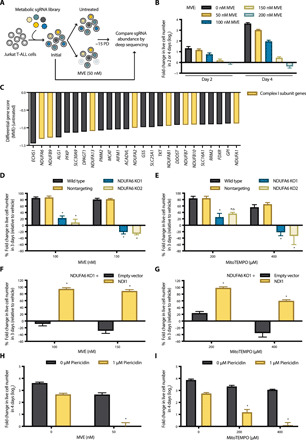
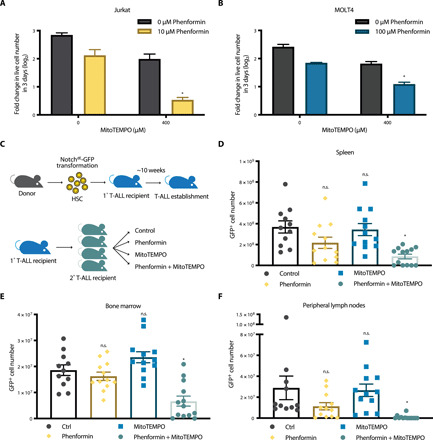
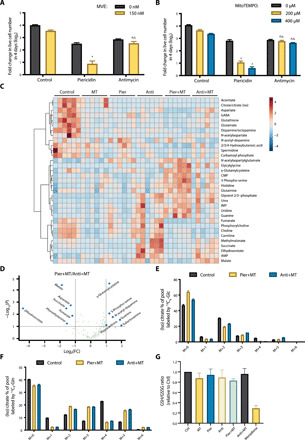
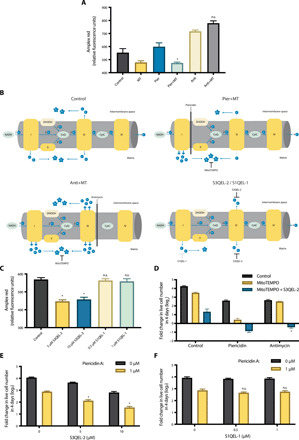
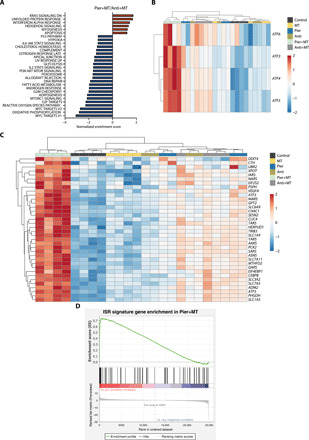
Mitochondria-derived reactive oxygen species (mROS) are required for the survival, proliferation, and metastasis of cancer cells. The mechanism by which mitochondrial metabolism regulates mROS levels to support cancer cells is not fully understood. To address this, we conducted a metabolism-focused CRISPR-Cas9 genetic screen and uncovered that loss of genes encoding subunits of mitochondrial complex I was deleterious in the presence of the mitochondria-targeted antioxidant mito-vitamin E (MVE). Genetic or pharmacologic inhibition of mitochondrial complex I in combination with the mitochondria-targeted antioxidants, MVE or MitoTEMPO, induced a robust integrated stress response (ISR) and markedly diminished cell survival and proliferation in vitro. This was not observed following inhibition of mitochondrial complex III. Administration of MitoTEMPO in combination with the mitochondrial complex I inhibitor phenformin decreased the leukemic burden in a mouse model of T cell acute lymphoblastic leukemia. Thus, mitochondrial complex I is a dominant metabolic determinant of mROS-dependent cellular fitness.
线粒体衍生的活性氧(mROS)是癌细胞存活、增殖和转移所必需的。线粒体代谢调节mROS水平以支持癌细胞的机制尚未完全了解。为了解决这个问题,我们进行了一项以代谢为重点的CRISPR-Cas9基因筛选,发现编码线粒体复合体I亚基的基因缺失在存在线粒体靶向抗氧化剂线粒体维生素E(MVE)的情况下是有害的。线粒体复合体I的基因或药理学抑制与线粒体靶向抗氧化剂MVE或MitoTEMPO联合使用,可诱导强烈的综合应激反应(ISR),并在体外显著降低细胞存活和增殖。抑制线粒体复合体III后未观察到这种情况。MitoTEMPO与线粒体复合体I抑制剂苯乙双胍联合给药可降低T细胞急性淋巴细胞白血病小鼠模型中的白血病负担。因此,线粒体复合体I是mROS依赖性细胞适应性的主要代谢决定因素。