Laboratory of Neural Development and Optical Recording (NDEVOR), Division of Physiology, Department of Molecular Medicine, University of Oslo, Blindern, 1105, Oslo, Norway.
Sci Rep. 2020 Nov 4;10(1):19027. doi: 10.1038/s41598-020-75835-7.
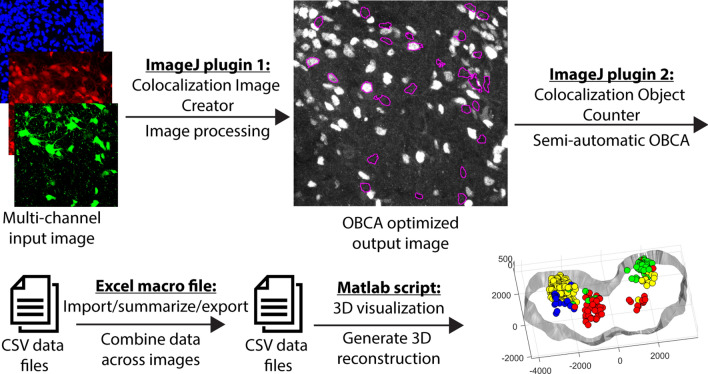
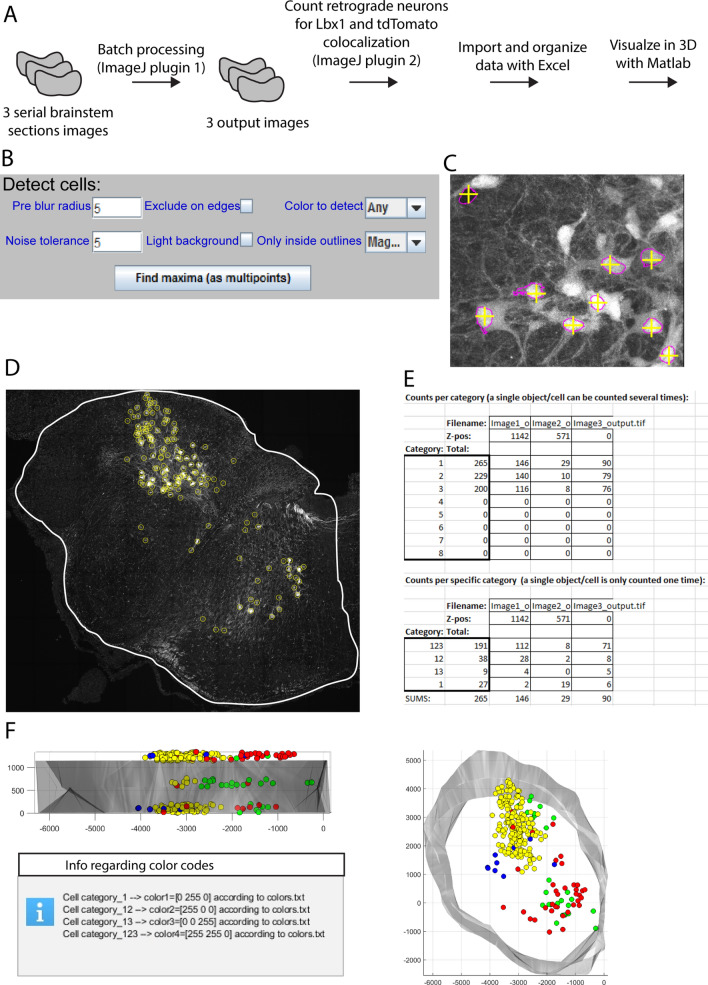
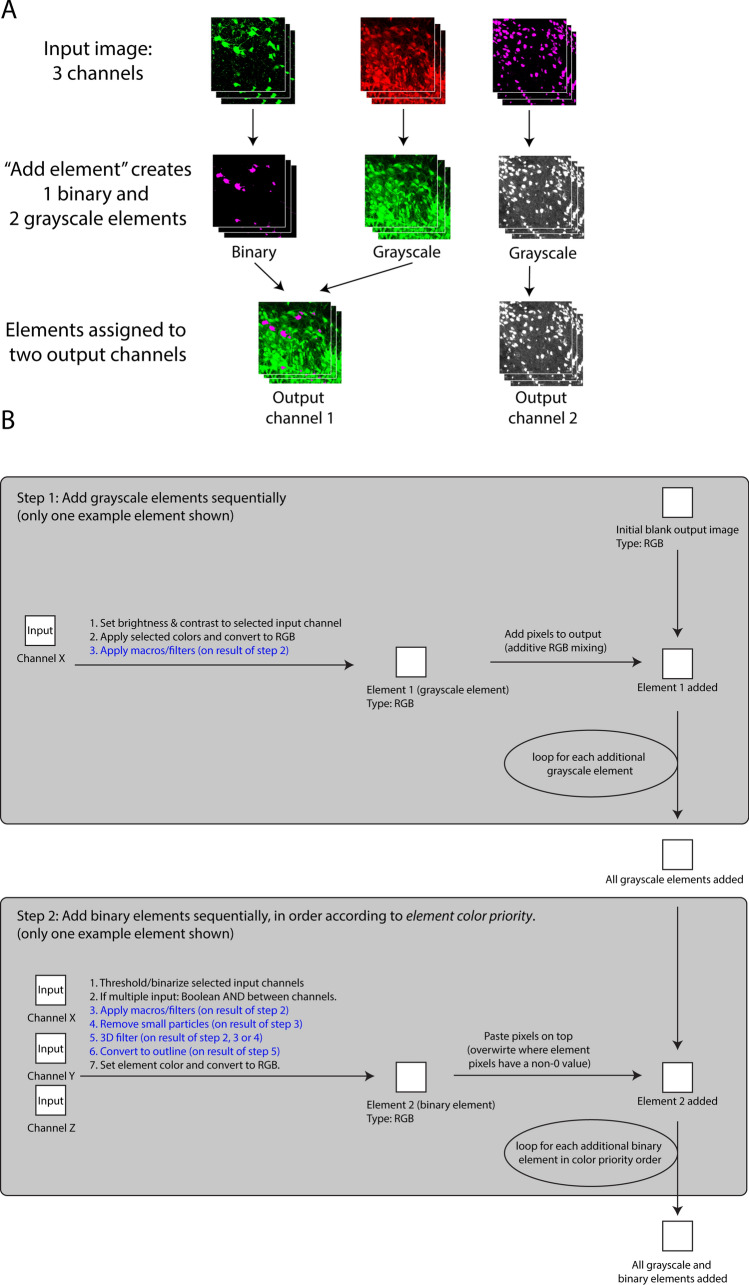
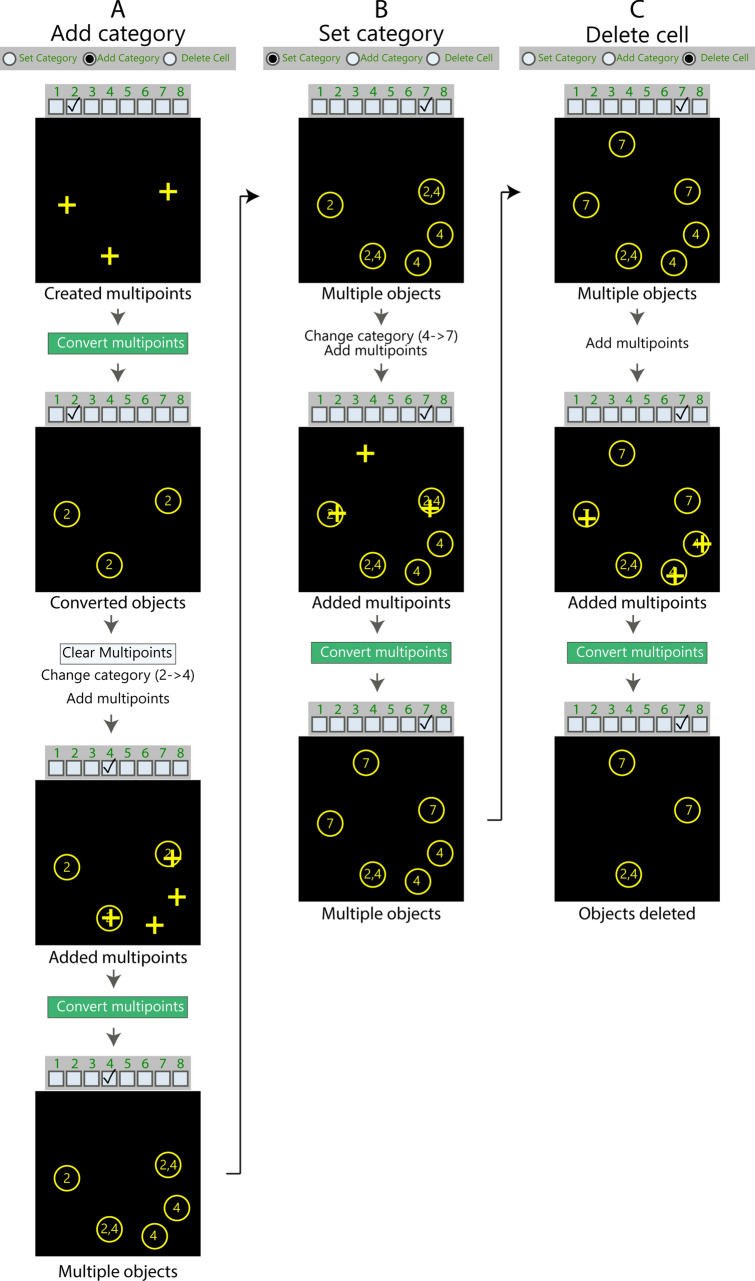
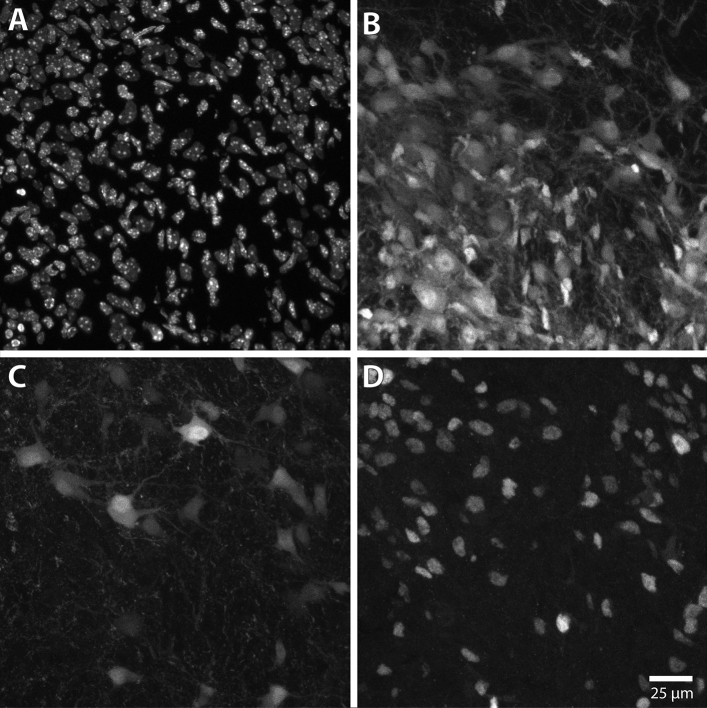
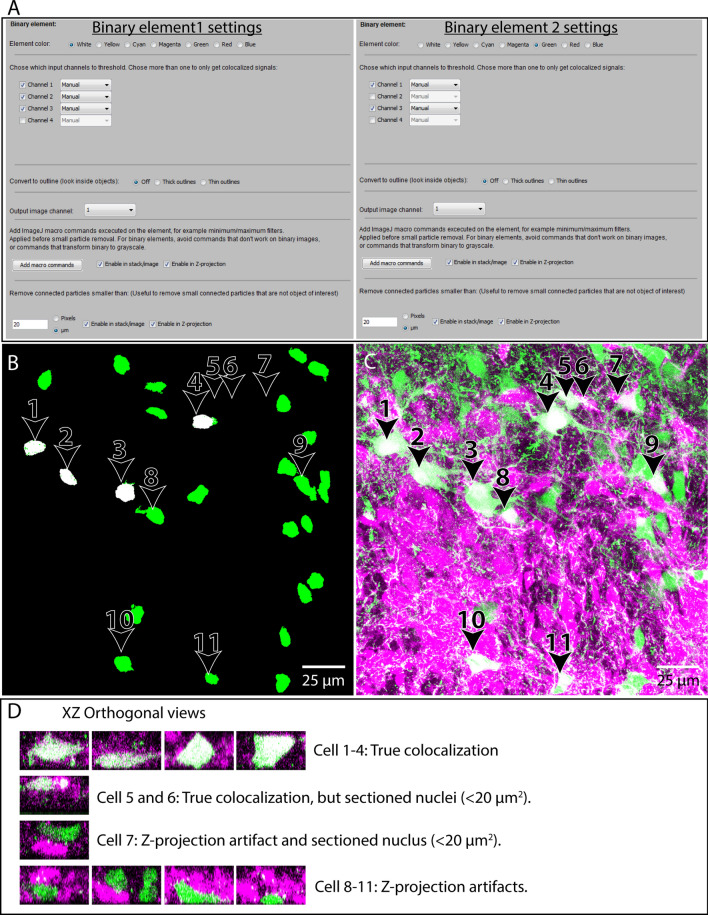
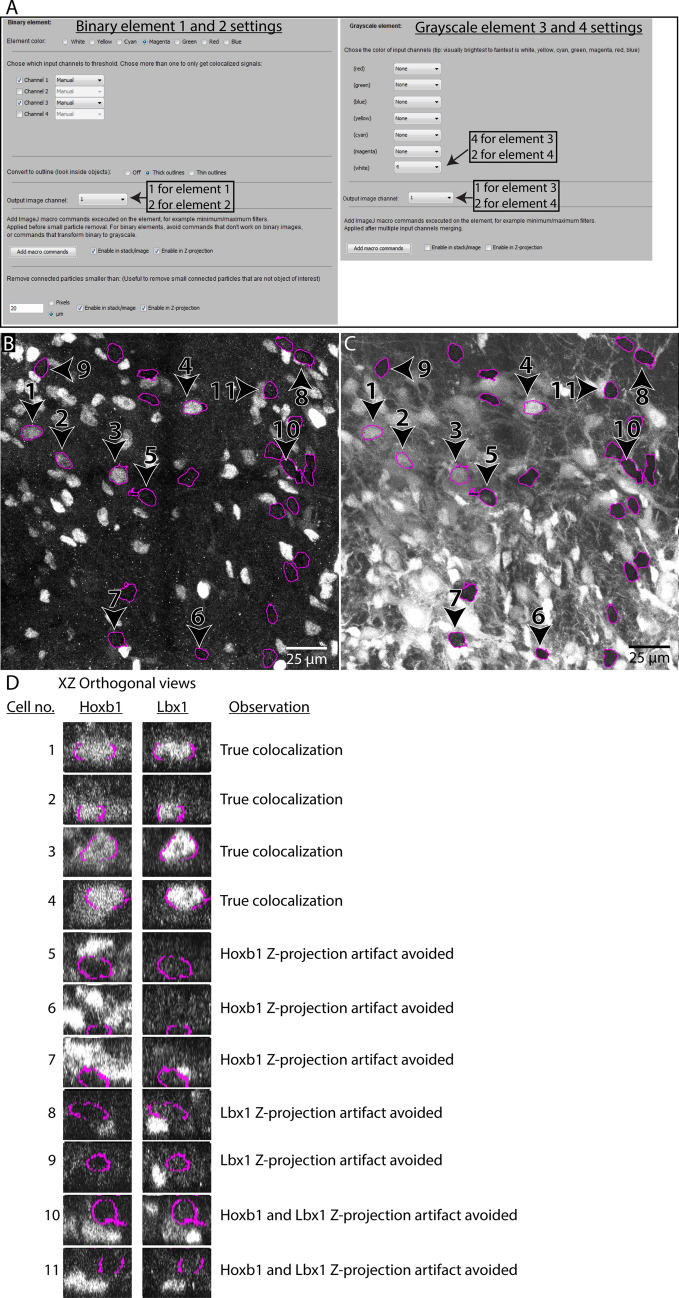
Differential fluorescence labeling and multi-fluorescence imaging followed by colocalization analysis is commonly used to investigate cellular heterogeneity in situ. This is particularly important when investigating the biology of tissues with diverse cell types. Object-based colocalization analysis (OBCA) tools can employ automatic approaches, which are sensitive to errors in cell segmentation, or manual approaches, which can be impractical and tedious. Here, we present a novel set of tools for OBCA using a semi-automatic approach, consisting of two ImageJ plugins, a Microsoft Excel macro, and a MATLAB script. One ImageJ plugin enables customizable processing of multichannel 3D images for enhanced visualization of features relevant to OBCA, and another enables semi-automatic colocalization quantification. The Excel macro and the MATLAB script enable data organization and 3D visualization of object data across image series. The tools are well suited for experiments involving complex and large image data sets, and can be used in combination or as individual components, allowing flexible, efficient and accurate OBCA. Here we demonstrate their utility in immunohistochemical analyses of the developing central nervous system, which is characterized by complexity in the number and distribution of cell types, and by high cell packing densities, which can both create challenging situations for OBCA.
差异荧光标记和多荧光成像后进行共定位分析通常用于原位研究细胞异质性。当研究具有多种细胞类型的组织生物学时,这一点尤为重要。基于对象的共定位分析(OBCA)工具可以采用自动方法,这些方法容易受到细胞分割错误的影响,也可以采用手动方法,但手动方法不切实际且繁琐。在这里,我们提出了一种使用半自动方法的新型 OBCA 工具集,包括两个 ImageJ 插件、一个 Microsoft Excel 宏和一个 MATLAB 脚本。一个 ImageJ 插件可用于对多通道 3D 图像进行可定制的处理,以增强与 OBCA 相关的特征的可视化效果,另一个插件则可用于半自动共定位定量。Excel 宏和 MATLAB 脚本可用于在图像系列之间组织和可视化对象数据。这些工具非常适合涉及复杂和大型图像数据集的实验,可以组合使用或作为单独的组件,从而实现灵活、高效和准确的 OBCA。在这里,我们展示了它们在发育中的中枢神经系统免疫组织化学分析中的应用,该系统的特点是细胞类型的数量和分布复杂,细胞密度高,这两者都会给 OBCA 带来挑战。