Feng Ling, Chen Haishan, Chen Jianhui, Xiong Chongxiang, Shao Xiaofei, Wang Xin, Ning Jing, Xiang Zhicong, Wang Xuan, Chen Tong, Xiao Hua, Tang Hongjuan, Li Xiaolin, Hong Guobao, Zou Hequn
Department of Nephrology, The Third Affiliated Hospital, Southern Medical University, Guangzhou 510630, People's Republic of China.
Diabetes Metab Syndr Obes. 2020 Oct 27;13:4007-4015. doi: 10.2147/DMSO.S270276. eCollection 2020.
To explore whether the red blood cell count multiplied by hematocrit index (RBCHct) in blood routine parameters can indicate the risk of impaired fasting blood glucose (IFG), and whether it is related to insulin resistance and inflammation.
In this cross-sectional study, previous history of diabetes was excluded, and people with normal and impaired IFG were included. We use Spearman analysis to evaluate the correlation between RBCHct index and fasting plasma glucose, insulin resistance homeostasis model assessment (HOMA-IR), and hypersensitive C-reactive protein (hs-CRP). Binary logistic regression analysis was used to evaluate the RBCHct index for assessing the potential risk of IFG, and the receiver operating characteristic (ROC) curve was used to evaluate the RBCHct index for diagnosing insulin resistance and chronic low-grade inflammatory efficacy among those with IFG.
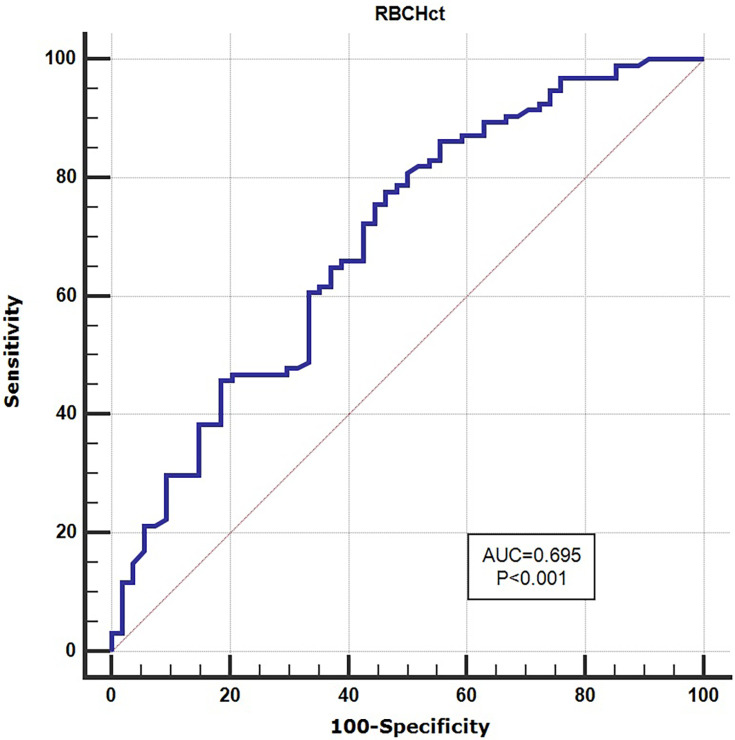
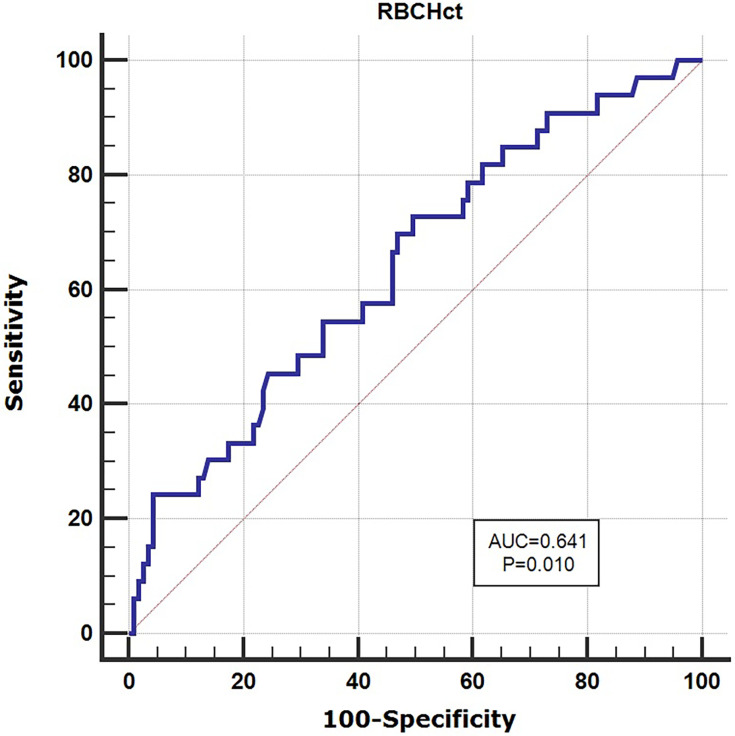
Correlation analysis showed that the RBCHct index and fasting plasma glucose (r=0.088, P=0.003); HOMA-IR (r=0.199, P<0.001); and hs-CRP (r=0.097, P=0.001) were positively correlated. After adjusting for confounding factors, the risk of IFG in the third and fourth quartiles of the RBCHct index increased to 1.889 and 3.048 times. The area under the ROC curve of the RBCHct index for diagnosis of insulin resistance state (HOMA-IR) was 0.695 (p<0.001), and the area under the ROC curve of the RBCHct index for the diagnosis of chronic low-inflammatory state (hs-CRP) was 0.641 (P=0.010).
The RBCHct index may be a potential indicator for assessing the risk of prediabetes and is closely related to whether the body is in a state of insulin resistance and inflammation under IFG.
探讨血常规参数中的红细胞计数乘以血细胞比容指数(RBCHct)是否可提示空腹血糖受损(IFG)风险,以及是否与胰岛素抵抗和炎症相关。
在这项横断面研究中,排除既往糖尿病史,纳入IFG正常和受损者。采用Spearman分析评估RBCHct指数与空腹血糖、胰岛素抵抗稳态模型评估(HOMA-IR)及超敏C反应蛋白(hs-CRP)之间的相关性。采用二元逻辑回归分析评估RBCHct指数用于评估IFG潜在风险的情况,采用受试者工作特征(ROC)曲线评估RBCHct指数在IFG患者中诊断胰岛素抵抗和慢性低度炎症的效能。
相关性分析显示,RBCHct指数与空腹血糖(r=0.088,P=0.003)、HOMA-IR(r=0.199,P<0.001)及hs-CRP(r=0.097,P=0.001)呈正相关。校正混杂因素后,RBCHct指数第三和第四四分位数组的IFG风险分别增至1.889倍和3.048倍。RBCHct指数诊断胰岛素抵抗状态(HOMA-IR)的ROC曲线下面积为0.695(p<0.001),RBCHct指数诊断慢性低度炎症状态(hs-CRP)的ROC曲线下面积为0.641(P=0.010)。
RBCHct指数可能是评估糖尿病前期风险的潜在指标,且与IFG状态下机体是否处于胰岛素抵抗和炎症状态密切相关。