Department of Physiology and Membrane Biology, University of California Davis School of Medicine, Davis, California.
Curr Protoc Neurosci. 2020 Dec;94(1):e106. doi: 10.1002/cpns.106.
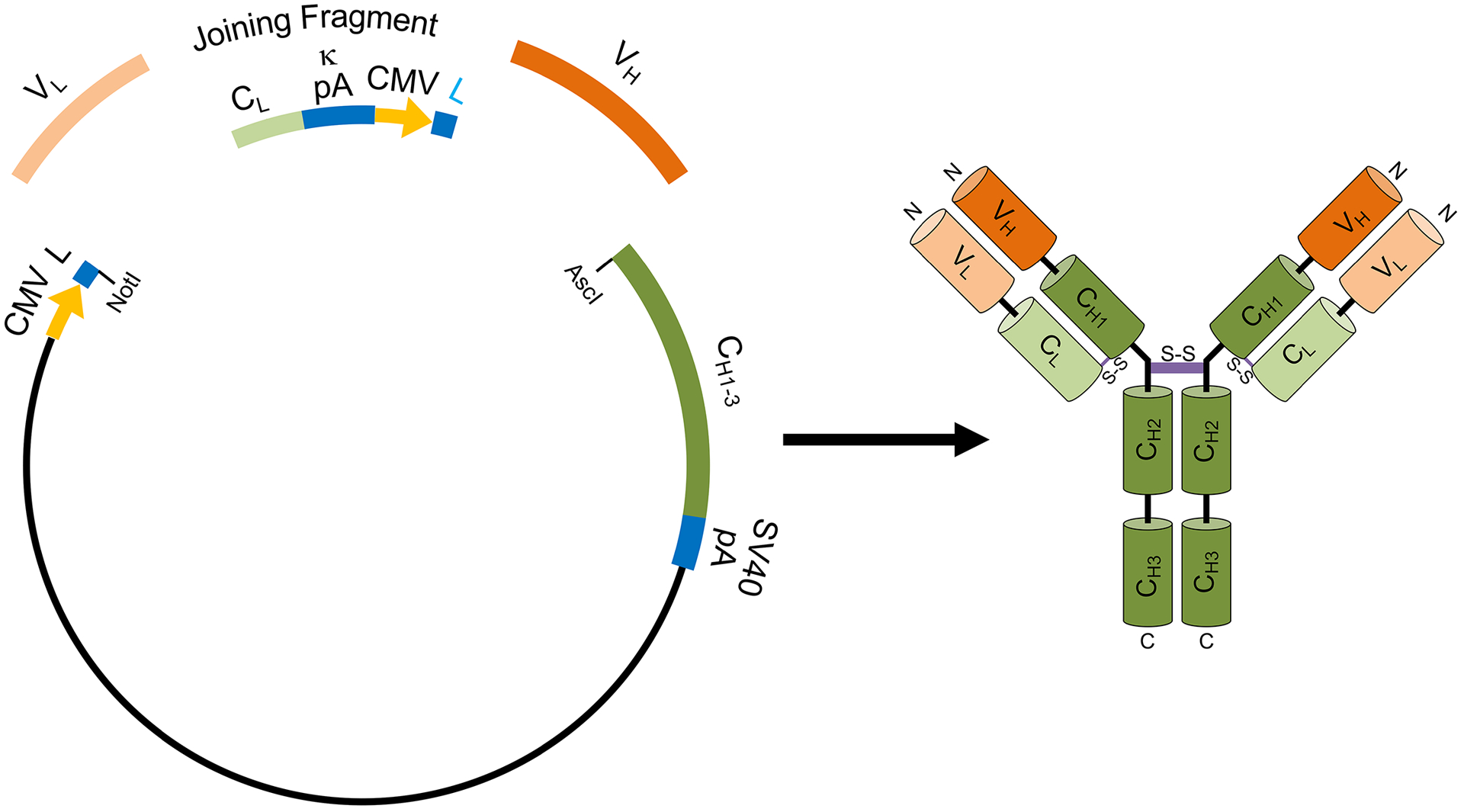
Basic neuroscience research employs antibodies as key reagents to label, capture, and modulate the function of proteins of interest. Antibodies are immunoglobulin proteins. Recombinant antibodies are immunoglobulin proteins whose nucleic acid coding regions, or fragments thereof, have been cloned into expression plasmids that allow for unlimited production. Recombinant antibodies offer many advantages over conventional antibodies including their unambiguous identification and digital archiving via DNA sequencing, reliable expression, ease and reliable distribution as DNA sequences and as plasmids, and the opportunity for numerous forms of engineering to enhance their utility. Recombinant antibodies exist in many different forms, each of which offers potential advantages and disadvantages for neuroscience research applications. I provide an overview of recombinant antibodies and their development. Examples of their emerging use as valuable reagents in basic neuroscience research are also discussed. Many of these examples employ recombinant antibodies in innovative experimental approaches that cannot be pursued with conventional antibodies. © 2020 Wiley Periodicals LLC.
基础神经科学研究采用抗体作为关键试剂来标记、捕获和调节感兴趣的蛋白质的功能。抗体是免疫球蛋白蛋白。重组抗体是免疫球蛋白蛋白,其核酸编码区或其片段已被克隆到表达质粒中,从而可以进行无限量生产。与传统抗体相比,重组抗体具有许多优势,包括通过 DNA 测序进行明确识别和数字存档、可靠表达、易于可靠地作为 DNA 序列和质粒进行分配,以及有机会进行多种形式的工程改造来增强其用途。重组抗体有许多不同的形式,每种形式都为神经科学研究应用提供了潜在的优势和劣势。我提供了重组抗体及其开发的概述。还讨论了它们作为基础神经科学研究有价值的试剂的新兴用途的例子。这些例子中的许多例子都采用了重组抗体,这些抗体采用了创新的实验方法,而传统抗体无法采用这些方法。© 2020 Wiley Periodicals LLC.