Knoebel Institute for Healthy Aging, University of Denver, Denver, CO, United States of America.
Diabetes Research Institute, University of Miami Miller School of Medicine, Miami, FL, United States of America.
PLoS One. 2020 Nov 5;15(11):e0241925. doi: 10.1371/journal.pone.0241925. eCollection 2020.
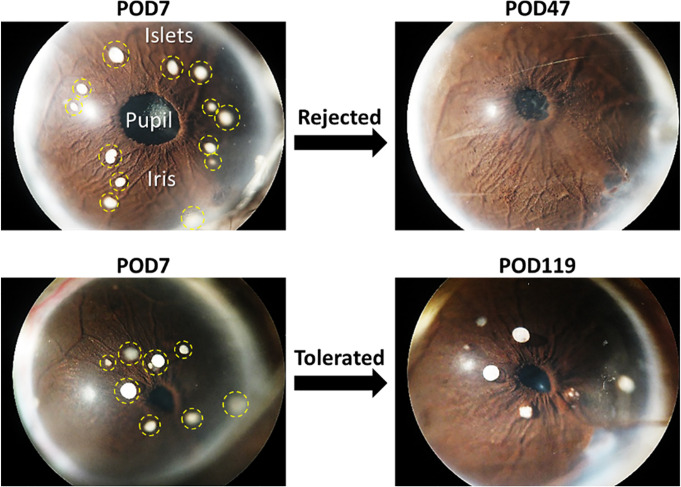
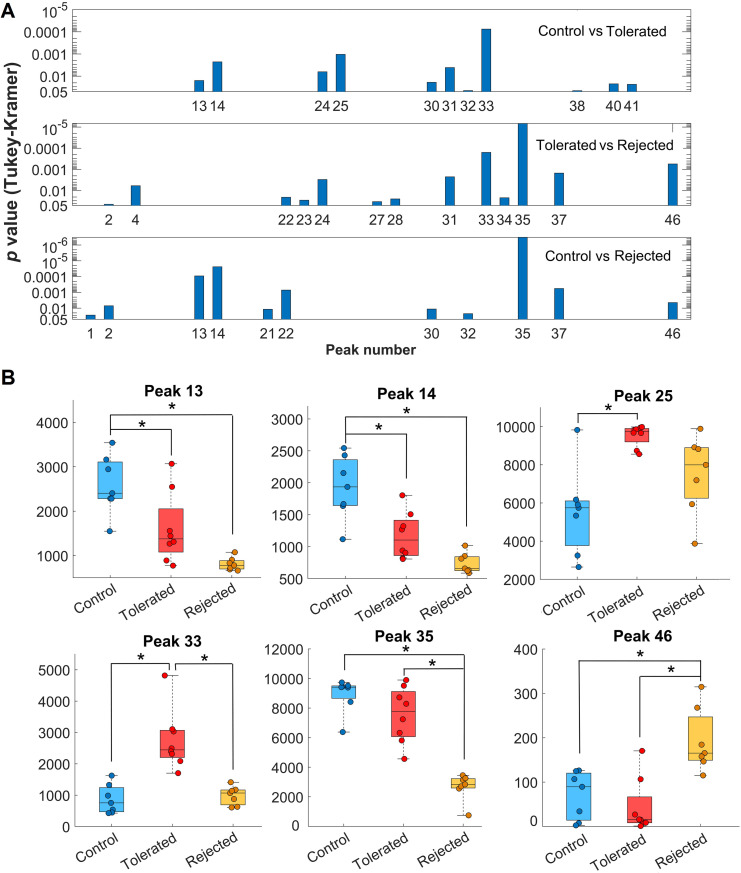
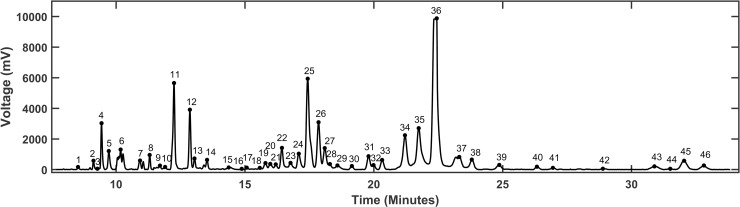
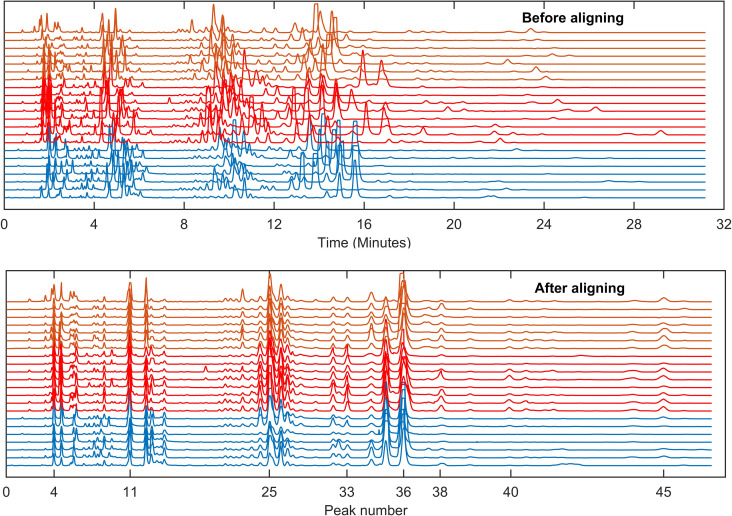
The application of artificial intelligence (AI) and machine learning (ML) in biomedical research promises to unlock new information from the vast amounts of data being generated through the delivery of healthcare and the expanding high-throughput research applications. Such information can aid medical diagnoses and reveal various unique patterns of biochemical and immune features that can serve as early disease biomarkers. In this report, we demonstrate the feasibility of using an AI/ML approach in a relatively small dataset to discriminate among three categories of samples obtained from mice that either rejected or tolerated their pancreatic islet allografts following transplant in the anterior chamber of the eye, and from naïve controls. We created a locked software based on a support vector machine (SVM) technique for pattern recognition in electropherograms (EPGs) generated by micellar electrokinetic chromatography and laser induced fluorescence detection (MEKC-LIFD). Predictions were made based only on the aligned EPGs obtained in microliter-size aqueous humor samples representative of the immediate local microenvironment of the islet allografts. The analysis identified discriminative peaks in the EPGs of the three sample categories. Our classifier software was tested with targeted and untargeted peaks. Working with the patterns of untargeted peaks (i.e., based on the whole pattern of EPGs), it was able to achieve a 21 out of 22 positive classification score with a corresponding 95.45% prediction accuracy among the three sample categories, and 100% accuracy between the rejecting and tolerant recipients. These findings demonstrate the feasibility of AI/ML approaches to classify small numbers of samples and they warrant further studies to identify the analytes/biochemicals corresponding to discriminative features as potential biomarkers of islet allograft immune rejection and tolerance.
人工智能 (AI) 和机器学习 (ML) 在生物医学研究中的应用有望从通过医疗保健交付和扩展的高通量研究应用生成的大量数据中解锁新信息。这些信息可以帮助进行医学诊断,并揭示各种独特的生化和免疫特征模式,这些模式可以作为早期疾病生物标志物。在本报告中,我们展示了在相对较小的数据集上使用 AI/ML 方法进行分类的可行性,这些数据集来自于接受胰腺胰岛同种异体移植物在眼前房移植后排斥或耐受的小鼠以及未接受处理的对照小鼠的三种样本。我们创建了一个基于支持向量机 (SVM) 技术的锁定软件,用于对胶束电动色谱和激光诱导荧光检测 (MEKC-LIFD) 生成的电泳图谱 (EPG) 进行模式识别。预测仅基于代表胰岛同种异体移植物局部微环境的微升尺寸房水样本中获得的对齐 EPG 进行。该分析确定了三种样本类别 EPG 中的有区别的峰。我们的分类器软件经过了靶向和非靶向峰的测试。使用非靶向峰的模式(即基于整个 EPG 模式),它能够在三个样本类别中实现 22 个中的 21 个阳性分类评分,对应的预测准确率为 95.45%,在排斥和耐受接受者之间的准确率为 100%。这些发现证明了 AI/ML 方法对少量样本进行分类的可行性,并且需要进一步研究以确定对应于区分特征的分析物/生化物质,作为胰岛同种异体移植物免疫排斥和耐受的潜在生物标志物。