Jacobsen Laura M, Haller Michael J, Schatz Desmond A
Division of Endocrinology, Department of Pediatrics, University of Florida, Gainesville, FL, United States.
Front Endocrinol (Lausanne). 2018 Mar 6;9:70. doi: 10.3389/fendo.2018.00070. eCollection 2018.
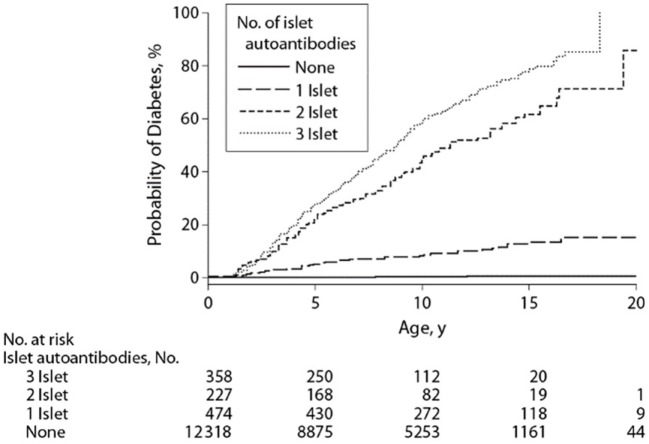
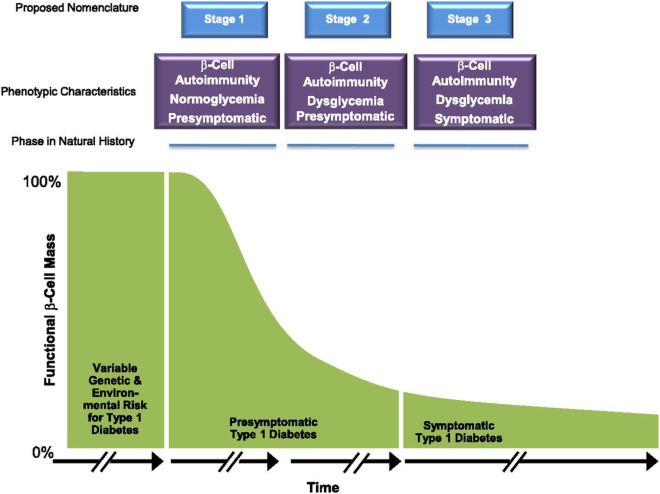
While the incidence of type 1 diabetes continues to rise by 3% each year, the ability to prevent this disease remains elusive. Hybrid closed loop devices, artificial pancreas systems, and continuous glucose monitoring technology have helped to ease the daily burden for many people living with type 1 diabetes. However, the artificial pancreas is not a cure; more research is needed to achieve our ultimate goal of preventing type 1 diabetes. The preceding decades have generated a wealth of information regarding the natural history of pre-type 1 diabetes. Islet autoimmunity in the form of multiple autoantibodies is known to be highly predictive of progression to disease. Staging systems have been devised to better characterize pre-type 1, direct mechanistic understanding of disease, and guide the design of prevention studies. However, there are no evidence-based recommendations for practitioners caring for autoantibody patients other than to encourage enrollment in research studies. Close monitoring of high-risk patients in natural history studies markedly reduces diabetic ketoacidosis rates at diagnosis and research participation is critical to finding a means of preventing type 1 diabetes. The discovery of an effective preventative strategy for type 1 diabetes will justify universal risk screening for all children.
虽然1型糖尿病的发病率每年持续上升3%,但预防这种疾病的能力仍然难以实现。混合闭环设备、人工胰腺系统和持续血糖监测技术有助于减轻许多1型糖尿病患者的日常负担。然而,人工胰腺并不能治愈该病;需要更多研究来实现我们预防1型糖尿病的最终目标。在过去几十年里,已经产生了大量关于1型糖尿病前期自然史的信息。已知多种自身抗体形式的胰岛自身免疫对疾病进展具有高度预测性。已经设计了分期系统,以更好地描述1型糖尿病前期特征、直接了解疾病机制并指导预防研究的设计。然而,除了鼓励自身抗体阳性患者参与研究外,对于照顾这些患者的从业者,并没有基于证据的建议。在自然史研究中对高危患者进行密切监测,可显著降低诊断时糖尿病酮症酸中毒的发生率,而参与研究对于找到预防1型糖尿病的方法至关重要。发现一种有效的1型糖尿病预防策略将证明对所有儿童进行普遍风险筛查是合理的。