Department of Civil and Environmental Engineering, New Jersey Institute of Technology, Newark, NJ 07102, USA.
Princeton University, Princeton, NJ 08544, USA.
Int J Environ Res Public Health. 2020 Nov 3;17(21):8117. doi: 10.3390/ijerph17218117.
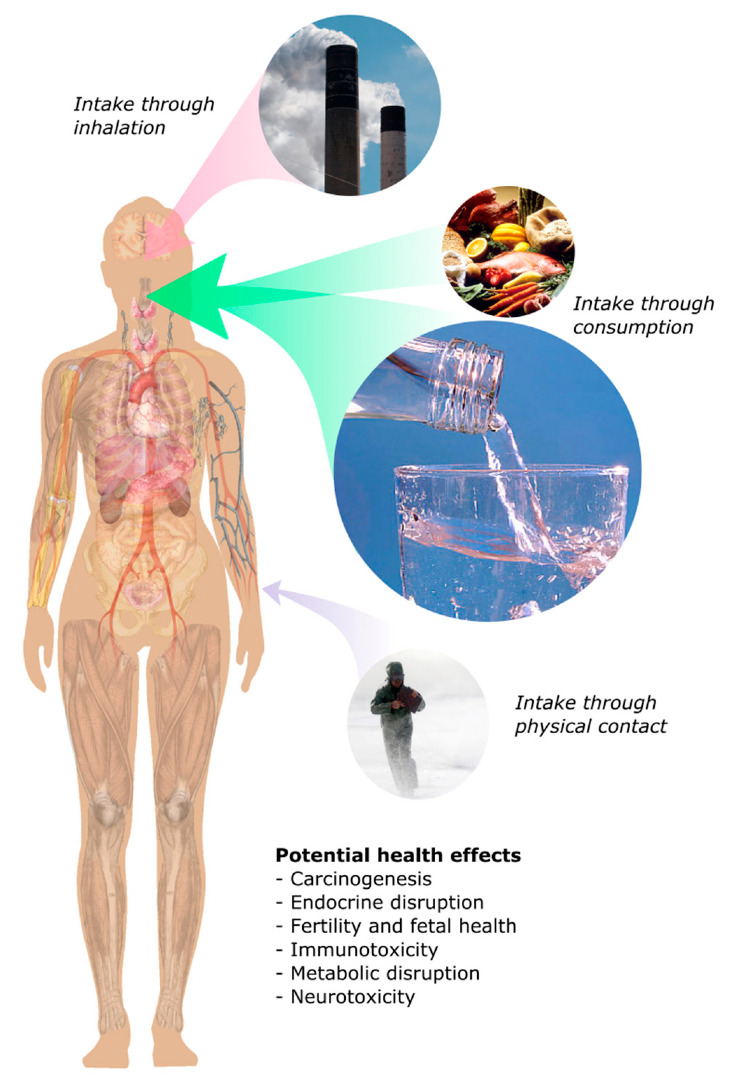
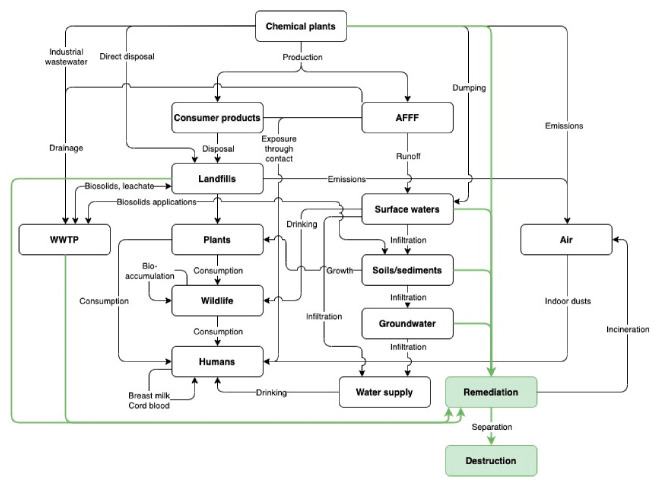
Per- and polyfluoroalkyl substances (PFAS) are pollutants that have demonstrated a high level of environmental persistence and are very difficult to remediate. As the body of literature on their environmental effects has increased, so has regulatory and research scrutiny. The widespread usage of PFAS in industrial applications and consumer products, complicated by their environmental release, mobility, fate, and transport, have resulted in multiple exposure routes for humans. Furthermore, low screening levels and stringent regulatory standards that vary by state introduce considerable uncertainty and potential costs in the environmental management of PFAS. The recalcitrant nature of PFAS render their removal difficult, but existing and emerging technologies can be leveraged to destroy or sequester PFAS in a variety of environmental matrices. Additionally, new research on PFAS remediation technologies has emerged to address the efficiency, costs, and other shortcomings of existing remediation methods. Further research on the impact of field parameters such as secondary water quality effects, the presence of co-contaminants and emerging PFAS, reaction mechanisms, defluorination yields, and the decomposition products of treatment technologies is needed to fully evaluate these emerging technologies, and industry attention should focus on treatment train approaches to improve efficiency and reduce the cost of treatment.
全氟和多氟烷基物质(PFAS)是一种污染物,具有很强的环境持久性,极难修复。随着关于其环境影响的文献数量不断增加,监管和研究也越来越严格。PFAS 在工业应用和消费产品中的广泛使用,加上其在环境中的释放、迁移、归宿和传输,使得人类有多种暴露途径。此外,各州之间存在的低筛查水平和严格的监管标准,给 PFAS 的环境管理带来了相当大的不确定性和潜在成本。PFAS 的顽固性质使其难以去除,但现有的和新兴的技术可以用来破坏或隔离各种环境基质中的 PFAS。此外,针对现有修复方法的效率、成本和其他缺点,新的 PFAS 修复技术研究也已经出现。需要进一步研究现场参数的影响,如二次水质影响、共存污染物和新兴 PFAS 的存在、反应机制、脱氟产率以及处理技术的分解产物,以充分评估这些新兴技术,行业应关注处理链方法,以提高效率并降低处理成本。