Duke University Medical Center, Division of Hematopathology and Department of Pathology, Durham, North Carolina.
Department of Hematology, The First Affiliated Hospital of Xiamen University and Institute of Hematology, School of Medicine, Xiamen University, Xiamen, Fujian, China.
Mol Cancer Res. 2021 Feb;19(2):249-260. doi: 10.1158/1541-7786.MCR-20-0466. Epub 2020 Nov 5.
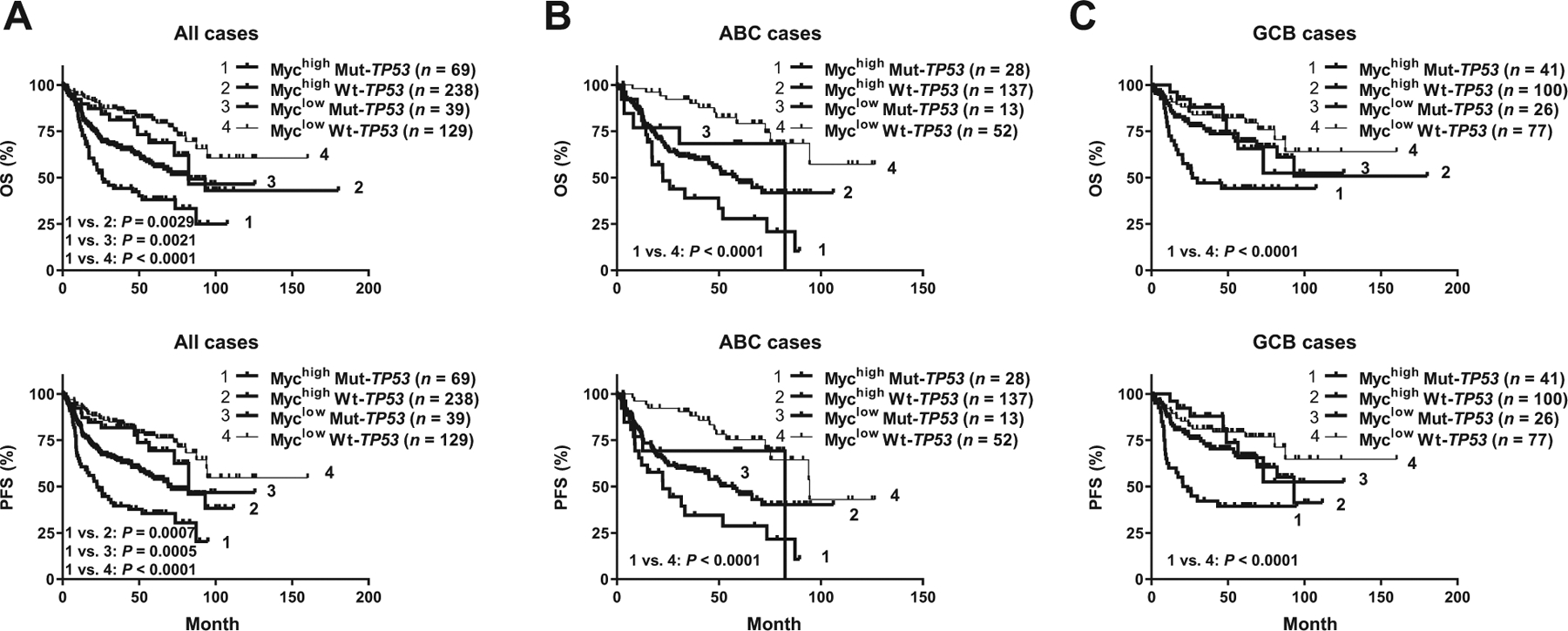
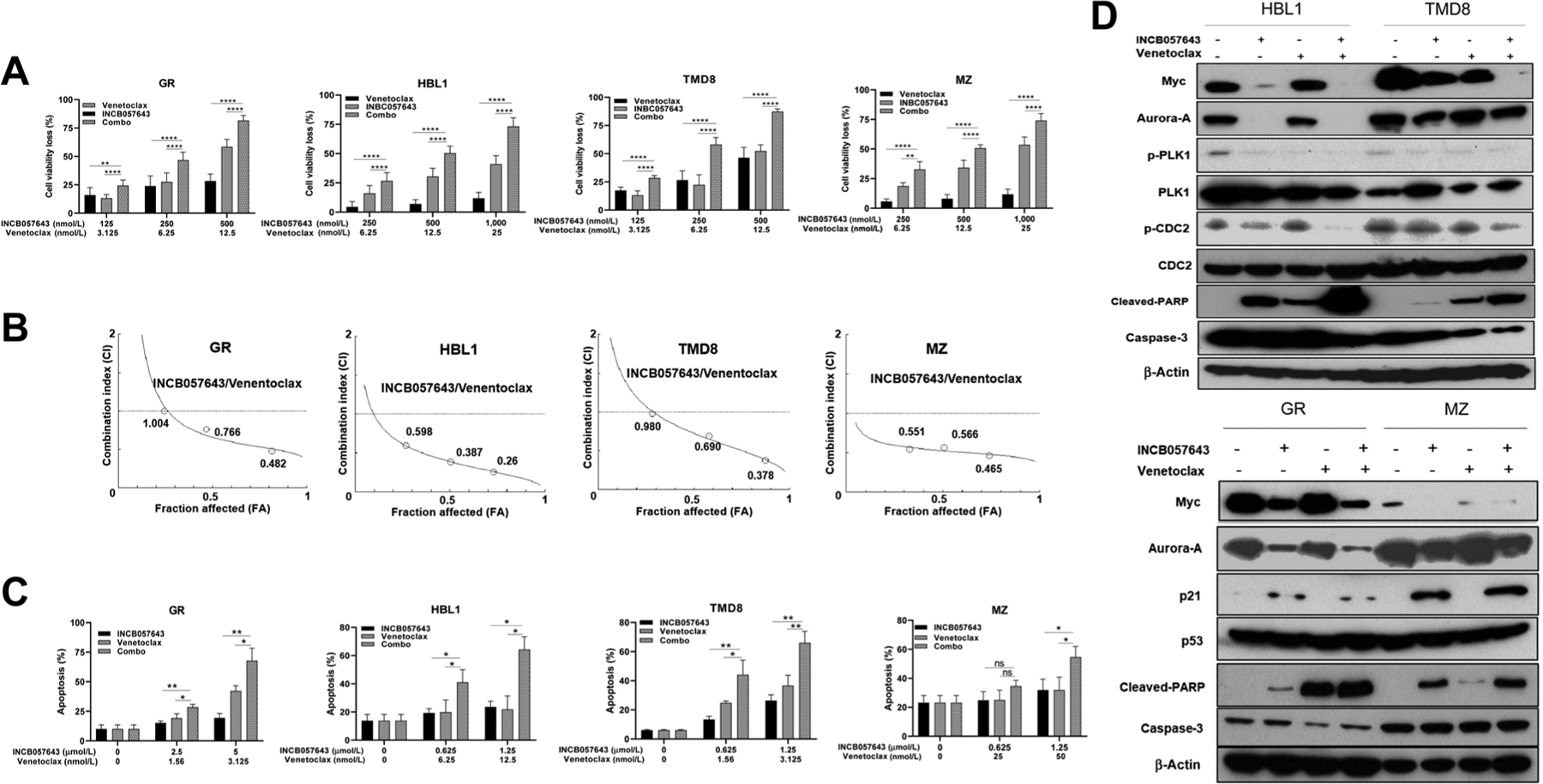
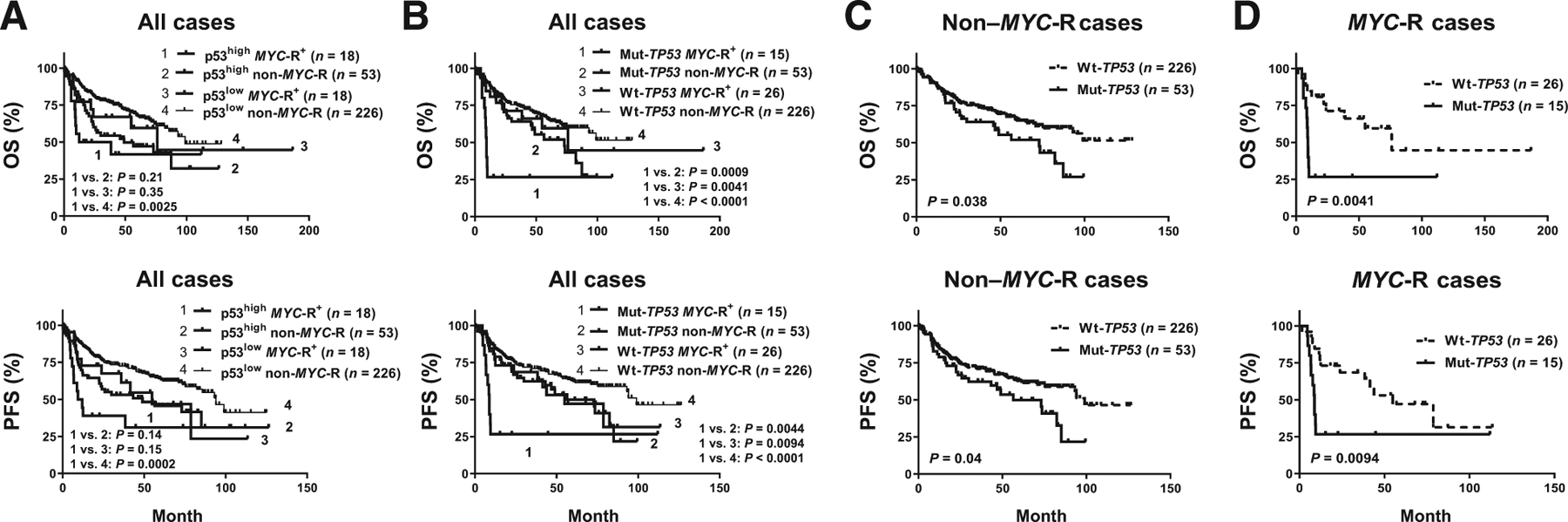
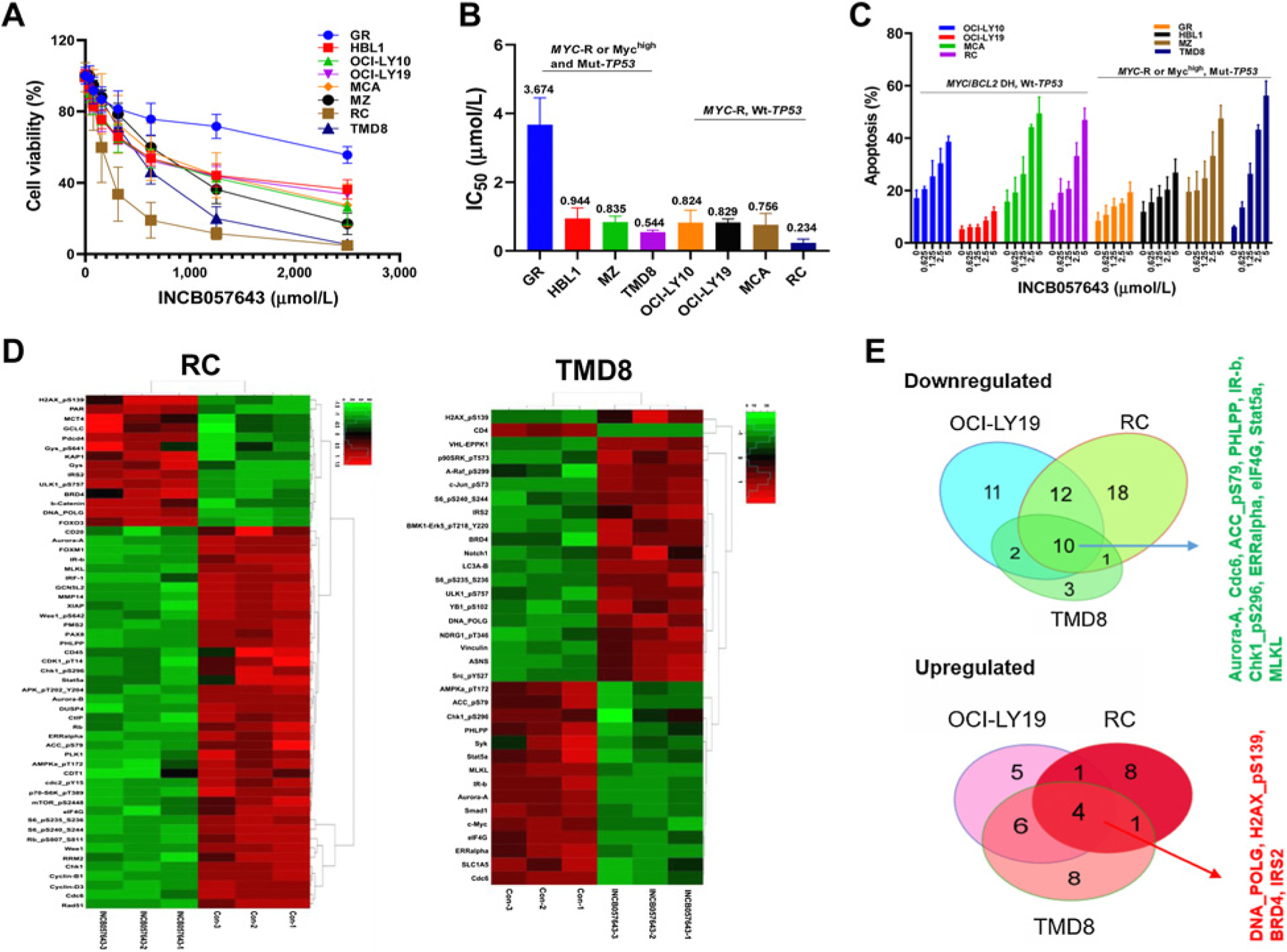
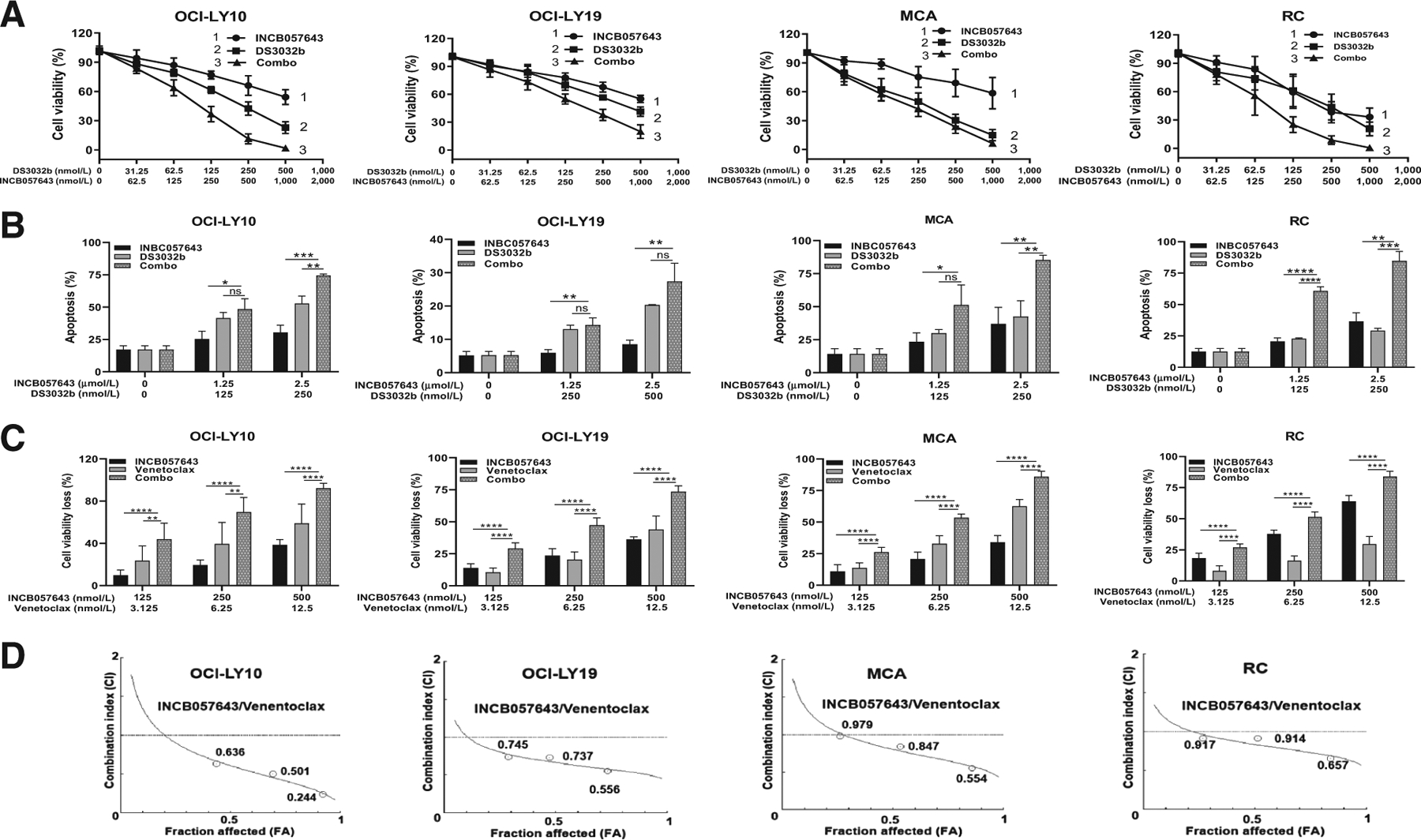
Diffuse large B-cell lymphoma (DLBCL) is the major type of aggressive B-cell lymphoma. High-grade B-cell lymphoma (HGBCL) with / double-hit (DH) represents a distinct entity with dismal prognosis after standard immunochemotherapy in the current WHO lymphoma classification. However, whether mutation synergizes with MYC abnormalities ( rearrangement and/or Myc protein overexpression) contributing to HGBCL-like biology and prognosis is not well investigated. In this study, patients with DLBCL with MYC/TP53 abnormalities demonstrated poor clinical outcome, high-grade morphology, and distinct gene expression signatures. To identify more effective therapies for this distinctive DLBCL subset, novel MYC/TP53/BCL-2-targeted agents were investigated in DLBCL cells with MYC/TP53 dual alterations or HGBCL-/-DH. A BET inhibitor INCB057643 effectively inhibited cell viability and induced apoptosis in DLBCL/HGBCL cells regardless of // status. Combining INCB057643 with a MDM2-p53 inhibitor DS3032b significantly enhanced the cytotoxic effects in HGBCL-DH without mutation, while combining with the BCL-2 inhibitor venetoclax displayed potent therapeutic synergy in DLBCL/HGBCL cells with and without concurrent mutation. Reverse-phase protein arrays revealed the synergistic molecular actions by INCB057643, DS3032b and venetoclax to induce cell-cycle arrest and apoptosis and to inhibit AKT/MEK/ERK/mTOR pathways, as well as potential drug resistance mechanisms mediated by upregulation of Mcl-1 and RAS/RAF/MEK/ERK pathways. In summary, these findings support subclassification of DLBCL/HGBCL with dual MYC/TP53 alterations, which demonstrates distinct pathobiologic features and dismal survival with standard therapy, therefore requiring additional targeted therapies. IMPLICATIONS: The clinical and pharmacologic studies suggest recognizing DLBCL with concomitant mutation and MYC abnormalities as a distinctive entity necessary for precision oncology practice. VISUAL OVERVIEW: http://mcr.aacrjournals.org/content/molcanres/19/2/249/F1.large.jpg.
弥漫性大 B 细胞淋巴瘤(DLBCL)是侵袭性 B 细胞淋巴瘤的主要类型。在现行世界卫生组织淋巴瘤分类中,具有 / 双重打击(DH)的高级别 B 细胞淋巴瘤(HGBCL)是一种独特的实体,在标准免疫化学疗法后预后不良。然而, 是否 突变与 MYC 异常(重排和/或 Myc 蛋白过表达)协同作用,导致 HGBCL 样生物学和预后尚不清楚。在这项研究中,具有 MYC/TP53 异常的 DLBCL 患者表现出较差的临床结局、高级别形态和独特的基因表达特征。为了确定针对这种独特的 DLBCL 亚群的更有效疗法,研究了新型 MYC/TP53/BCL-2 靶向药物在具有 MYC/TP53 双重改变或 HGBCL-/-DH 的 DLBCL 细胞中的作用。BET 抑制剂 INCB057643 有效抑制了 DLBCL/HGBCL 细胞的活力并诱导其凋亡,而与 // 状态无关。联合 INCB057643 与 MDM2-p53 抑制剂 DS3032b 可显著增强无 突变的 HGBCL-DH 的细胞毒性作用,而联合 BCL-2 抑制剂 venetoclax 在具有和不具有同时发生的 突变的 DLBCL/HGBCL 细胞中显示出强大的治疗协同作用。反相蛋白阵列揭示了 INCB057643、DS3032b 和 venetoclax 诱导细胞周期停滞和凋亡以及抑制 AKT/MEK/ERK/mTOR 途径的协同分子作用,以及由 Mcl-1 和 RAS/RAF/MEK/ERK 途径上调介导的潜在药物耐药机制。总之,这些发现支持具有双重 MYC/TP53 改变的 DLBCL/HGBCL 的亚分类,其表现出明显的病理生物学特征和标准治疗后的不良生存,因此需要额外的靶向治疗。 意义:临床和药理学研究表明,将同时具有 突变和 MYC 异常的 DLBCL 识别为一种独特的实体,这是精准肿瘤学实践的必要条件。 直观描述:http://mcr.aacrjournals.org/content/molcanres/19/2/249/F1.large.jpg。