University of Bordeaux, CNRS, Institut de Biochimie et Génétique Cellulaires (IBGC), UMR 5095, Bordeaux, France.
University of Bordeaux, CNRS, ImmunoConcEpT, UMR 5164, Bordeaux, France.
Front Immunol. 2020 Oct 14;11:585616. doi: 10.3389/fimmu.2020.585616. eCollection 2020.
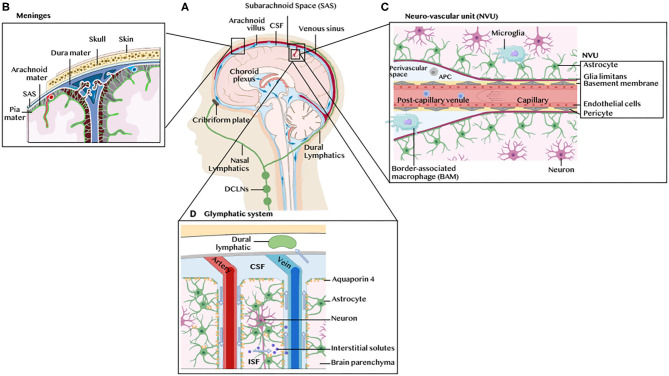
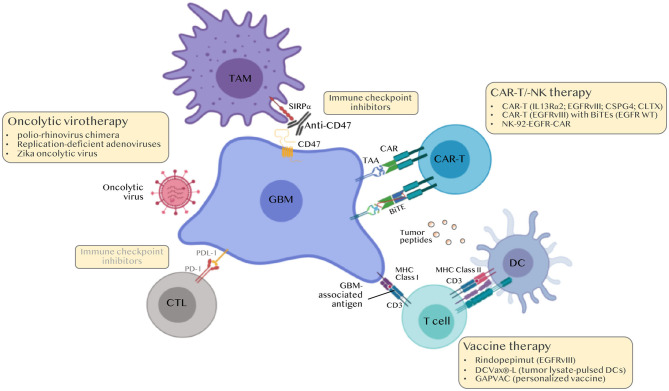
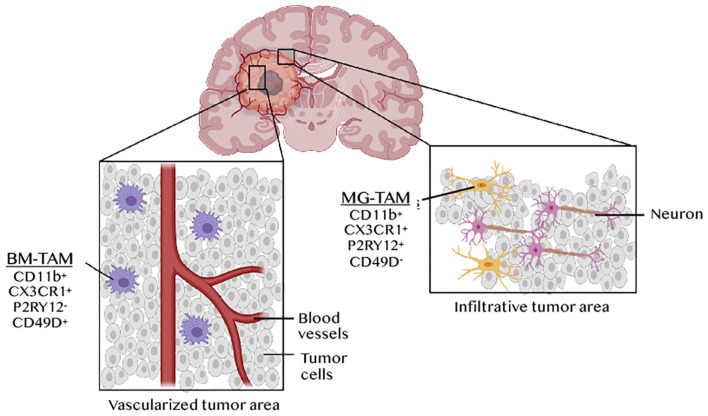
Glioblastoma (GBM) are the most common tumors of the central nervous system and among the deadliest cancers in adults. GBM overall survival has not improved over the last decade despite optimization of therapeutic standard-of-care. While immune checkpoint inhibitors (ICI) have revolutionized cancer care, they unfortunately have little therapeutic success in GBM. Here, we elaborate on normal brain and GBM-associated immune landscapes. We describe the role of microglia and tumor-associated macrophages (TAMs) in immune suppression and highlight the impact of energy metabolism in immune evasion. We also describe the challenges and opportunities of immunotherapies in GBM and discuss new avenues based on harnessing the anti-tumor activity of myeloid cells, vaccines, chimeric antigen receptors (CAR)-T and -NK cells, oncolytic viruses, nanocarriers, and combination therapies.
胶质母细胞瘤(GBM)是中枢神经系统最常见的肿瘤,也是成年人中最致命的癌症之一。尽管治疗标准护理得到了优化,但在过去十年中,GBM 的总生存率并没有提高。虽然免疫检查点抑制剂(ICI)彻底改变了癌症治疗,但它们在 GBM 中的治疗效果却微乎其微。在这里,我们详细阐述了正常大脑和 GBM 相关的免疫景观。我们描述了小胶质细胞和肿瘤相关巨噬细胞(TAMs)在免疫抑制中的作用,并强调了能量代谢在免疫逃逸中的影响。我们还描述了免疫疗法在 GBM 中的挑战和机遇,并讨论了基于利用髓样细胞、疫苗、嵌合抗原受体(CAR)-T 和 -NK 细胞、溶瘤病毒、纳米载体和联合疗法的抗肿瘤活性的新途径。