Department of Cardiology, University Heart and Vascular Center Hamburg, Hamburg, Germany.
German Center for Cardiovascular Research (DZHK), partner site Hamburg/Kiel/Luebeck, Hamburg, Germany.
Cardiovasc Drugs Ther. 2021 Jun;35(3):627-635. doi: 10.1007/s10557-020-07105-7. Epub 2020 Nov 6.
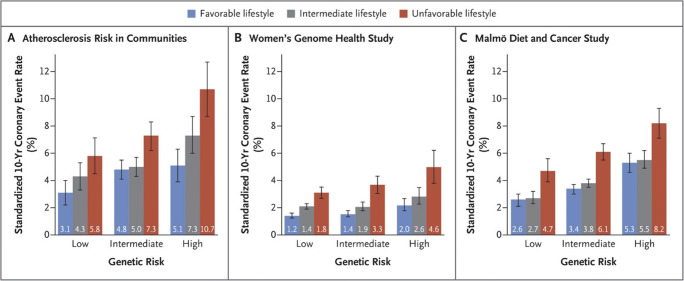
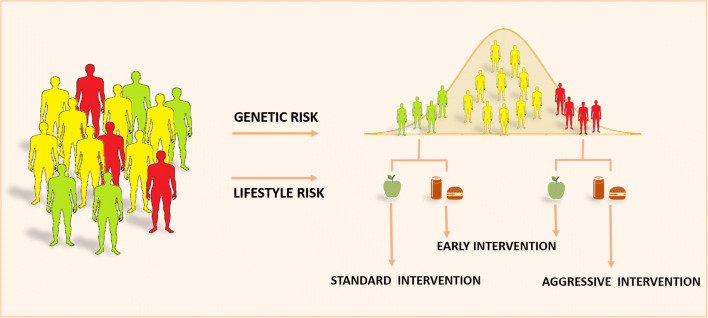
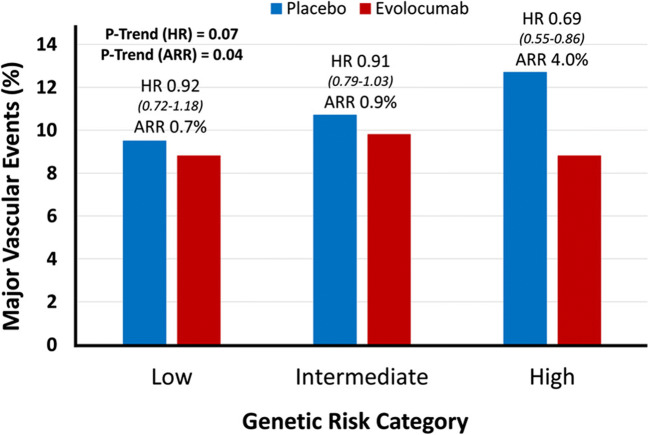
Improvement in risk prediction of atherosclerotic cardiovascular disease (ASCVD) using information on the genetic predisposition at an individual level might offer new possibilities for the successful management of such complex trait. Latest developments in genetic research with the conduction of genome-wide association studies have facilitated a broader utility of polygenic risk score (PRS) as a potent risk prognosticator, being strongly associated with future cardiovascular events. Although its discriminative ability beyond traditional risk factors is still a matter of controversy, PRS possesses at least comparable risk information to that provided by traditional risk tools. More importantly, increased genetic risk for ASCVD might be discovered at younger ages, much longer before conventional risk factors become manifest, thereby providing a potent instrument for aggressive primordial and primary prevention in those at high risk. Furthermore, there is strong evidence that inherited risk may be successfully modulated by a healthy lifestyle or medication use (e.g., statins or PCSK-9 inhibitors). Here, we provide a short overview of the current research related to the possible application of PRS in clinical routine and critically discuss existing pitfalls, which still limit a widespread utility of PRS outside a research setting.
利用个体水平的遗传易感性信息来改善动脉粥样硬化性心血管疾病(ASCVD)的风险预测,可能为成功管理这种复杂疾病提供新的可能性。遗传研究的最新进展,包括全基因组关联研究的开展,促进了多基因风险评分(PRS)作为一种强大的风险预测指标的更广泛应用,它与未来的心血管事件密切相关。尽管其在传统危险因素之外的判别能力仍存在争议,但 PRS 至少具有与传统风险工具相当的风险信息。更重要的是,ASCVD 的遗传风险可能在年轻时就被发现,远早于传统危险因素显现,从而为高危人群的积极一级和二级预防提供了有力工具。此外,有强有力的证据表明,遗传风险可以通过健康的生活方式或药物使用(例如他汀类药物或 PCSK-9 抑制剂)得到成功调节。在这里,我们简要概述了与 PRS 在临床常规中可能应用相关的当前研究,并批判性地讨论了仍然限制 PRS 在研究环境之外广泛应用的现有缺陷。