Ahn Yu Jin, Lim Joo Weon, Kim Hyeyoung
Department of Food and Nutrition, BK21 FOUR, College of Human Ecology, Yonsei University, Seoul 03722, Korea.
Antioxidants (Basel). 2020 Nov 4;9(11):1084. doi: 10.3390/antiox9111084.
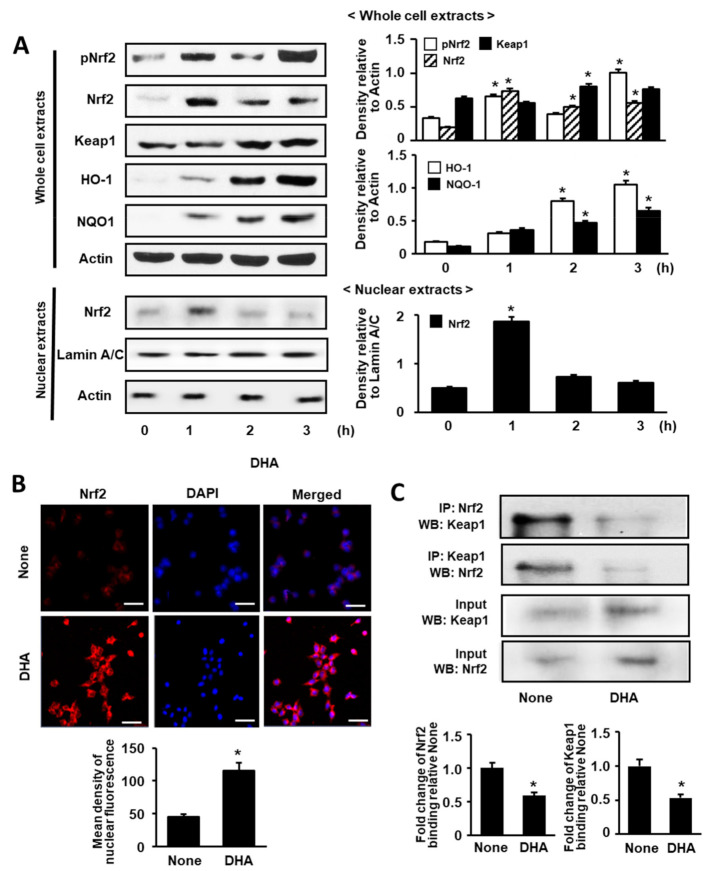
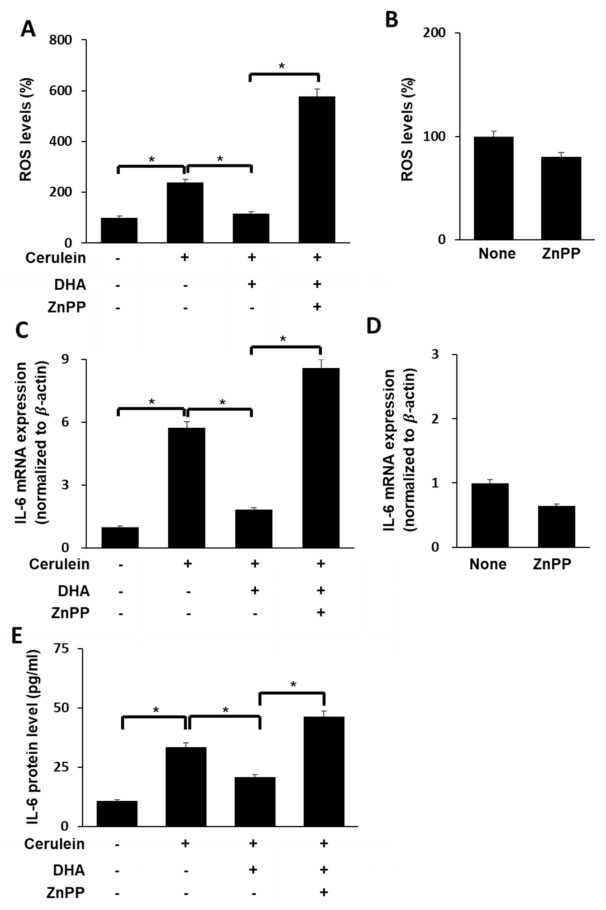
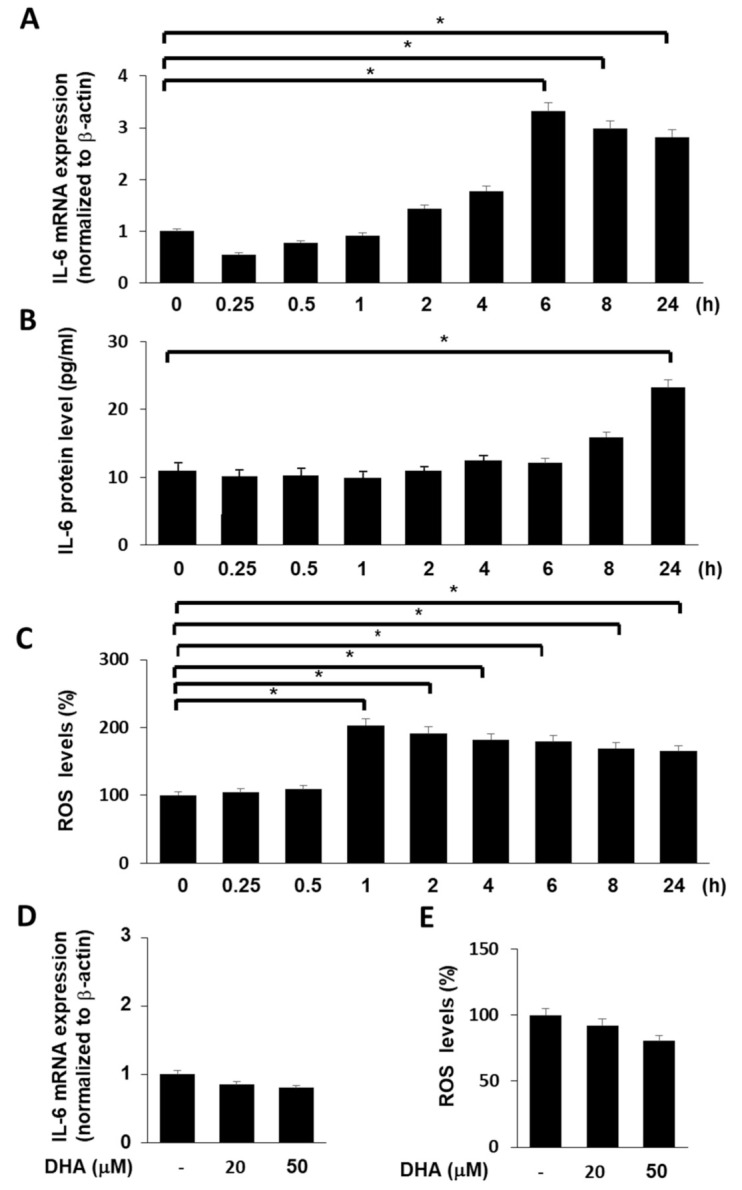
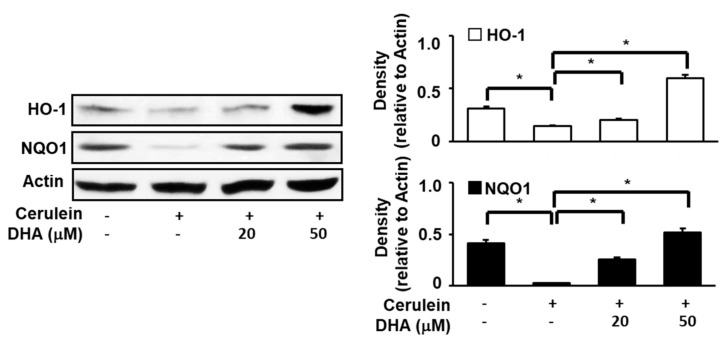
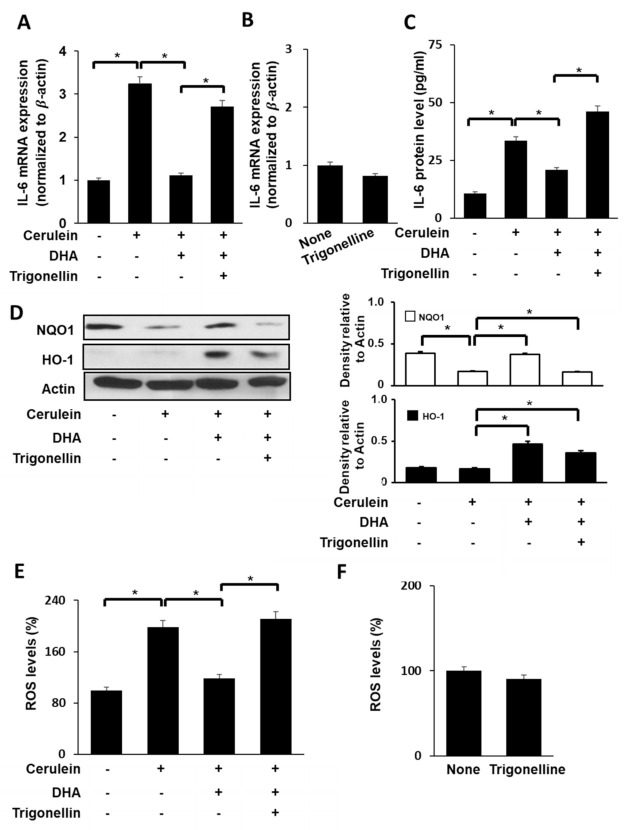
Oxidative stress is a major risk factor for acute pancreatitis. Reactive oxygen species (ROS) mediate expression of inflammatory cytokines such as interleukin-6 (IL-6) which reflects the severity of acute pancreatitis. The nuclear factor erythroid-2-related factor 2 (Nrf2) pathway is activated to induce the expression of antioxidant enzymes such as NAD(P)H: quinone oxidoreductase 1 (NQO1) and heme oxygenase-1 (HO-1) as a cytoprotective response to oxidative stress. In addition, binding of Kelch-like ECH-associated protein 1 (Keap1) to Nrf2 promotes degradation of Nrf2. Docosahexaenoic acid (DHA)-an omega-3 fatty acid-exerts anti-inflammatory and antioxidant effects. Oxidized omega-3 fatty acids react with Keap1 to induce Nrf2-regulated gene expression. In this study, we investigated whether DHA reduces ROS levels and inhibits IL-6 expression via Nrf2 signaling in pancreatic acinar (AR42J) cells stimulated with cerulein, as an in vitro model of acute pancreatitis. The cells were pretreated with or without DHA for 1 h and treated with cerulein (10 M) for 1 (ROS levels, protein levels of NQO1, HO-1, pNrf2, Nrf2, and Keap1), 6 (IL-6 mRNA expression), and 24 h (IL-6 protein level in the medium). Our results showed that DHA upregulates the expression of NQO1 and HO-1 in cerulein-stimulated AR42J cells by promoting phosphorylation and nuclear translocation of Nrf2. DHA increased interaction between Keap1 and Nrf2 in AR42J cells, which may increase Nrf2 activity by inhibiting Keap1-mediated sequestration of Nrf2. In addition, DHA-induced expression of NQO1 and HO-1 is related to reduction of ROS and IL-6 levels in cerulein-stimulated AR42J cells. In conclusion, DHA inhibits ROS-mediated IL-6 expression by upregulating Nrf2-mediated expression of NQO1 and HO-1 in cerulein-stimulated pancreatic acinar cells. DHA may exert positive modulatory effects on acute pancreatitis by inhibiting oxidative stress and inflammatory cytokine production by activating Nrf2 signaling in pancreatic acinar cells.
氧化应激是急性胰腺炎的主要风险因素。活性氧(ROS)介导炎性细胞因子如白细胞介素-6(IL-6)的表达,而IL-6反映急性胰腺炎的严重程度。核因子红细胞2相关因子2(Nrf2)途径被激活以诱导抗氧化酶如NAD(P)H:醌氧化还原酶1(NQO1)和血红素加氧酶-1(HO-1)的表达,作为对氧化应激的细胞保护反应。此外,kelch样ECH相关蛋白1(Keap1)与Nrf2的结合促进Nrf2的降解。二十二碳六烯酸(DHA)——一种ω-3脂肪酸——具有抗炎和抗氧化作用。氧化的ω-3脂肪酸与Keap1反应以诱导Nrf2调节的基因表达。在本研究中,我们研究了在作为急性胰腺炎体外模型的用雨蛙肽刺激的胰腺腺泡(AR42J)细胞中,DHA是否通过Nrf2信号通路降低ROS水平并抑制IL-6表达。细胞用或不用DHA预处理1小时,然后用雨蛙肽(10μM)处理1小时(用于检测ROS水平、NQO1、HO-1、磷酸化Nrf2、Nrf2和Keap1的蛋白水平)、6小时(用于检测IL-6 mRNA表达)和24小时(用于检测培养基中IL-6蛋白水平)。我们的结果表明,DHA通过促进Nrf2的磷酸化和核转位,上调雨蛙肽刺激的AR42J细胞中NQO1和HO-1的表达。DHA增加AR42J细胞中Keap1与Nrf2之间的相互作用,这可能通过抑制Keap1介导的Nrf2隔离来增加Nrf2活性。此外,DHA诱导的NQO1和HO-1表达与雨蛙肽刺激的AR42J细胞中ROS和IL-6水平的降低有关。总之,DHA通过上调雨蛙肽刺激的胰腺腺泡细胞中Nrf2介导的NQO1和HO-1表达,抑制ROS介导的IL-6表达。DHA可能通过激活胰腺腺泡细胞中的Nrf2信号通路,抑制氧化应激和炎性细胞因子产生,从而对急性胰腺炎发挥正向调节作用。