Department of Biomedicine, Hepatology, University Hospital and University of Basel, Basel, Switzerland.
Department of Biomedicine, Experimental Immunology, University Hospital and University of Basel, Basel, Switzerland.
Life Sci Alliance. 2020 Nov 6;4(1). doi: 10.26508/lsa.201900612. Print 2021 Jan.
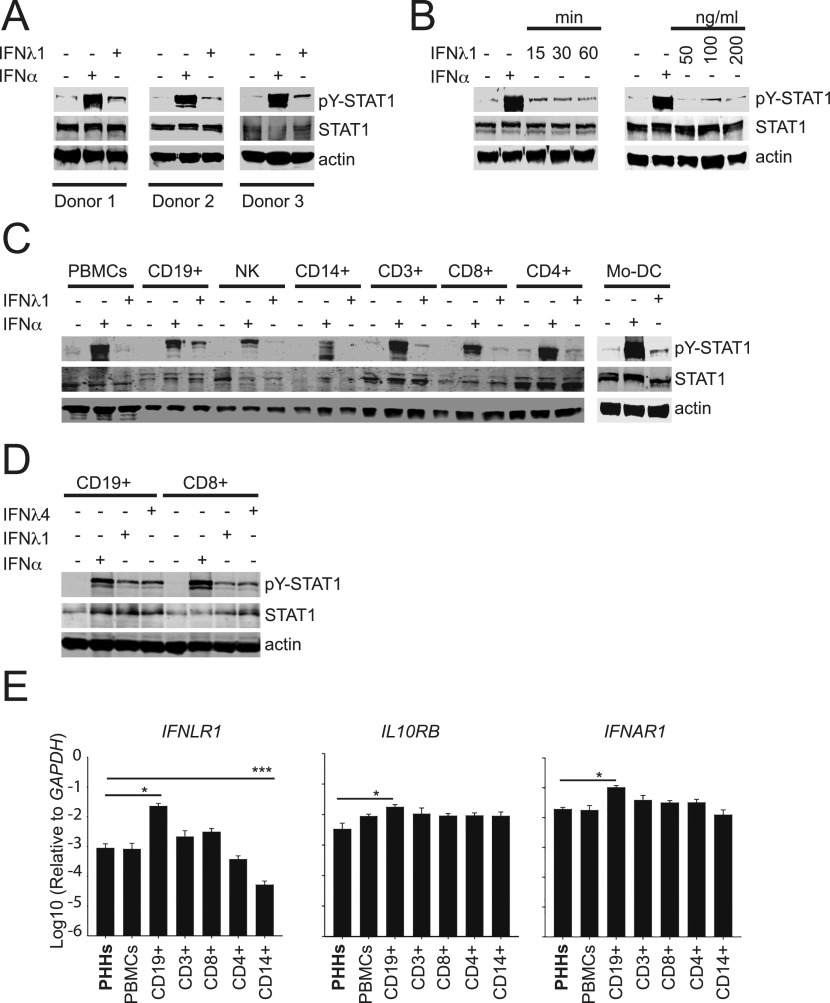
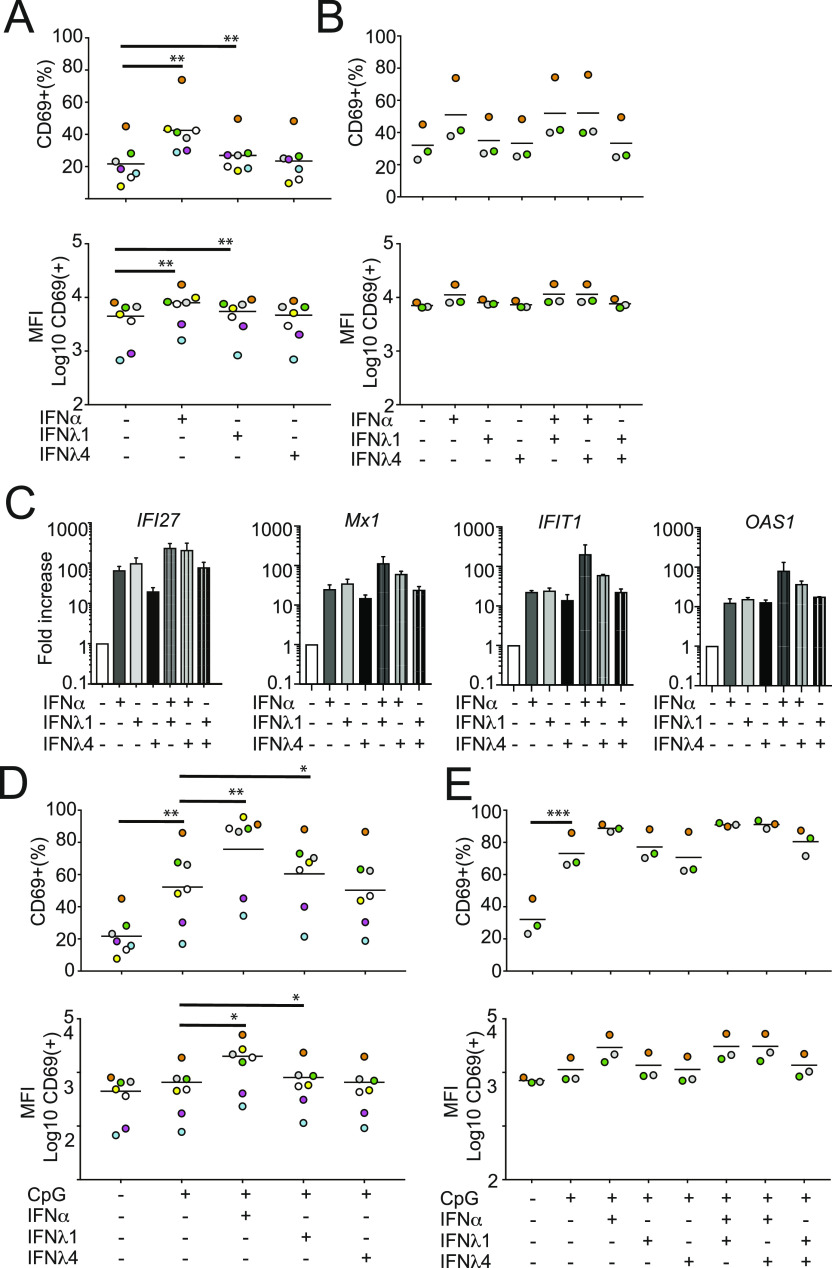
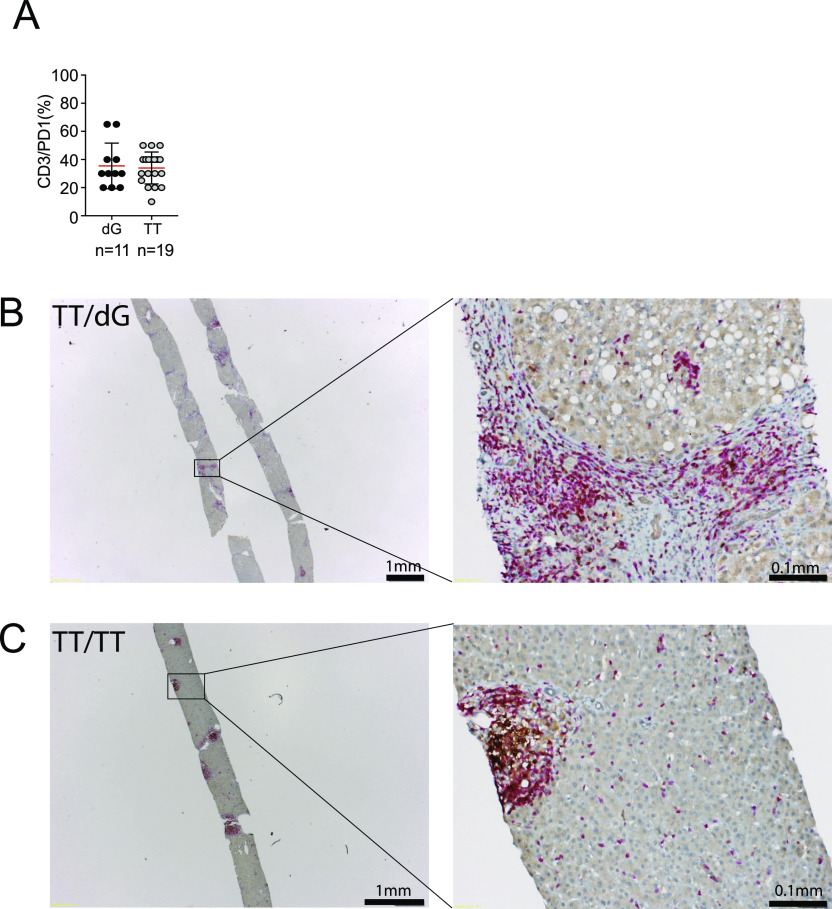
Compared with the ubiquitous expression of type I (IFNα and IFNβ) interferon receptors, type III (IFNλ) interferon receptors are mainly expressed in epithelial cells of mucosal barriers of the of the intestine and respiratory tract. Consequently, IFNλs are important for innate pathogen defense in the lung and intestine. IFNλs also determine the outcome of hepatitis C virus (HCV) infections, with IFNλ4 inhibiting spontaneous clearance of HCV. Because viral clearance is dependent on T cells, we explored if IFNλs can directly bind to and regulate human T cells. We found that human B cells and CD8 T cells express the IFNλ receptor and respond to IFNλs, including IFNλ4. IFNλs were not inhibitors but weak stimulators of B- and T-cell responses. Furthermore, IFNλ4 showed neither synergistic nor antagonistic effects in co-stimulatory experiments with IFNλ1 or IFNα. Multidimensional flow cytometry of cells from liver biopsies of hepatitis patients from IFNλ4-producers showed accumulation of activated CD8 T cells with a central memory-like phenotype. In contrast, CD8 T cells with a senescent/exhausted phenotype were more abundant in IFNλ4-non-producers. It remains to be elucidated how IFNλ4 promotes CD8 T-cell responses and inhibits the host immunity to HCV infections.
与广泛表达的 I 型(IFNα 和 IFNβ)干扰素受体相比,III 型(IFNλ)干扰素受体主要在肠道和呼吸道黏膜屏障的上皮细胞中表达。因此,IFNλs 对于肺部和肠道的固有病原体防御很重要。IFNλs 还决定丙型肝炎病毒 (HCV) 感染的结局,IFNλ4 抑制 HCV 的自发清除。由于病毒清除依赖于 T 细胞,我们探索了 IFNλs 是否可以直接结合并调节人类 T 细胞。我们发现人类 B 细胞和 CD8 T 细胞表达 IFNλ 受体并对 IFNλs(包括 IFNλ4)作出反应。IFNλs 不是 B 和 T 细胞反应的抑制剂,而是弱的刺激剂。此外,IFNλ4 在与 IFNλ1 或 IFNα 的共刺激实验中既没有协同作用也没有拮抗作用。来自 IFNλ4 产生者的肝炎患者肝活检细胞的多维流式细胞术显示,激活的具有中央记忆样表型的 CD8 T 细胞聚集。相比之下,IFNλ4 非产生者中更丰富的是具有衰老/耗竭表型的 CD8 T 细胞。IFNλ4 如何促进 CD8 T 细胞反应并抑制宿主对 HCV 感染的免疫仍有待阐明。