Division of Pulmonary, Allergy, and Critical Care Medicine, Department of Medicine, University of Pennsylvania, Philadelphia, PA, USA.
Lung Biology Institute, University of Pennsylvania, Philadelphia, PA, USA.
Nat Commun. 2020 Nov 6;11(1):5640. doi: 10.1038/s41467-020-18979-4.
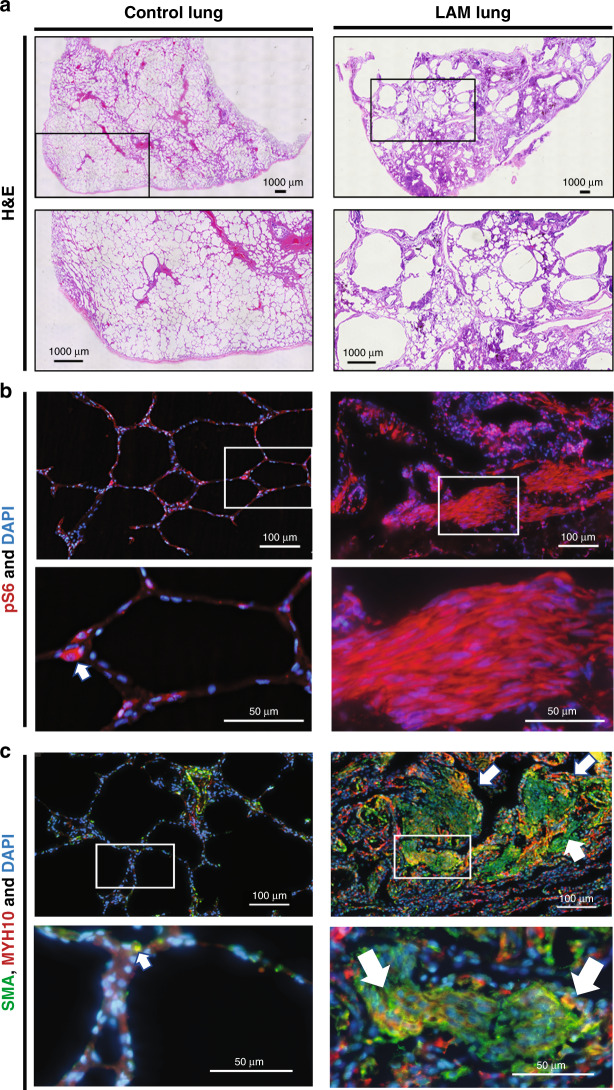
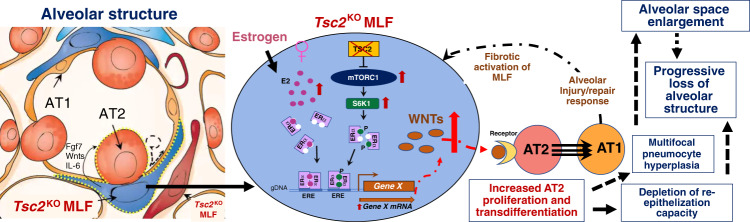
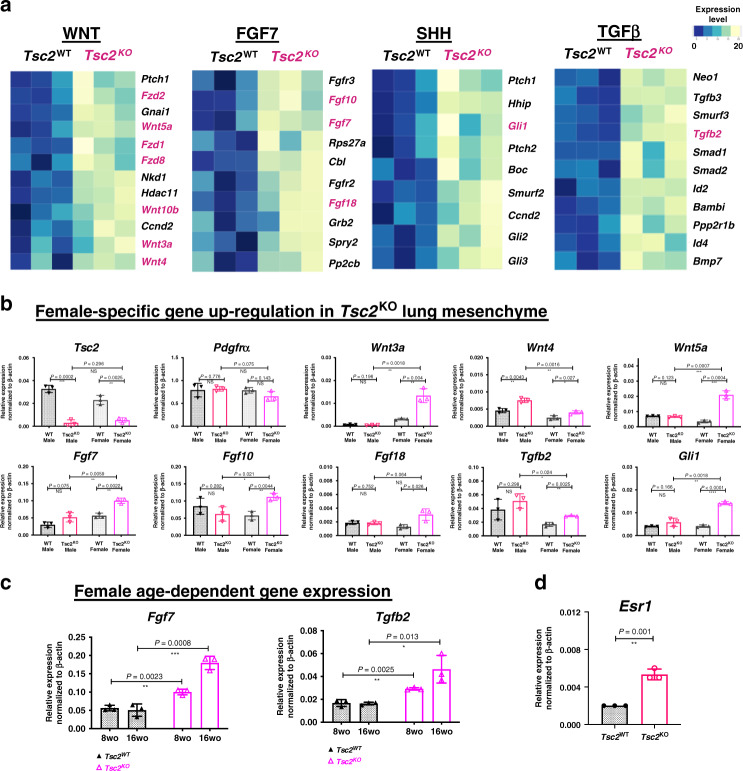
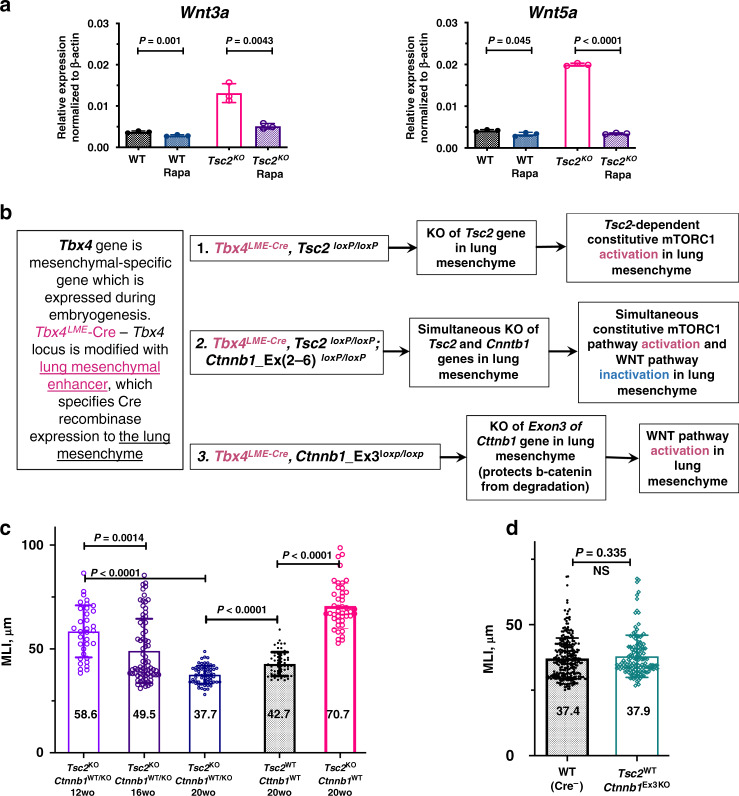
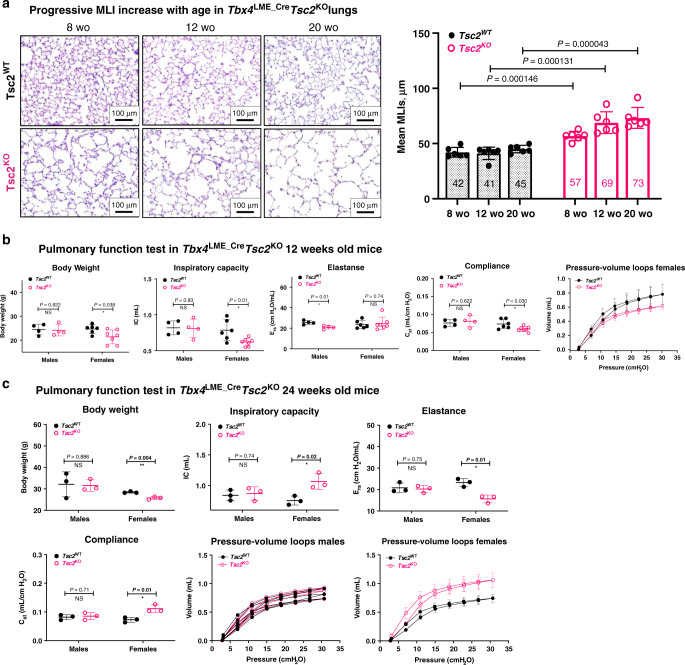
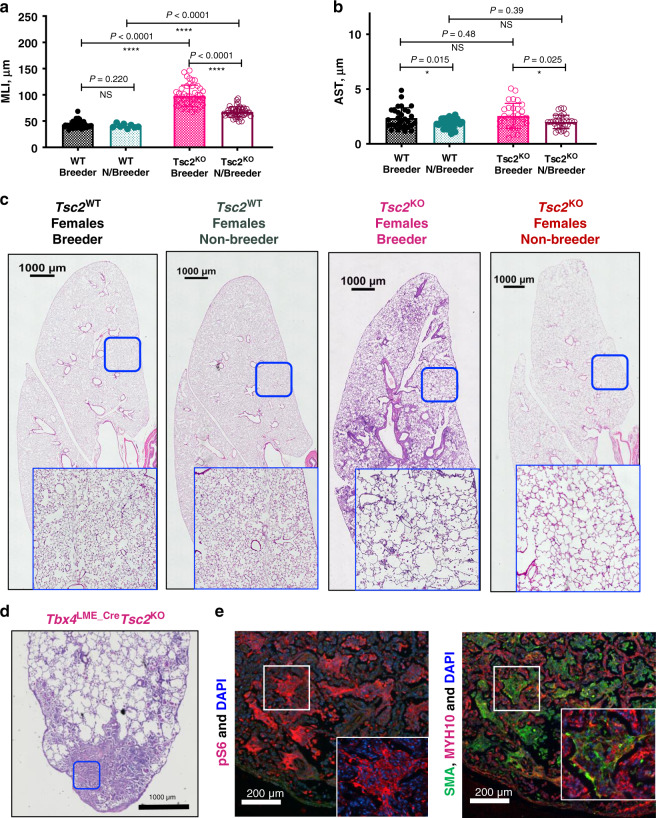
Lymphangioleiomyomatosis (LAM) is a rare fatal cystic lung disease due to bi-allelic inactivating mutations in tuberous sclerosis complex (TSC1/TSC2) genes coding for suppressors of the mechanistic target of rapamycin complex 1 (mTORC1). The origin of LAM cells is still unknown. Here, we profile a LAM lung compared to an age- and sex-matched healthy control lung as a hypothesis-generating approach to identify cell subtypes that are specific to LAM. Our single-cell RNA sequencing (scRNA-seq) analysis reveals novel mesenchymal and transitional alveolar epithelial states unique to LAM lung. This analysis identifies a mesenchymal cell hub coordinating the LAM disease phenotype. Mesenchymal-restricted deletion of Tsc2 in the mouse lung produces a mTORC1-driven pulmonary phenotype, with a progressive disruption of alveolar structure, a decline in pulmonary function, increase of rapamycin-sensitive expression of WNT ligands, and profound female-specific changes in mesenchymal and epithelial lung cell gene expression. Genetic inactivation of WNT signaling reverses age-dependent changes of mTORC1-driven lung phenotype, but WNT activation alone in lung mesenchyme is not sufficient for the development of mouse LAM-like phenotype. The alterations in gene expression are driven by distinctive crosstalk between mesenchymal and epithelial subsets of cells observed in mesenchymal Tsc2-deficient lungs. This study identifies sex- and age-specific gene changes in the mTORC1-activated lung mesenchyme and establishes the importance of the WNT signaling pathway in the mTORC1-driven lung phenotype.
淋巴管平滑肌瘤病(LAM)是一种罕见的致命性囊性肺疾病,由结节性硬化复合物(TSC1/TSC2)基因的双等位基因失活突变引起,这些基因编码雷帕霉素复合物 1(mTORC1)的抑制剂。LAM 细胞的起源仍不清楚。在这里,我们对 LAM 肺与年龄和性别匹配的健康对照肺进行了描绘,作为一种产生假说的方法来鉴定特定于 LAM 的细胞亚型。我们的单细胞 RNA 测序(scRNA-seq)分析揭示了 LAM 肺特有的新型间充质和过渡性肺泡上皮状态。这种分析确定了一个协调 LAM 疾病表型的间充质细胞中心。在小鼠肺中,间充质受限的 Tsc2 缺失会产生 mTORC1 驱动的肺表型,伴有肺泡结构的进行性破坏、肺功能下降、雷帕霉素敏感的 WNT 配体表达增加,以及间充质和上皮肺细胞基因表达的深刻雌性特异性变化。WNT 信号的遗传失活逆转了 mTORC1 驱动的肺表型的年龄依赖性变化,但肺间质中单独的 WNT 激活不足以发展出类似于 LAM 的小鼠表型。基因表达的改变是由间充质 Tsc2 缺陷肺中观察到的间充质和上皮细胞亚群之间独特的串扰驱动的。这项研究确定了 mTORC1 激活的肺间质中性别和年龄特异性的基因变化,并确立了 WNT 信号通路在 mTORC1 驱动的肺表型中的重要性。