Babanezhad Meisam, Behroyan Iman, Taghvaie Nakhjiri Ali, Rezakazemi Mashallah, Marjani Azam, Shirazian Saeed
Institute of Research and Development, Duy Tan University, Da Nang, 550000, Vietnam.
Faculty of Electrical - Electronic Engineering, Duy Tan University, Da Nang, 550000, Vietnam.
Sci Rep. 2020 Nov 6;10(1):19280. doi: 10.1038/s41598-020-76260-6.
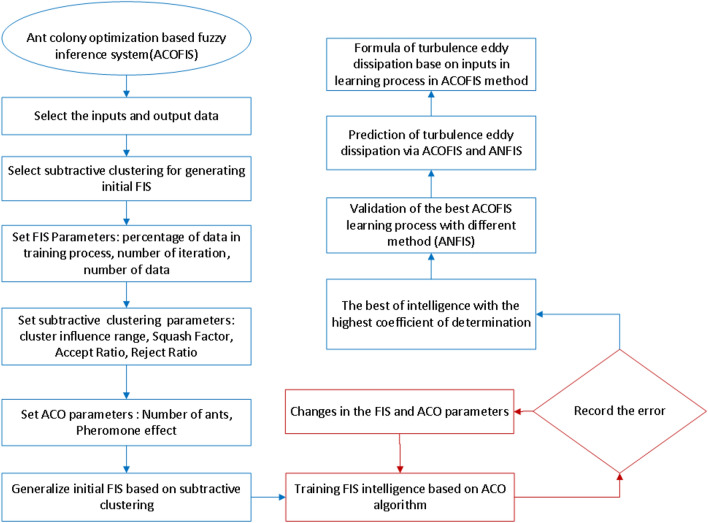
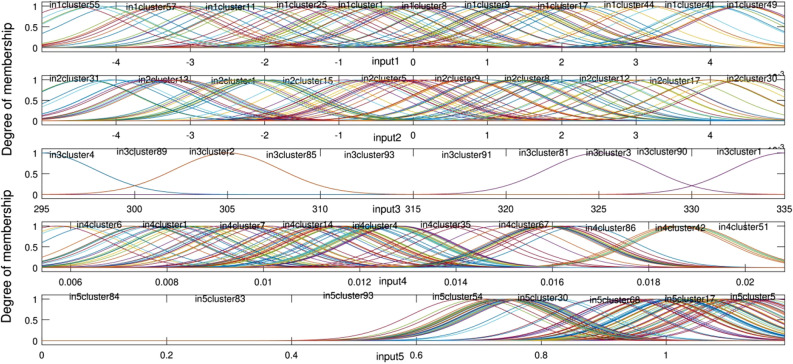
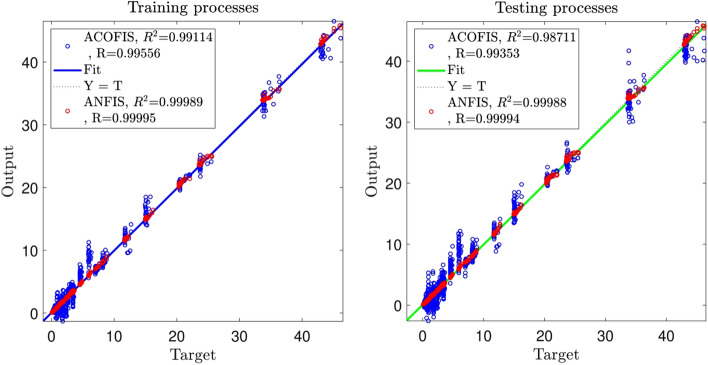
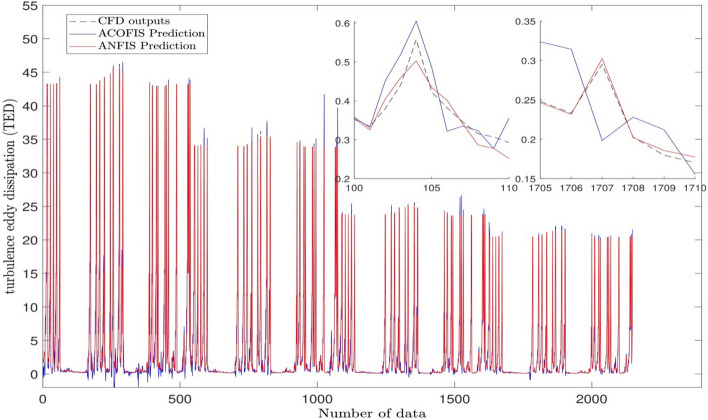
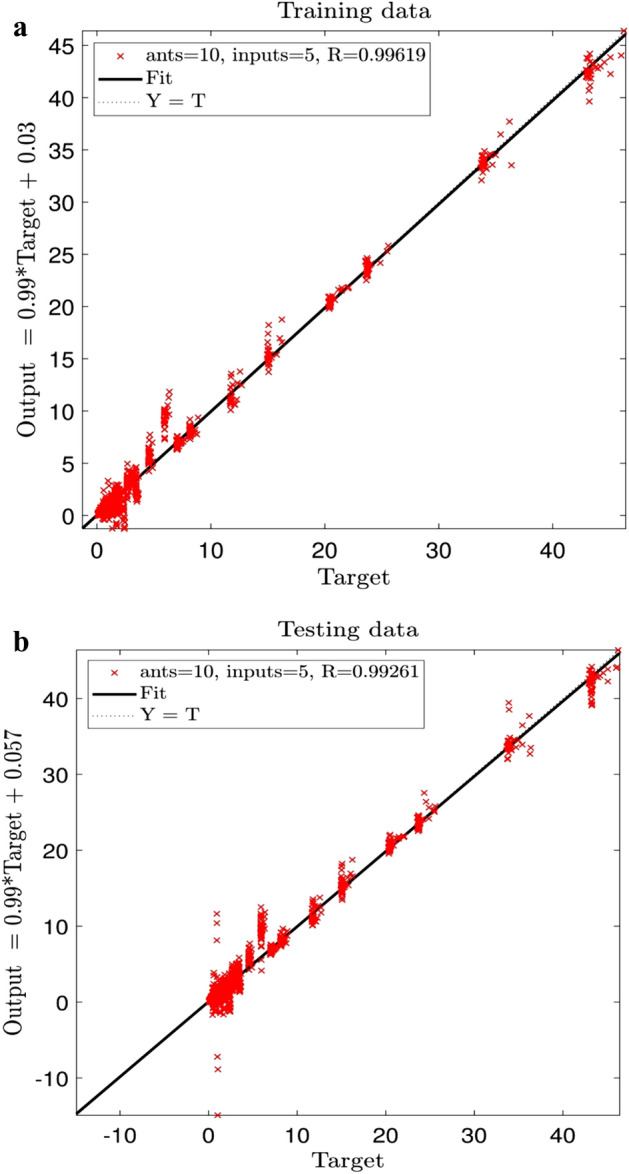
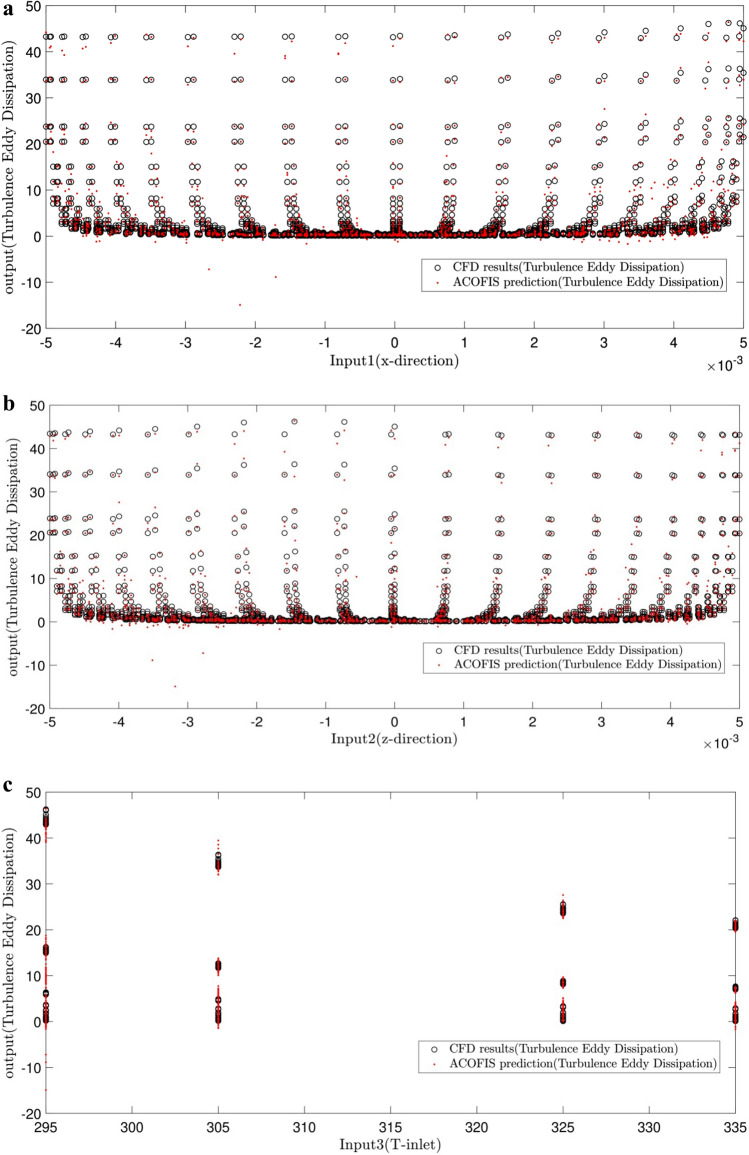
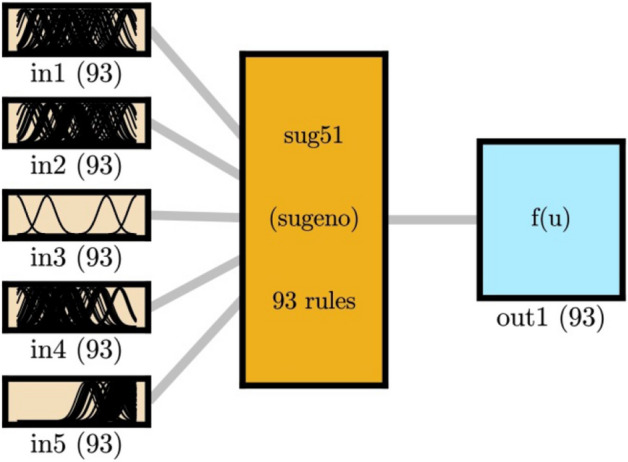
The insertion of porous metal media inside the pipes and channels has already shown a significant heat transfer enhancement by experimental and numerical studies. Porous media could make a mixing flow and small-scale eddies. Therefore, the turbulence parameters are attractive in such cases. The computational fluid dynamics (CFD) approach can predict the turbulence parameters using the turbulence models. However, the CFD is unable to find the relation of the turbulence parameters to the boundary conditions. The artificial intelligence (AI) has shown potential in combination with the CFD to build high-performance predictive models. This study is aimed to establish a new AI algorithm to capture the patterns of the CFD results by changing the system's boundary conditions. The ant colony optimization-based fuzzy inference system (ACOFIS) method is used for the first time to reduce time and computational effort needed in the CFD simulation. This investigation is done on turbulent forced convection of water through an aluminum metal foam tube under constant wall heat flux. The ANSYS-FLUENT CFD software is used for the simulations. The x and y of the fluid nodal locations, inlet temperature, velocity, and turbulent kinetic energy (TKE) are the inputs of the ACOFIS to predict turbulence eddy dissipation (TED) as the output. The results revealed that for the best intelligence of the ACOFIS, the number of inputs, the number of ants, the number of membership functions (MFs) and the rule are 5, 10, 93 and 93, respectively. Further comparison is made with the adaptive network-based fuzzy inference system (ANFIS). The coefficient of determination for both methods was close to 1. The ANFIS showed more learning and prediction times (785 s and 10 s, respectively) than the ACOFIS (556 s and 3 s, respectively). Finding the member function versus the inputs, the value of TED is calculated without the CFD modeling. So, solving the complicated equations by the CFD is replaced with a simple correlation.
通过实验和数值研究表明,在管道和通道内插入多孔金属介质可显著增强传热。多孔介质能产生混合流和小尺度涡旋。因此,在这种情况下湍流参数很有吸引力。计算流体动力学(CFD)方法可使用湍流模型预测湍流参数。然而,CFD无法找到湍流参数与边界条件之间的关系。人工智能(AI)已显示出与CFD结合构建高性能预测模型的潜力。本研究旨在建立一种新的AI算法,通过改变系统边界条件来捕捉CFD结果的模式。首次使用基于蚁群优化的模糊推理系统(ACOFIS)方法来减少CFD模拟所需的时间和计算量。本研究针对水在恒定壁面热流条件下通过铝泡沫金属管的湍流强制对流进行。使用ANSYS-FLUENT CFD软件进行模拟。流体节点位置的x和y、入口温度、速度以及湍动能(TKE)作为ACOFIS的输入,以预测湍流涡耗散(TED)作为输出。结果表明,为使ACOFIS具有最佳智能,输入数量、蚂蚁数量、隶属函数(MF)数量和规则数量分别为5、10、93和93。进一步与基于自适应网络的模糊推理系统(ANFIS)进行比较。两种方法的决定系数均接近1。与ACOFIS(分别为556秒和3秒)相比,ANFIS的学习和预测时间更多(分别为785秒和10秒)。通过找到与输入对应的隶属函数,无需CFD建模即可计算TED值。因此,用简单的关联关系取代了通过CFD求解复杂方程的过程。