Department of Biosciences, Program in Biochemistry and Cell Biology, Rice University, Houston, TX, USA.
Mol Psychiatry. 2021 Mar;26(3):736-746. doi: 10.1038/s41380-020-00943-9. Epub 2020 Nov 6.
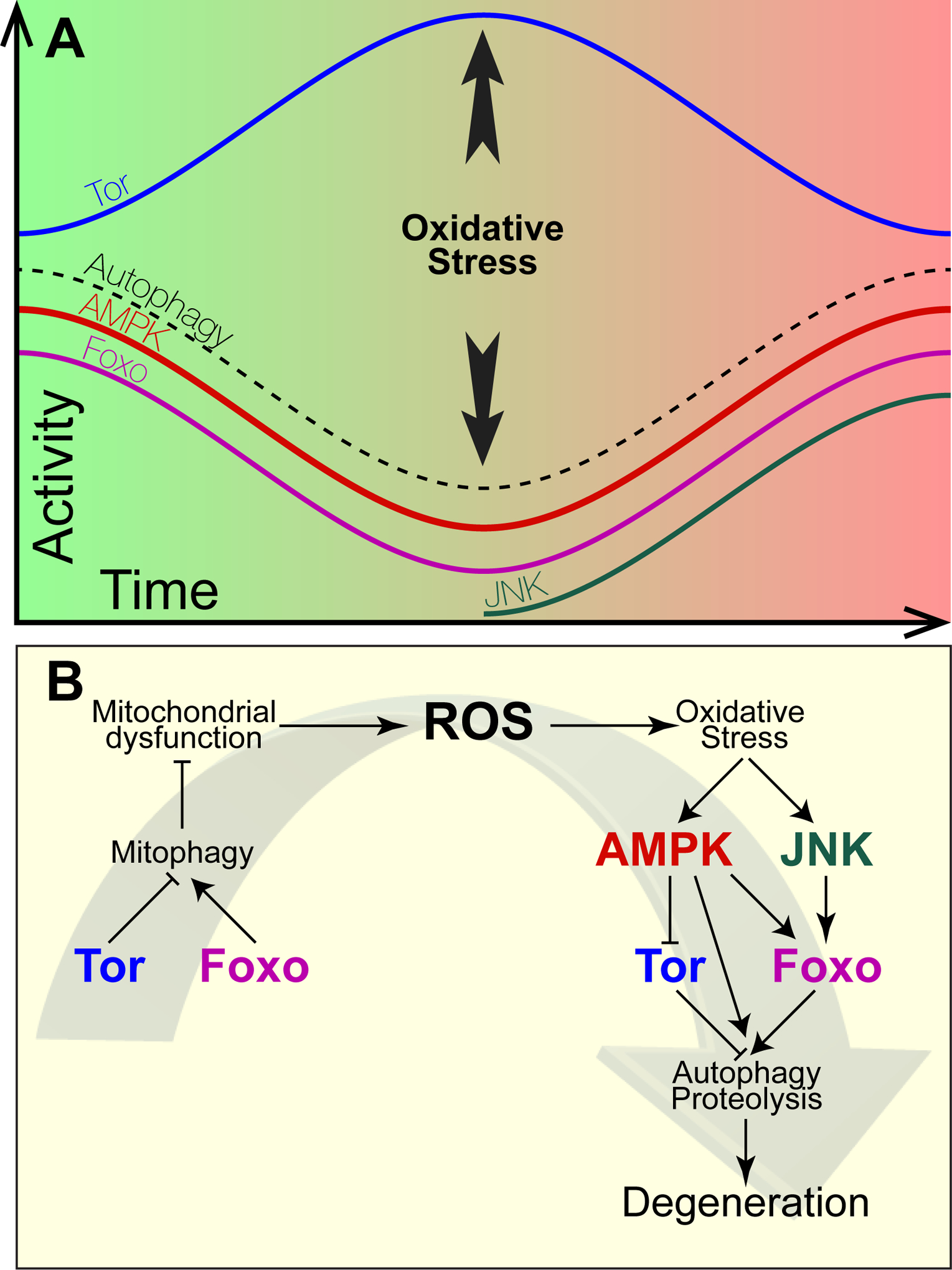
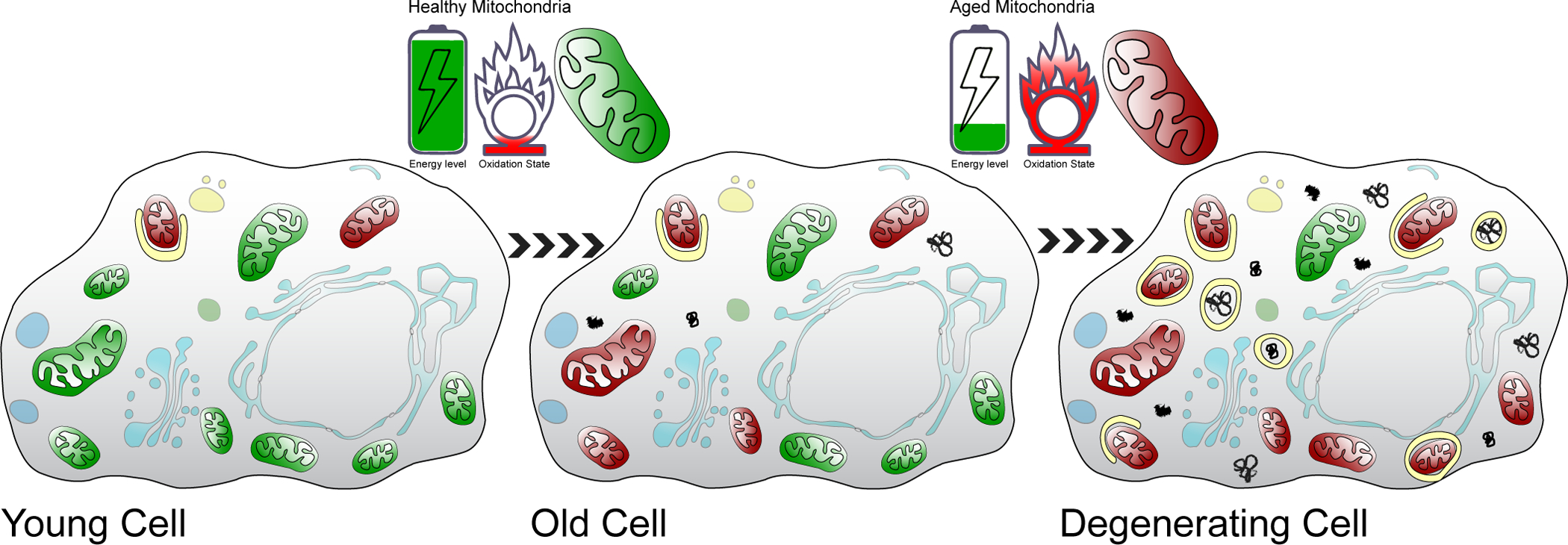
Although the activities of many signaling pathways are dysregulated during the progression of neurodegenerative and muscle degeneration disorders, the precise sequence of cellular events leading to degeneration has not been fully elucidated. Two kinases of particular interest, the growth-promoting Tor kinase and the energy sensor AMPK, appear to show reciprocal changes in activity during degeneration, with increased Tor activity and decreased AMPK activity reported. These changes in activity have been predicted to cause degeneration by attenuating autophagy, leading to the accumulation of unfolded protein aggregates and dysfunctional mitochondria, the consequent increased production of reactive oxygen species (ROS), and ultimately oxidative damage. Here we propose that this increased ROS production not only causes oxidative damage but also ultimately induces an oxidative stress response that reactivates the redox-sensitive AMPK and activates the redox-sensitive stress kinase JNK. Activation of these kinases reactivates autophagy. Because at this late stage, cells have become filled with dysfunctional mitochondria and protein aggregates, which are autophagy targets, this autophagy reactivation induces degeneration. The mechanism proposed here emphasizes that the process of degeneration is dynamic, that dysregulated signaling pathways change over time and can transition from deleterious to beneficial and vice versa as degeneration progresses.
尽管在神经退行性和肌肉变性疾病的进展过程中许多信号通路的活性被失调,但导致变性的确切细胞事件序列尚未完全阐明。两种特别引人关注的激酶,促进生长的 Tor 激酶和能量传感器 AMPK,在变性过程中似乎表现出活性的相互变化,报道称 Tor 活性增加和 AMPK 活性降低。这些活性变化被预测通过减弱自噬导致变性,导致未折叠蛋白聚集体和功能失调的线粒体积累,随后产生更多的活性氧(ROS),最终导致氧化损伤。在这里,我们提出,这种增加的 ROS 产生不仅会导致氧化损伤,而且最终还会诱导氧化应激反应,从而重新激活氧化还原敏感的 AMPK 并激活氧化还原敏感的应激激酶 JNK。这些激酶的激活重新激活自噬。因为在这个晚期阶段,细胞中充满了功能失调的线粒体和蛋白聚集体,这些都是自噬的靶点,因此这种自噬的重新激活会诱导变性。这里提出的机制强调了变性过程是动态的,失调的信号通路随着时间的推移而变化,并随着变性的进展可以从有害转变为有益,反之亦然。