The Second Affiliated Hospital of Henan University of Traditional Chinese Medicine, Zhengzhou, Henan, China.
J Clin Lab Anal. 2021 Jan;35(1):e23575. doi: 10.1002/jcla.23575. Epub 2020 Nov 7.
As circular RNAs (circRNAs) have been found to significantly involve in the onset and progression of multiple malignant tumors including breast cancer (BC), this study aims at evaluating the diagnostic and prognostic values of circRNAs in this malady.
Available databases were thoroughly searched to collect studies on the diagnosis and/or prognosis of BC using circRNA profiling. The updated Quality Assessment of Diagnostic Accuracy Studies 2 (QUADAS-2) tool and the Newcastle Ottawa Scale (NOS) were used to assess the underlying bias of included studies. Clinical characteristics of the studies were merged by the quantitative-weighted integral method to obtain the combined effects.
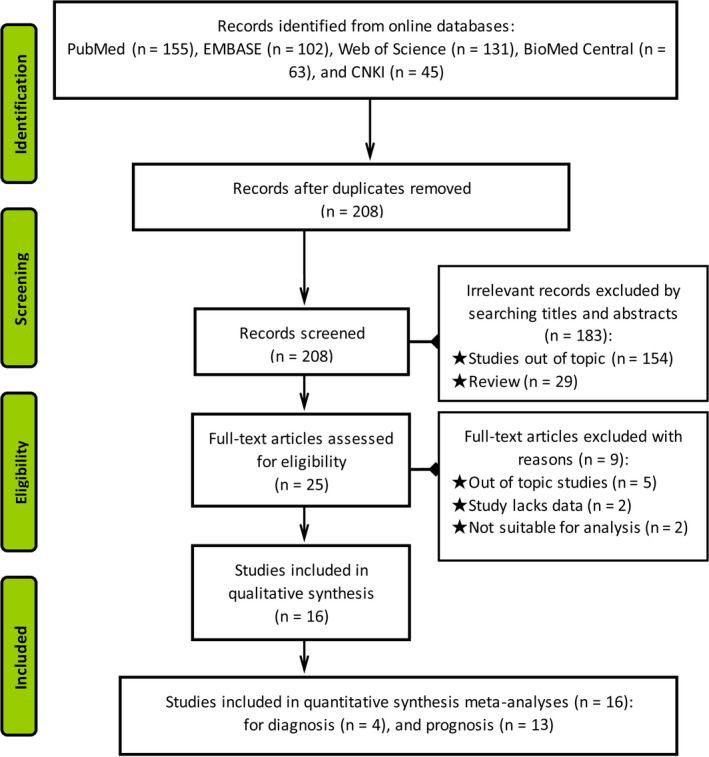
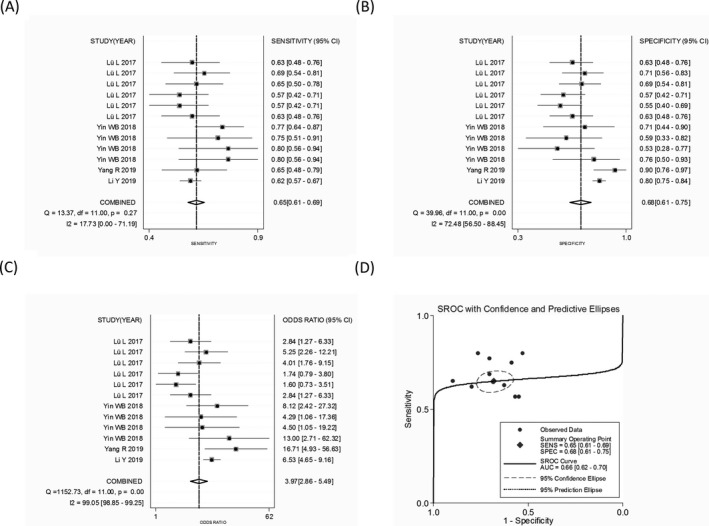
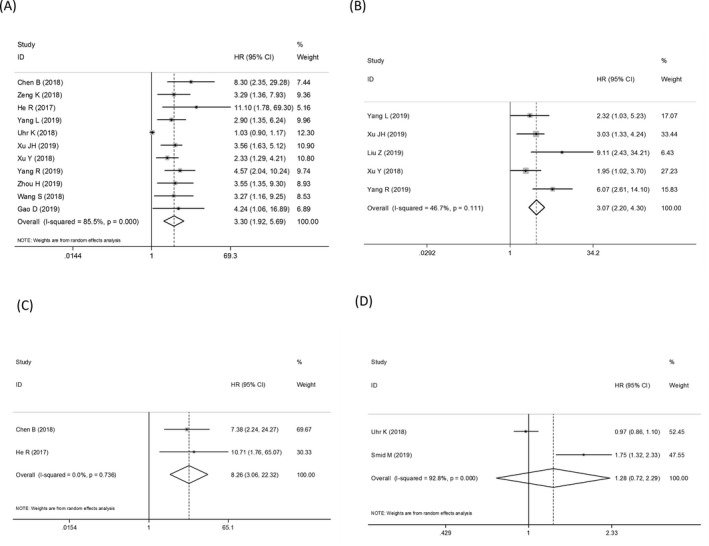
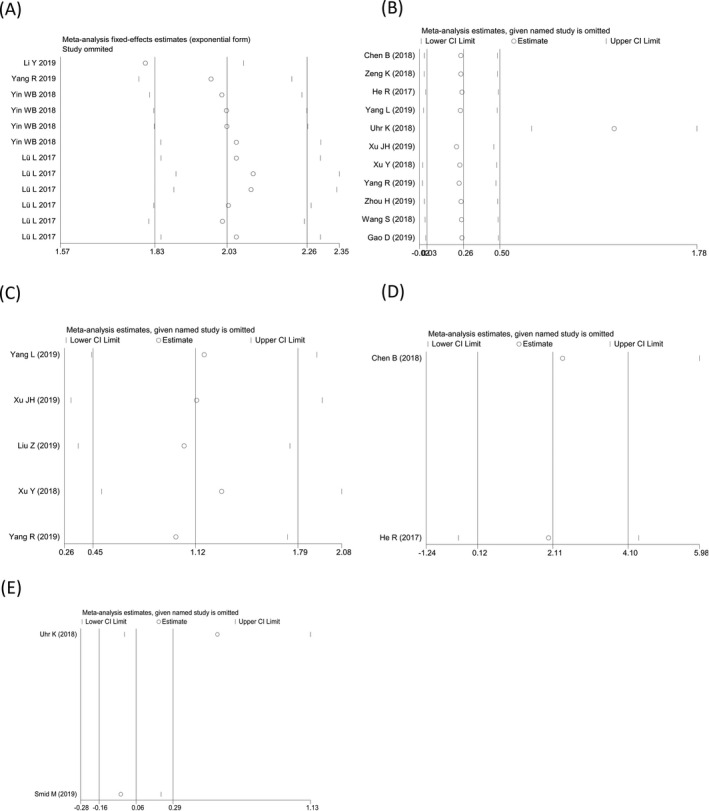
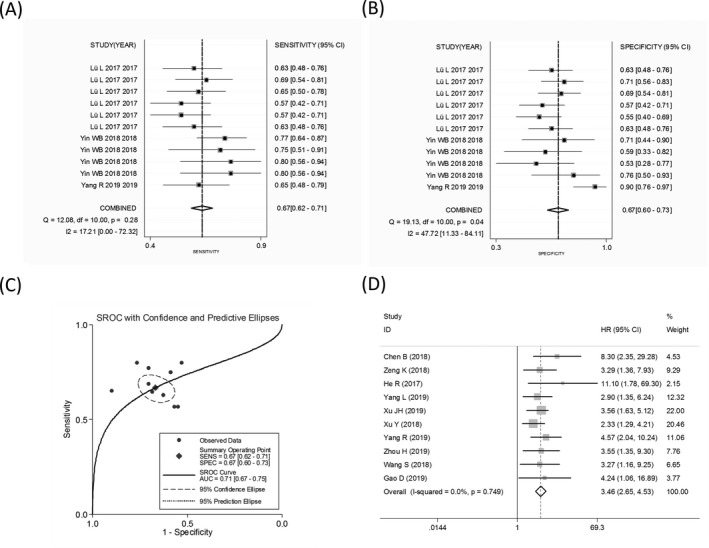
Sixteen studies were included, comprising 2438 BC cases and 271 noncancerous controls. The expression signature covered 24 circRNAs (down-regulated: circ-VRK1, hsa_circ_0068033, hsa_circ_103110, hsa_circ_104689, and hsa_circ_104821; up-regulated: circAGFG1, hsa_circ_0001785, hsa_circ_0108942, hsa_circ_0001785, hsa_circ_006054, hsa_circ_100219, hsa_circ_406697, circEPSTI1, circANKS1B, circGFRA1, circ_0103552, CDR1-AS, has_circ_001569, hsa_circ_001783, circFBXL5, circ_0005230, circAGFG1, circ-UBAP2, and circ_0006528). The sensitivity and specificity of circRNAs in distinguishing BC patients from noncancerous controls were 0.65 and 0.68, and the corresponding area under the curve was 0.66. Survival analysis revealed that patients showing highly expressed oncogenic circRNAs were associated with increased mortality risks of BC in overall survival (univariate analysis: hazard ratio [HR] = 3.30, P = .000; multivariate analysis: HR = 3.07, P = .000), and disease-free survival (HR = 8.26, P = .000). Stratified analysis based on circRNA expression status and control type also showed robust results.
Circular RNA profiling presents prominent diagnostic and prognostic values in BC, and can be rated as a promising tool facilitating its early diagnosis and survival.
环状 RNA(circRNAs)已被发现显著参与多种恶性肿瘤的发生和发展,包括乳腺癌(BC)。本研究旨在评估 circRNAs 在该疾病中的诊断和预后价值。
全面检索可用数据库,以收集使用 circRNA 谱分析诊断和/或预测 BC 的研究。使用更新的诊断准确性研究质量评估 2 (QUADAS-2)工具和纽卡斯尔渥太华量表(NOS)评估纳入研究的潜在偏倚。通过定量加权积分法合并研究的临床特征,以获得综合效应。
共纳入 16 项研究,包括 2438 例 BC 病例和 271 例非癌对照。表达谱涵盖了 24 个 circRNAs(下调:circ-VRK1、hsa_circ_0068033、hsa_circ_103110、hsa_circ_104689 和 hsa_circ_104821;上调:circAGFG1、hsa_circ_0001785、hsa_circ_0108942、hsa_circ_0001785、hsa_circ_006054、hsa_circ_100219、hsa_circ_406697、circEPSTI1、circANKS1B、circGFRA1、circ_0103552、CDR1-AS、has_circ_001569、hsa_circ_001783、circFBXL5、circ_0005230、circAGFG1、circ-UBAP2 和 circ_0006528)。circRNAs 区分 BC 患者与非癌对照的敏感性和特异性分别为 0.65 和 0.68,相应的曲线下面积为 0.66。生存分析显示,高表达致癌 circRNAs 的患者在总生存(单因素分析:风险比[HR] = 3.30,P =.000;多因素分析:HR = 3.07,P =.000)和无病生存(HR = 8.26,P =.000)中与 BC 死亡率增加相关。基于 circRNA 表达状态和对照类型的分层分析也显示了稳健的结果。
环状 RNA 谱分析在 BC 中具有显著的诊断和预后价值,可作为促进其早期诊断和生存的有前途的工具。