Institute of Neuroscience, Newcastle University, Newcastle NE2 4HH, UK.
Prog Neurobiol. 2021 Apr;199:101940. doi: 10.1016/j.pneurobio.2020.101940. Epub 2020 Nov 5.
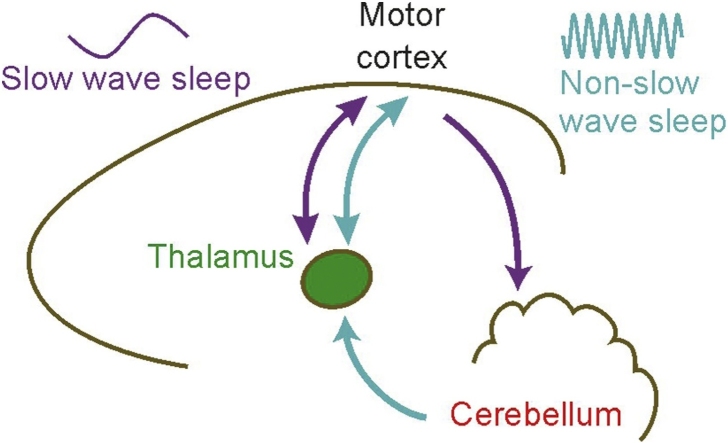
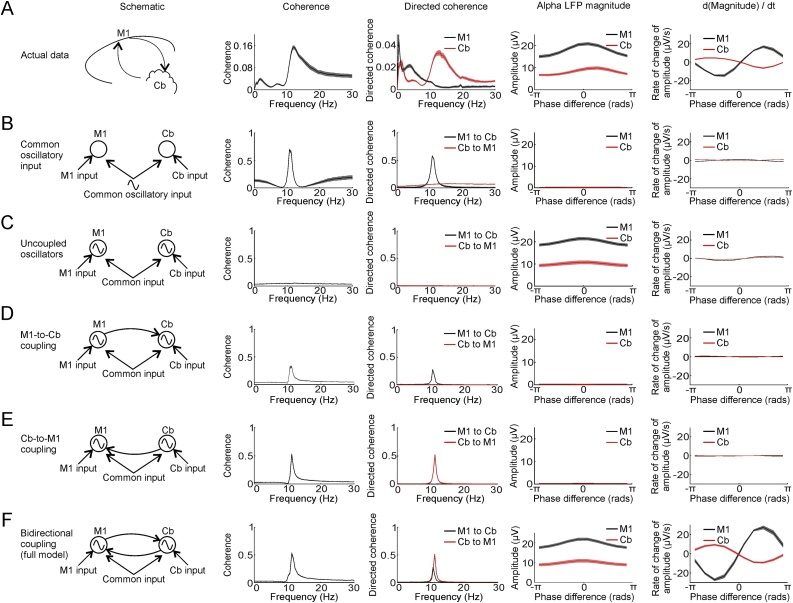
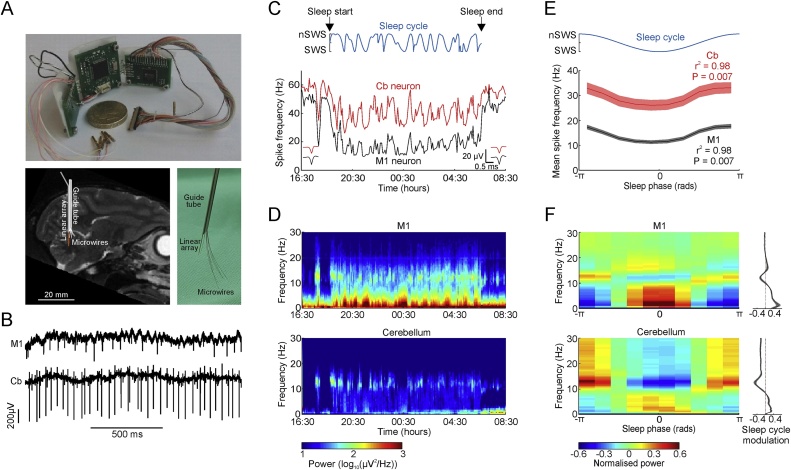
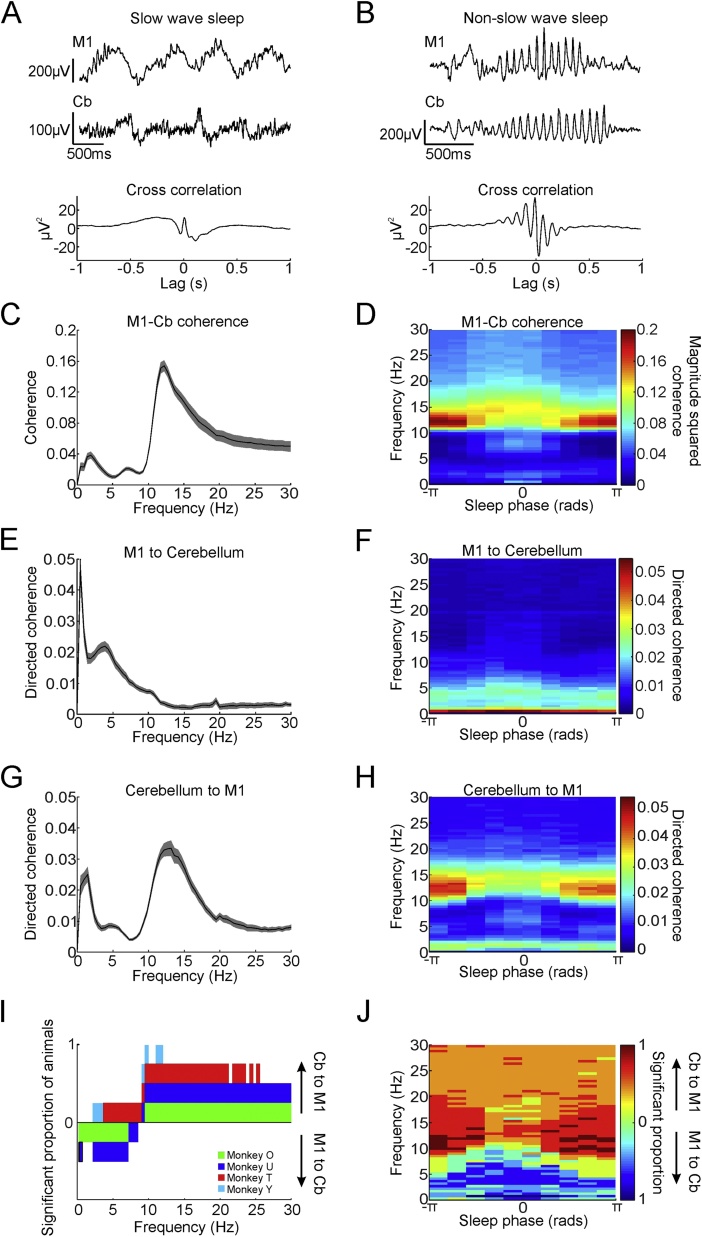
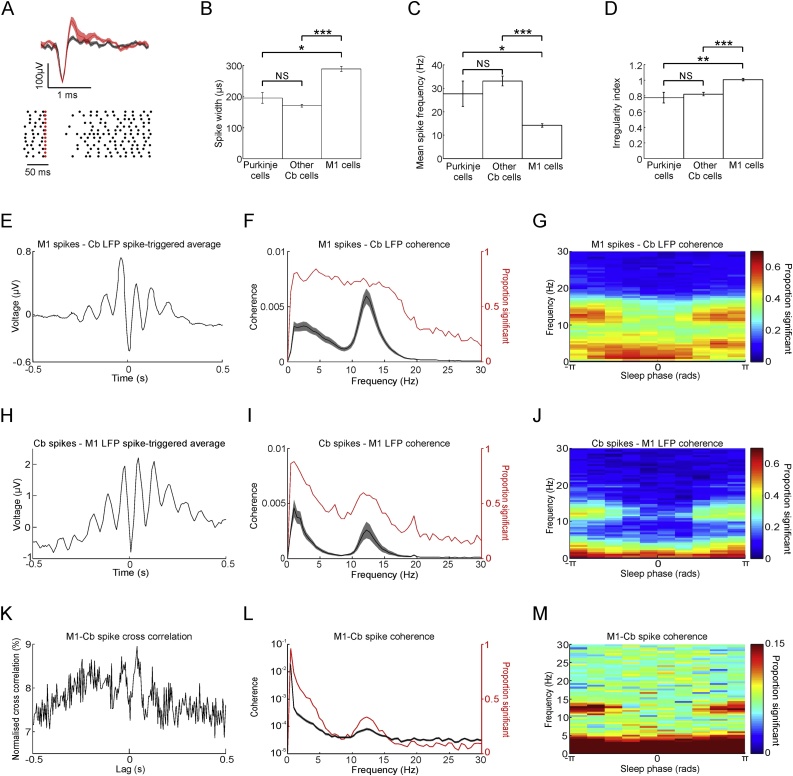
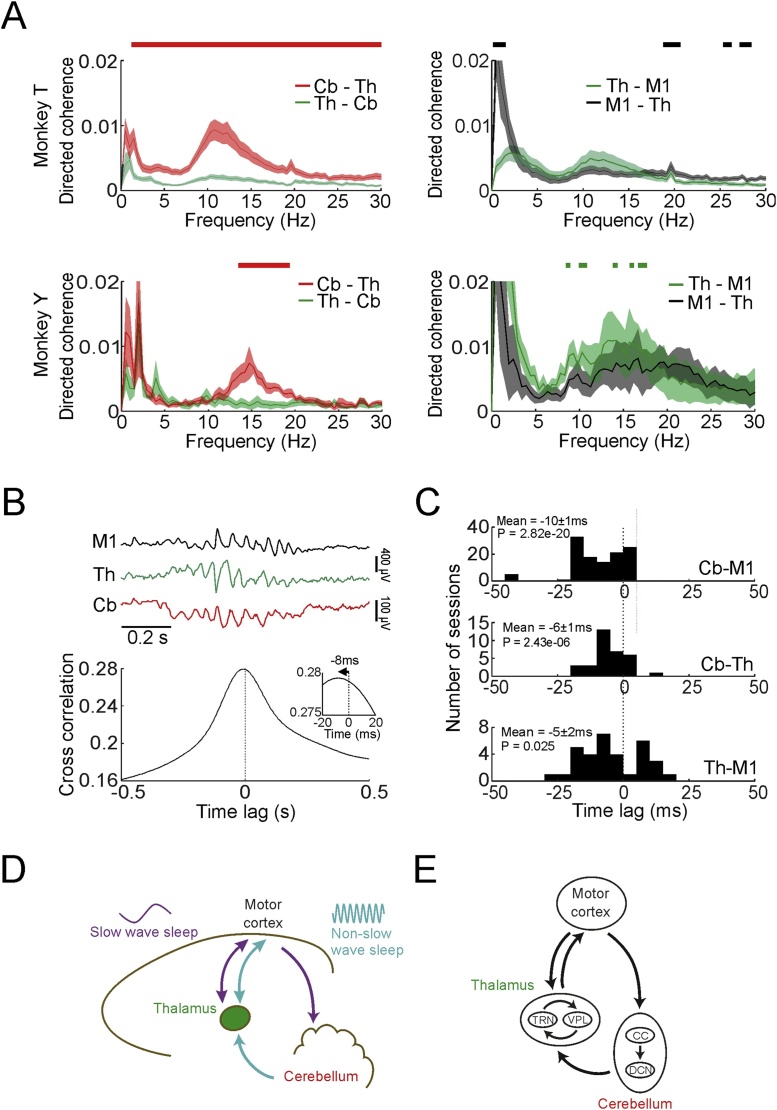
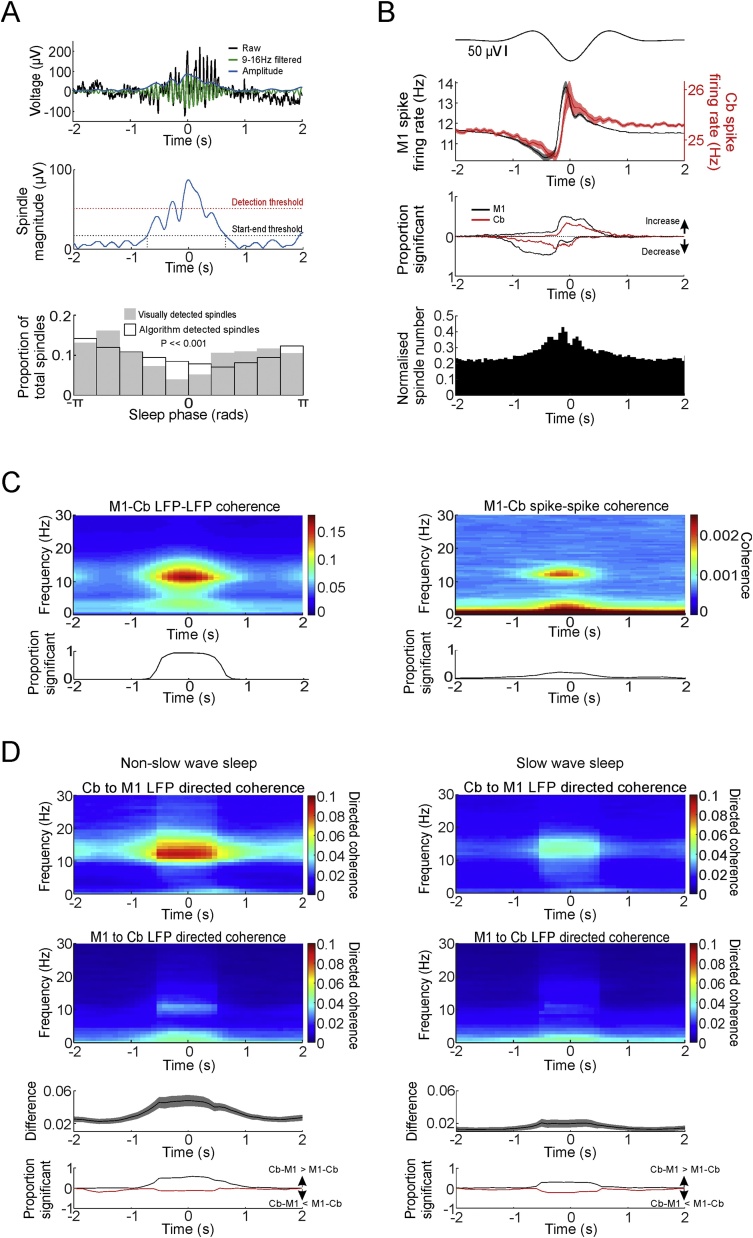
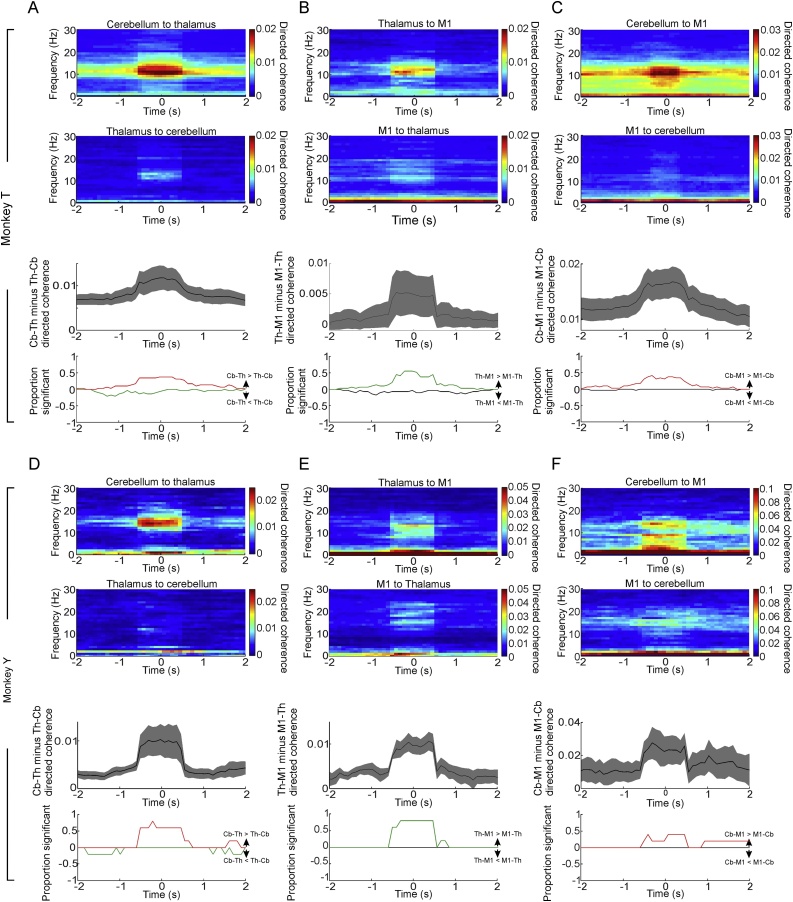
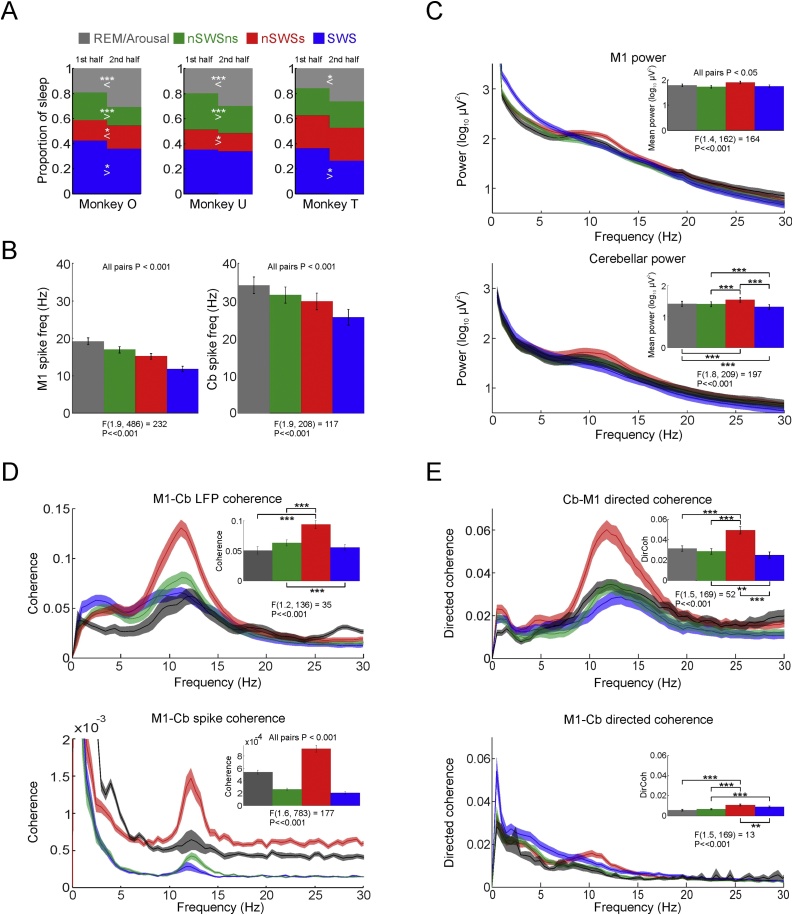
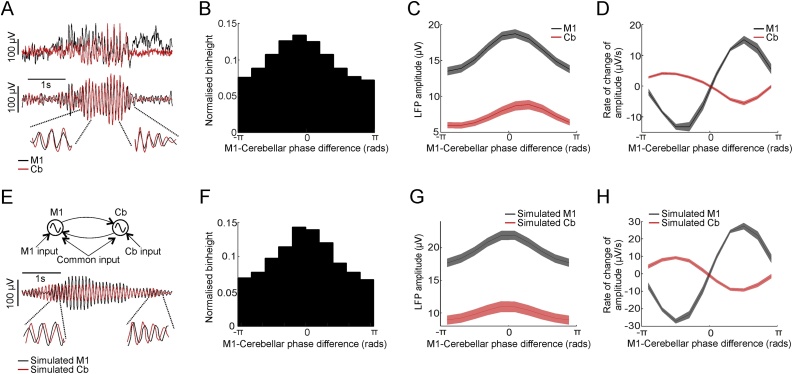
Surprisingly little is known about neural activity in the sleeping cerebellum. Using long-term wireless recording, we characterised dynamic cerebro-thalamo-cerebellar interactions during natural sleep in monkeys. Similar sleep cycles were evident in both M1 and cerebellum as cyclical fluctuations in firing rates as well as a reciprocal pattern of slow waves and sleep spindles. Directed connectivity from motor cortex to the cerebellum suggested a neocortical origin of slow waves. Surprisingly however, spindles were associated with a directional influence from the cerebellum to motor cortex, conducted via the thalamus. Furthermore, the relative phase of spindle-band oscillations in the neocortex and cerebellum varied systematically with their changing amplitudes. We used linear dynamical systems analysis to show that this behaviour could only be explained by a system of two coupled oscillators. These observations appear inconsistent with a single spindle generator within the thalamo-cortical system, and suggest instead a cerebellar contribution to neocortical sleep spindles. Since spindles are implicated in the off-line consolidation of procedural learning, we speculate that this may involve communication via cerebello-thalamo-neocortical pathways in sleep.
令人惊讶的是,人们对睡眠小脑的神经活动知之甚少。使用长期无线记录,我们在猴子的自然睡眠期间描述了动态的脑-丘脑-小脑相互作用。在 M1 和小脑中都可以明显看到相似的睡眠周期,表现为放电率的周期性波动以及慢波和睡眠纺锤波的反向模式。从运动皮层到小脑的定向连接表明慢波具有新皮层起源。然而,令人惊讶的是,纺锤波与来自小脑到运动皮层的定向影响有关,通过丘脑进行。此外,皮层和小脑中的纺锤带振荡的相对相位随其幅度的变化而系统变化。我们使用线性动力系统分析表明,这种行为只能通过两个耦合振荡器系统来解释。这些观察结果似乎与丘脑-皮质系统内的单个纺锤波发生器不一致,而是表明小脑对新皮层睡眠纺锤波有贡献。由于纺锤波与程序性学习的离线巩固有关,我们推测这可能涉及睡眠中通过小脑-丘脑-新皮层通路进行的通信。