Li Yong, Wang Shifeng, Shen Zichen, Li Xin, Zhou Qianyu, Sun Yaxun, Wang Tingting, Liu Yanfang, Gao Qi
Department of Physics, Innovation Center of Materials for Energy and Environment Technologies (i-MEET), College of Science, Tibet University, Lhasa 850000, China.
Institute of Oxygen Supply, Center of Tibetan Studies (Everest Research Institute), Tibet University, Lhasa 850000, China.
ACS Omega. 2020 Oct 22;5(43):28382-28392. doi: 10.1021/acsomega.0c04437. eCollection 2020 Nov 3.
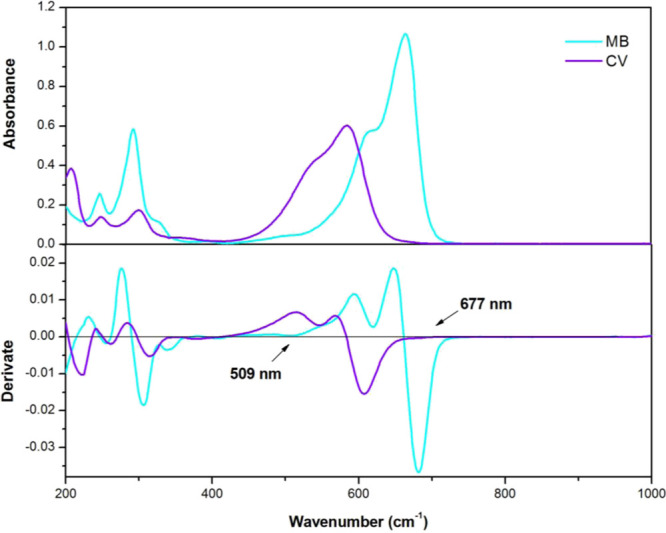
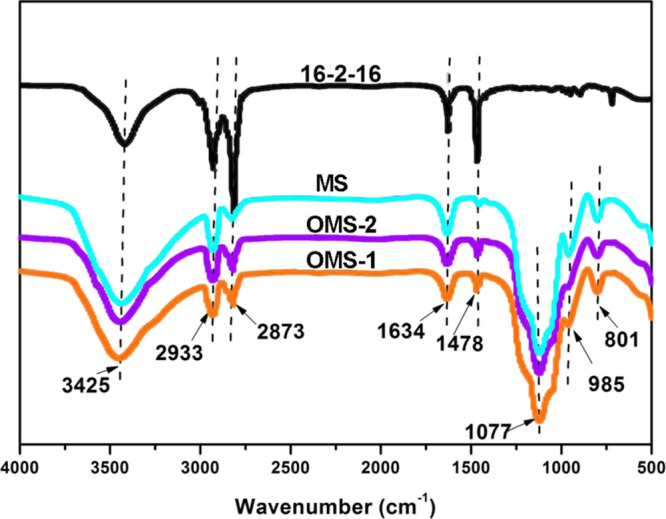
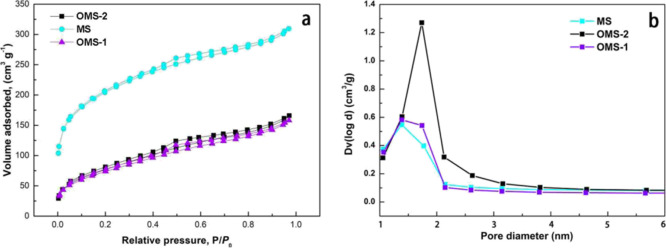
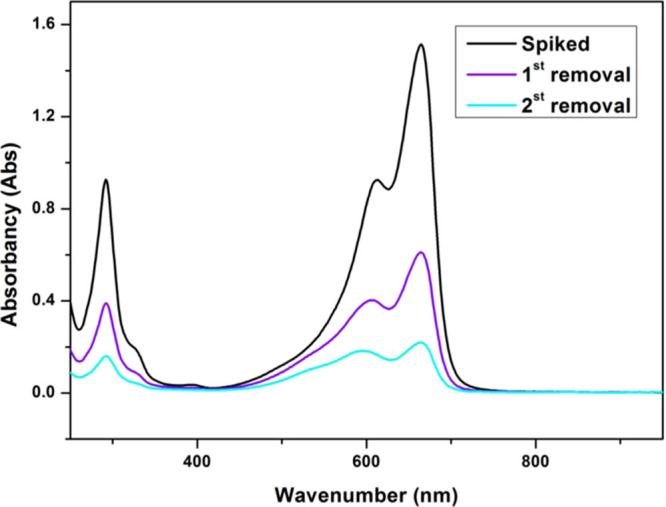
Microporous silica (MS) materials are a kind of an emerging and promising adsorbent precursor. MS prepared from vermiculite has the advantages of easy preparation, low cost, and low layer charge. In this study, organo-MS (OMS) modified by a typical gemini surfactant 1,2-bis(hexadecyldimethylammonio)ethane dibromide (G) is first synthesized and proved to have effective retention capacity toward cationic dyes. Fourier transform infrared spectroscopy, TG-DTG, X-ray diffraction, scanning electron microscopy, transmission electron microscopy, and Brunauer-Emmett-Teller are used to explore the structural characters of adsorbents. Gradient adsorption of compound MS (MS and OMS) in a binary dye system [methylene blue (MB) and crystal violet (CV)] was investigated. In a single system, the relationship between the adsorption capacity and influencing factors (dye concentration, contact time, temperature, and pH), adsorption kinetics, isotherms, as well as thermodynamics was comprehensively compared to reveal the adsorption mechanism. The adsorption values of MB and CV on MS and OMS are 308 mg g ( = 77.0%, 15 min) and 250 mg g ( = 83.3%), respectively, which may be caused by various intermolecular interactions (electrostatic or hydrophobic interactions) between the dye and adsorbent surface. In a binary system, the improved first spectroscopy method is used to calculate the individual concentration of the dye in the binary system. The total removal efficiency of gradient adsorption reaches as high as 89.5% (MB) and 86.4% (CV). In addition, compound MS can be effectively regenerated by HCl solution for several cycles.
微孔二氧化硅(MS)材料是一种新兴且有前景的吸附剂前驱体。由蛭石制备的MS具有制备简便、成本低和层电荷低的优点。在本研究中,首次合成了由典型的双子表面活性剂1,2-双(十六烷基二甲基铵)乙烷二溴化物(G)改性的有机MS(OMS),并证明其对阳离子染料具有有效的保留能力。采用傅里叶变换红外光谱、TG-DTG、X射线衍射、扫描电子显微镜、透射电子显微镜和布鲁诺尔-埃米特-泰勒法来探究吸附剂的结构特征。研究了复合MS(MS和OMS)在二元染料体系[亚甲基蓝(MB)和结晶紫(CV)]中的梯度吸附。在单一体系中,全面比较了吸附容量与影响因素(染料浓度、接触时间、温度和pH)、吸附动力学、等温线以及热力学之间的关系,以揭示吸附机理。MB和CV在MS和OMS上的吸附值分别为308 mg/g(=77.0%,15分钟)和250 mg/g(=83.3%),这可能是由于染料与吸附剂表面之间的各种分子间相互作用(静电或疏水相互作用)所致。在二元体系中,采用改进的一阶光谱法计算二元体系中染料的个体浓度。梯度吸附的总去除效率高达89.5%(MB)和86.4%(CV)。此外,复合MS可用HCl溶液有效再生若干循环。