Department of Politics, Princeton University, United States.
Department of Government, Dartmouth College, United States.
Vaccine. 2020 Nov 17;38(49):7799-7805. doi: 10.1016/j.vaccine.2020.10.018. Epub 2020 Oct 22.
To assess the quantity and type of vaccine-related information Americans consume online and its relationship to social media use and attitudes toward vaccines.
Analysis of individual-level web browsing data linked with survey responses from representative samples of Americans collected between October 2016 and February 2019.
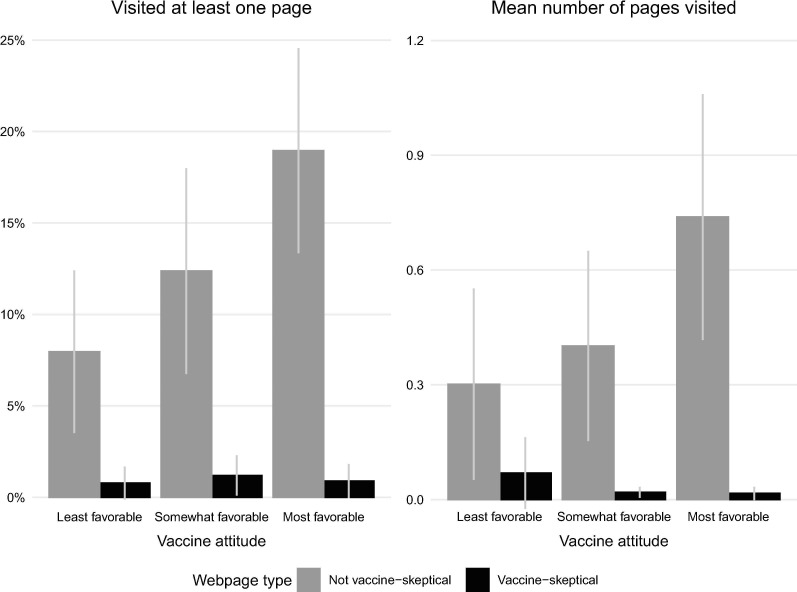
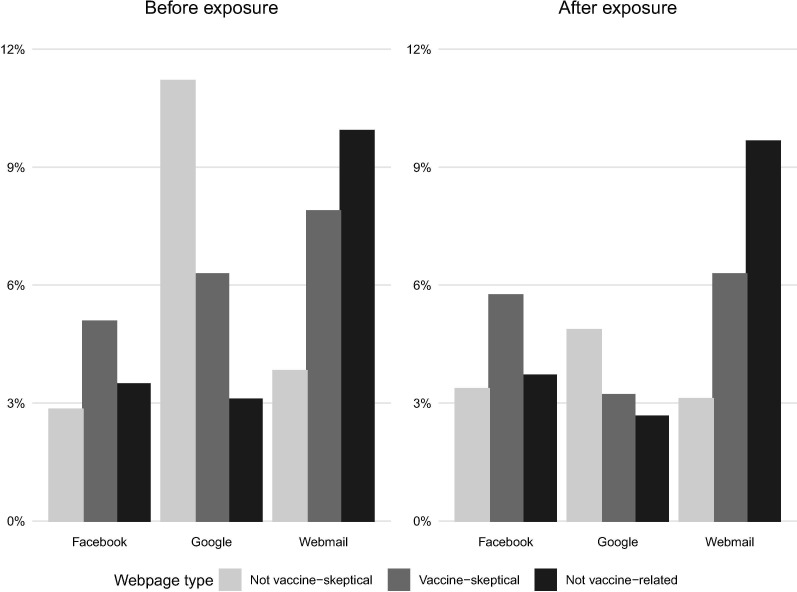
We estimate that approximately 84% of Americans visit a vaccine-related webpage each year. Encounters with vaccine-skeptical content are less frequent; they make up only 7.5% of vaccine-related pageviews and are encountered by only 18.5% of people annually. However, these pages are more likely to be published by untrustworthy sources. Moreover, skeptical content exposure is more common among people with less favorable vaccine attitudes. Finally, usage of online intermediaries is frequently linked to vaccine-related information exposure. Google use is differentially associated with subsequent exposure to non-skeptical content, whereas exposure to vaccine-skeptical webpages is associated with usage of webmail and, to a lesser extent, Facebook.
Online exposure to vaccine-skeptical content is relatively rare, but vigilance is required given the potential for exposure among vulnerable audiences.
评估美国人在线获取疫苗相关信息的数量和类型,及其与社交媒体使用和疫苗态度之间的关系。
分析 2016 年 10 月至 2019 年 2 月期间从代表性美国人群中收集的个人网络浏览数据与调查回复之间的关联。
我们估计,每年约有 84%的美国人访问过与疫苗相关的网页。接触到怀疑疫苗的内容不太常见;它们仅占疫苗相关网页浏览量的 7.5%,每年只有 18.5%的人会接触到。然而,这些网页更有可能来自不可信的来源。此外,对疫苗持负面态度的人更容易接触到怀疑疫苗的内容。最后,使用在线中介通常与疫苗相关信息的接触有关。谷歌的使用与随后接触到非怀疑疫苗的内容有关,而接触到怀疑疫苗的网页则与使用网络邮件有关,而与 Facebook 的关联则较小。
尽管接触怀疑疫苗内容的情况相对较少,但鉴于易受影响人群可能会接触到这种内容,因此仍需保持警惕。