• 文献检索
  • 文档翻译
  • 深度研究
  • 学术资讯
  • Suppr Zotero 插件Zotero 插件
  • 邀请有礼
  • 套餐&价格
  • 历史记录
应用&插件
Suppr Zotero 插件Zotero 插件浏览器插件Mac 客户端Windows 客户端微信小程序
定价
高级版会员购买积分包购买API积分包
服务
文献检索文档翻译深度研究API 文档MCP 服务
关于我们
关于 Suppr公司介绍联系我们用户协议隐私条款
关注我们

Suppr 超能文献

核心技术专利:CN118964589B侵权必究
粤ICP备2023148730 号-1Suppr @ 2026

文献检索

告别复杂PubMed语法,用中文像聊天一样搜索,搜遍4000万医学文献。AI智能推荐,让科研检索更轻松。

立即免费搜索

文件翻译

保留排版,准确专业,支持PDF/Word/PPT等文件格式,支持 12+语言互译。

免费翻译文档

深度研究

AI帮你快速写综述,25分钟生成高质量综述,智能提取关键信息,辅助科研写作。

立即免费体验

线上疫苗接种劝导:对两个支持疫苗和两个对疫苗持怀疑态度网站的定性研究

Vaccination persuasion online: a qualitative study of two provaccine and two vaccine-skeptical websites.

作者信息

Grant Lenny, Hausman Bernice L, Cashion Margaret, Lucchesi Nicholas, Patel Kelsey, Roberts Jonathan

机构信息

Vaccination Research Group, Department of English, Virginia Tech, Blacksburg, VA, United States.

出版信息

J Med Internet Res. 2015 May 29;17(5):e133. doi: 10.2196/jmir.4153.

DOI:10.2196/jmir.4153
PMID:26024907
原文链接:https://pmc.ncbi.nlm.nih.gov/articles/PMC4468570/
Abstract

BACKGROUND

Current concerns about vaccination resistance often cite the Internet as a source of vaccine controversy. Most academic studies of vaccine resistance online use quantitative methods to describe misinformation on vaccine-skeptical websites. Findings from these studies are useful for categorizing the generic features of these websites, but they do not provide insights into why these websites successfully persuade their viewers. To date, there have been few attempts to understand, qualitatively, the persuasive features of provaccine or vaccine-skeptical websites.

OBJECTIVE

The purpose of this research was to examine the persuasive features of provaccine and vaccine-skeptical websites. The qualitative analysis was conducted to generate hypotheses concerning what features of these websites are persuasive to people seeking information about vaccination and vaccine-related practices.

METHODS

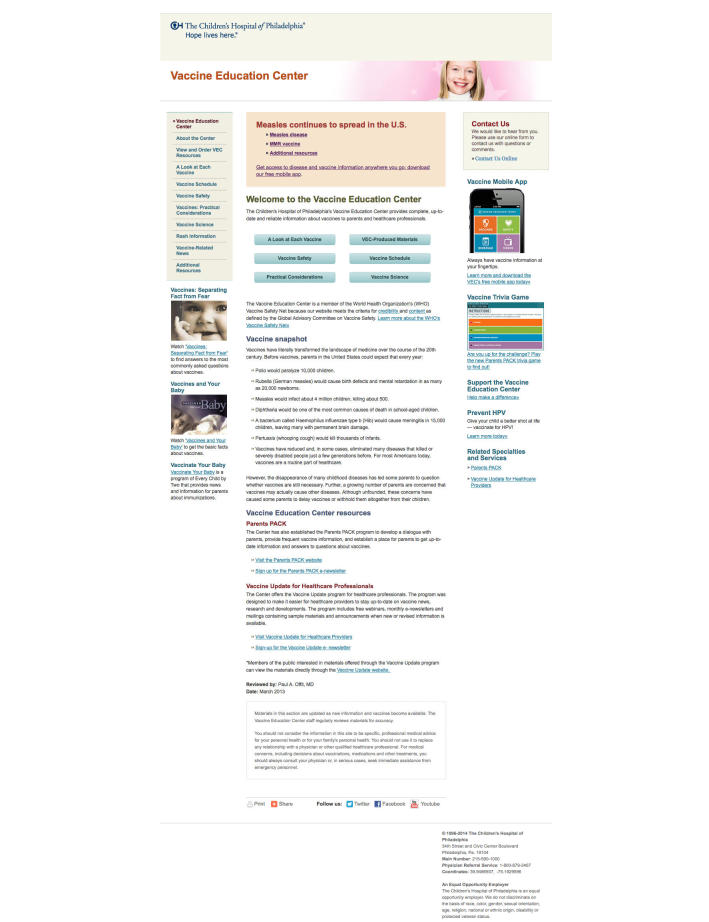
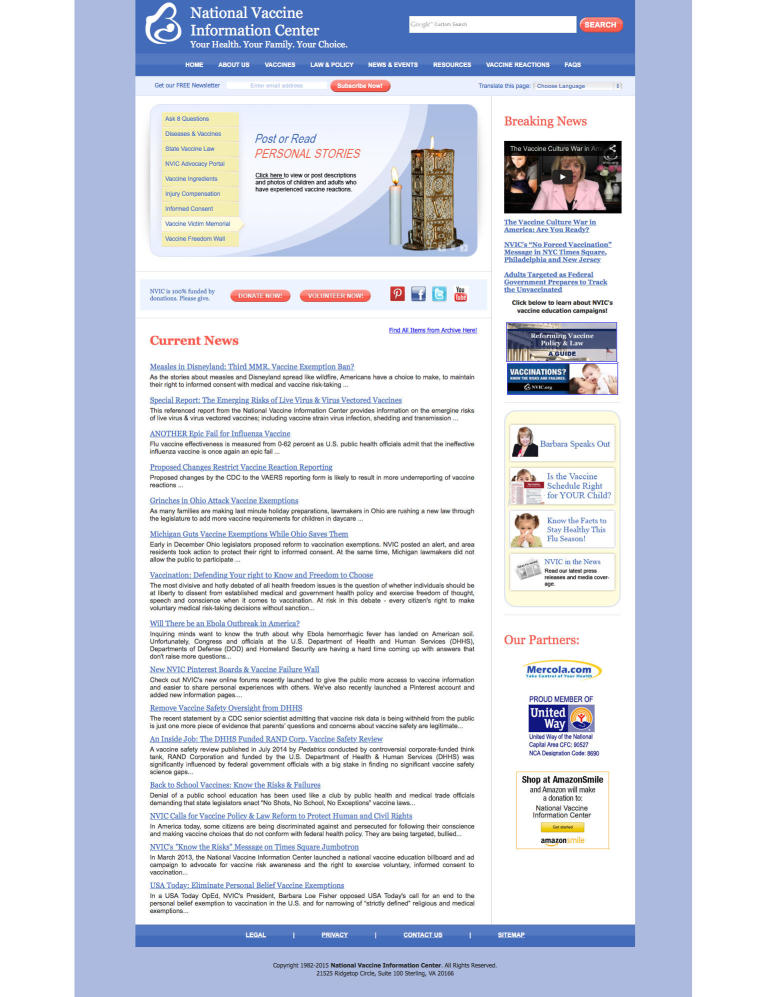
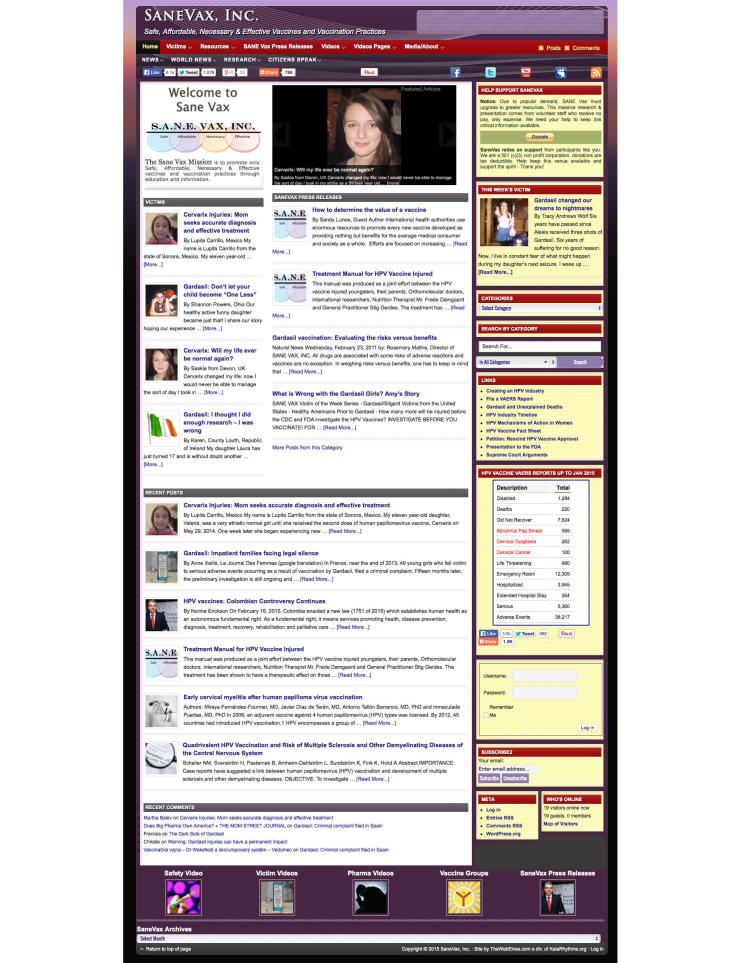
This study employed a fully qualitative case study methodology that used the anthropological method of thick description to detail and carefully review the rhetorical features of 1 provaccine government website, 1 provaccine hospital website, 1 vaccine-skeptical information website focused on general vaccine safety, and 1 vaccine-skeptical website focused on a specific vaccine. The data gathered were organized into 5 domains: website ownership, visual and textual content, user experience, hyperlinking, and social interactivity.

RESULTS

The study found that the 2 provaccine websites analyzed functioned as encyclopedias of vaccine information. Both of the websites had relatively small digital ecologies because they only linked to government websites or websites that endorsed vaccination and evidence-based medicine. Neither of these websites offered visitors interactive features or made extensive use of the affordances of Web 2.0. The study also found that the 2 vaccine-skeptical websites had larger digital ecologies because they linked to a variety of vaccine-related websites, including government websites. They leveraged the affordances of Web 2.0 with their interactive features and digital media.

CONCLUSIONS

By employing a rhetorical framework, this study found that the provaccine websites analyzed concentrate on the accurate transmission of evidence-based scientific research about vaccines and government-endorsed vaccination-related practices, whereas the vaccine-skeptical websites focus on creating communities of people affected by vaccines and vaccine-related practices. From this personal framework, these websites then challenge the information presented in scientific literature and government documents. At the same time, the vaccine-skeptical websites in this study are repositories of vaccine information and vaccination-related resources. Future studies on vaccination and the Internet should take into consideration the rhetorical features of provaccine and vaccine-skeptical websites and further investigate the influence of Web 2.0 community-building features on people seeking information about vaccine-related practices.

https://cdn.ncbi.nlm.nih.gov/pmc/blobs/12c2/4468570/c6fd6f5ce0a3/jmir_v17i5e133_fig4.jpg
https://cdn.ncbi.nlm.nih.gov/pmc/blobs/12c2/4468570/22949f9e2c8e/jmir_v17i5e133_fig1.jpg
https://cdn.ncbi.nlm.nih.gov/pmc/blobs/12c2/4468570/f9965f70a813/jmir_v17i5e133_fig2.jpg
https://cdn.ncbi.nlm.nih.gov/pmc/blobs/12c2/4468570/455de5275452/jmir_v17i5e133_fig3.jpg
https://cdn.ncbi.nlm.nih.gov/pmc/blobs/12c2/4468570/c6fd6f5ce0a3/jmir_v17i5e133_fig4.jpg
https://cdn.ncbi.nlm.nih.gov/pmc/blobs/12c2/4468570/22949f9e2c8e/jmir_v17i5e133_fig1.jpg
https://cdn.ncbi.nlm.nih.gov/pmc/blobs/12c2/4468570/f9965f70a813/jmir_v17i5e133_fig2.jpg
https://cdn.ncbi.nlm.nih.gov/pmc/blobs/12c2/4468570/455de5275452/jmir_v17i5e133_fig3.jpg
https://cdn.ncbi.nlm.nih.gov/pmc/blobs/12c2/4468570/c6fd6f5ce0a3/jmir_v17i5e133_fig4.jpg
摘要

背景

当前对疫苗接种抵触情绪的担忧常常将互联网视为疫苗争议的源头。大多数关于网上疫苗接种抵触情绪的学术研究采用定量方法来描述对疫苗持怀疑态度的网站上的错误信息。这些研究结果有助于对这些网站的一般特征进行分类,但无法深入了解这些网站为何能成功说服其浏览者。迄今为止,几乎没有人尝试从定性角度去理解支持疫苗接种或对疫苗持怀疑态度的网站的说服特征。

目的

本研究旨在探究支持疫苗接种和对疫苗持怀疑态度的网站的说服特征。进行定性分析,以提出关于这些网站的哪些特征对寻求疫苗接种及疫苗相关做法信息的人具有说服力的假设。

方法

本研究采用完全定性的案例研究方法,运用人类学的深度描述方法,详细并仔细审查1个支持疫苗接种的政府网站、1个支持疫苗接种的医院网站、1个关注一般疫苗安全性的对疫苗持怀疑态度的信息网站以及1个关注特定疫苗的对疫苗持怀疑态度的网站的修辞特征。收集到的数据被整理成5个领域:网站所有权、视觉和文本内容、用户体验、超链接以及社交互动性。

结果

研究发现,所分析的2个支持疫苗接种的网站发挥着疫苗信息百科全书的作用。这两个网站的数字生态相对较小,因为它们仅链接到政府网站或支持疫苗接种及循证医学的网站。这两个网站都未为访问者提供互动功能,也未广泛利用Web 2.0的特性。研究还发现,2个对疫苗持怀疑态度的网站拥有更大的数字生态,因为它们链接到各种与疫苗相关的网站,包括政府网站。它们通过互动功能和数字媒体利用了Web 2.0的特性。

结论

通过运用修辞框架,本研究发现,所分析的支持疫苗接种的网站专注于准确传播关于疫苗的循证科学研究以及政府认可的疫苗接种相关做法,而对疫苗持怀疑态度的网站则专注于创建受疫苗及疫苗相关做法影响的人群社区。基于此个人框架,这些网站随后对科学文献和政府文件中呈现的信息提出质疑。同时,本研究中的对疫苗持怀疑态度的网站是疫苗信息和疫苗接种相关资源的存储库。未来关于疫苗接种与互联网的研究应考虑支持疫苗接种和对疫苗持怀疑态度的网站的修辞特征,并进一步调查Web 2.0社区建设功能对寻求疫苗相关做法信息的人的影响。

相似文献

1
Vaccination persuasion online: a qualitative study of two provaccine and two vaccine-skeptical websites.线上疫苗接种劝导:对两个支持疫苗和两个对疫苗持怀疑态度网站的定性研究
J Med Internet Res. 2015 May 29;17(5):e133. doi: 10.2196/jmir.4153.
2
Vaccine Hesitancy and Online Information: The Influence of Digital Networks.疫苗犹豫与网络信息:数字网络的影响。
Health Educ Behav. 2018 Aug;45(4):599-606. doi: 10.1177/1090198117739673. Epub 2017 Dec 21.
3
Fear and Derision: A Quantitative Content Analysis of Provaccine and Antivaccine Internet Memes.恐惧与嘲笑:疫苗支持派与反疫苗派互联网模因的定量内容分析。
Health Educ Behav. 2019 Dec;46(6):1012-1023. doi: 10.1177/1090198119866886. Epub 2019 Sep 6.
4
Using Machine Learning to Compare Provaccine and Antivaccine Discourse Among the Public on Social Media: Algorithm Development Study.使用机器学习比较社交媒体上公众对疫苗和反疫苗言论:算法开发研究。
JMIR Public Health Surveill. 2021 Jun 24;7(6):e23105. doi: 10.2196/23105.
5
Vaccine criticism: Presence and arguments on French-speaking websites.疫苗批评:在法语网站上的存在与观点。
Med Mal Infect. 2018 Feb;48(1):37-43. doi: 10.1016/j.medmal.2017.09.003. Epub 2017 Oct 12.
6
Rhetorical Appeals and Tactics in New York Times Comments About Vaccines: Qualitative Analysis.《纽约时报》关于疫苗评论中的修辞诉求和策略:定性分析。
J Med Internet Res. 2020 Dec 4;22(12):e19504. doi: 10.2196/19504.
7
Communication about vaccinations in Italian websites: a quantitative analysis.意大利网站上关于疫苗接种的交流:一项定量分析。
Hum Vaccin Immunother. 2014;10(5):1416-20. doi: 10.4161/hv.28268. Epub 2014 Mar 7.
8
Supporting informed decision-making about vaccination: an analysis of two official websites.支持关于疫苗接种的知情决策:对两个官方网站的分析。
Public Health. 2020 Jan;178:112-119. doi: 10.1016/j.puhe.2019.09.007. Epub 2019 Oct 30.
9
Content and functionality of alcohol and other drug websites: results of an online survey.酒精及其他毒品相关网站的内容与功能:一项在线调查结果
J Med Internet Res. 2010 Dec 19;12(5):e51. doi: 10.2196/jmir.1449.
10
Lessons from an online vaccine communication project.从一个在线疫苗传播项目中得到的经验。
Vaccine. 2018 Oct 22;36(44):6509-6511. doi: 10.1016/j.vaccine.2018.05.007. Epub 2018 Jun 18.

引用本文的文献

1
Mapping Vaccine Sentiment by Analyzing Spanish-Language Social Media Posts and Survey-Based Public Opinion: Dual Methods Study.通过分析西班牙语社交媒体帖子和基于调查的公众舆论来绘制疫苗情绪:双方法研究
JMIR Infodemiology. 2025 Aug 29;5:e63223. doi: 10.2196/63223.
2
From institutional trust to digital literacy: Socioeconomic and political determinants of COVID-19 vaccine hesitancy among Czech adults based on a national panel survey.从机构信任到数字素养:基于全国性面板调查的捷克成年人对新冠疫苗犹豫态度的社会经济和政治决定因素
Hum Vaccin Immunother. 2025 Dec;21(1):2533639. doi: 10.1080/21645515.2025.2533639. Epub 2025 Jul 15.
3

本文引用的文献

1
Opioid abuse in the United States and Department of Health and Human Services actions to address opioid-drug-related overdoses and deaths.美国的阿片类药物滥用情况以及美国卫生与公众服务部为应对与阿片类药物相关的过量用药和死亡所采取的行动。
J Pain Palliat Care Pharmacother. 2015 Jun;29(2):133-9. doi: 10.3109/15360288.2015.1037530.
2
Greater freedom of speech on Web 2.0 correlates with dominance of views linking vaccines to autism.网络2.0上言论自由度的提高与将疫苗与自闭症联系起来的观点占主导地位相关。
Vaccine. 2015 Mar 17;33(12):1422-5. doi: 10.1016/j.vaccine.2015.01.078. Epub 2015 Feb 7.
3
Vaccine-criticism on the internet: new insights based on French-speaking websites.
Identifying Trusted Sources of Lyme Disease Prevention Information Among Internet Users Connected to Academic Public Health Resources: Internet-Based Survey Study.
在与学术公共卫生资源相关的互联网用户中识别莱姆病预防信息的可靠来源:基于互联网的调查研究。
JMIR Form Res. 2023 Jul 26;7:e43516. doi: 10.2196/43516.
4
Exploring parents' views of the use of narratives to promote childhood vaccination online.探讨父母对使用叙事来促进儿童在线接种疫苗的看法。
PLoS One. 2023 Jul 19;18(7):e0284107. doi: 10.1371/journal.pone.0284107. eCollection 2023.
5
A taxonomy of anti-vaccination arguments from a systematic literature review and text modelling.从系统文献回顾和文本建模的角度对反疫苗接种论点进行分类。
Nat Hum Behav. 2023 Sep;7(9):1462-1480. doi: 10.1038/s41562-023-01644-3. Epub 2023 Jul 17.
6
The Association Between Dissemination and Characteristics of Pro-/Anti-COVID-19 Vaccine Messages on Twitter: Application of the Elaboration Likelihood Model.推特上支持/反对新冠疫苗信息的传播与特征之间的关联:精细加工可能性模型的应用
JMIR Infodemiology. 2022 Jun 27;2(1):e37077. doi: 10.2196/37077. eCollection 2022 Jan-Jun.
7
Online misinformation and vaccine hesitancy.网络错误信息与疫苗犹豫
Transl Behav Med. 2021 Dec 14;11(12):2194-2199. doi: 10.1093/tbm/ibab128.
8
The COVID-19 pandemic and the search for structure: Social media and conspiracy theories.新冠疫情与对结构的探寻:社交媒体与阴谋论
Soc Personal Psychol Compass. 2021 Sep;15(9):e12636. doi: 10.1111/spc3.12636. Epub 2021 Aug 4.
9
[Content Themes and Influential Voices Within Vaccine Opposition on Twitter, 2019].[2019年推特上疫苗反对者的内容主题及有影响力的观点]
Rev Panam Salud Publica. 2021 May 12;45:e54. doi: 10.26633/RPSP.2021.54. eCollection 2021.
10
Rhetorical Appeals and Tactics in New York Times Comments About Vaccines: Qualitative Analysis.《纽约时报》关于疫苗评论中的修辞诉求和策略:定性分析。
J Med Internet Res. 2020 Dec 4;22(12):e19504. doi: 10.2196/19504.
互联网上对疫苗的批评:基于法语网站的新见解。
Vaccine. 2015 Feb 18;33(8):1063-70. doi: 10.1016/j.vaccine.2014.12.064. Epub 2015 Jan 9.
4
'Poisonous, filthy, loathsome, damnable stuff': the rhetorical ecology of vaccination concern.“有毒、肮脏、令人厌恶、该受诅咒的东西”:疫苗接种担忧的修辞生态学
Yale J Biol Med. 2014 Dec 12;87(4):403-16. eCollection 2014 Dec.
5
Dr Google and the consumer: a qualitative study exploring the navigational needs and online health information-seeking behaviors of consumers with chronic health conditions.谷歌医生与消费者:一项定性研究,探索慢性病患者的导航需求及在线健康信息寻求行为
J Med Internet Res. 2014 Dec 2;16(12):e262. doi: 10.2196/jmir.3706.
6
Attitudes to vaccination: a critical review.接种态度:批判性回顾。
Soc Sci Med. 2014 Jul;112:1-11. doi: 10.1016/j.socscimed.2014.04.018. Epub 2014 Apr 16.
7
Reframing medicine's publics: the local as a public of vaccine refusal.重塑医学的公众群体:将地方视为拒绝接种疫苗的公众群体。
J Med Humanit. 2014 Jun;35(2):111-29. doi: 10.1007/s10912-014-9278-4.
8
Effective messages in vaccine promotion: a randomized trial.疫苗推广中的有效信息:一项随机试验。
Pediatrics. 2014 Apr;133(4):e835-42. doi: 10.1542/peds.2013-2365. Epub 2014 Mar 3.
9
The effects of anti-vaccine conspiracy theories on vaccination intentions.反疫苗阴谋论对疫苗接种意愿的影响。
PLoS One. 2014 Feb 20;9(2):e89177. doi: 10.1371/journal.pone.0089177. eCollection 2014.
10
Measuring vaccine confidence: analysis of data obtained by a media surveillance system used to analyse public concerns about vaccines.测量疫苗信心:利用媒体监测系统分析公众对疫苗的担忧数据。
Lancet Infect Dis. 2013 Jul;13(7):606-13. doi: 10.1016/S1473-3099(13)70108-7. Epub 2013 May 13.