Department of Translational Medicine, Seoul National University College of Medicine, Seoul, Korea.
Department of Orthopedic Surgery, SMG-SNU Boramae Medical Center, Seoul National University College of Medicine, Seoul, Korea.
PLoS One. 2020 Nov 9;15(11):e0235239. doi: 10.1371/journal.pone.0235239. eCollection 2020.
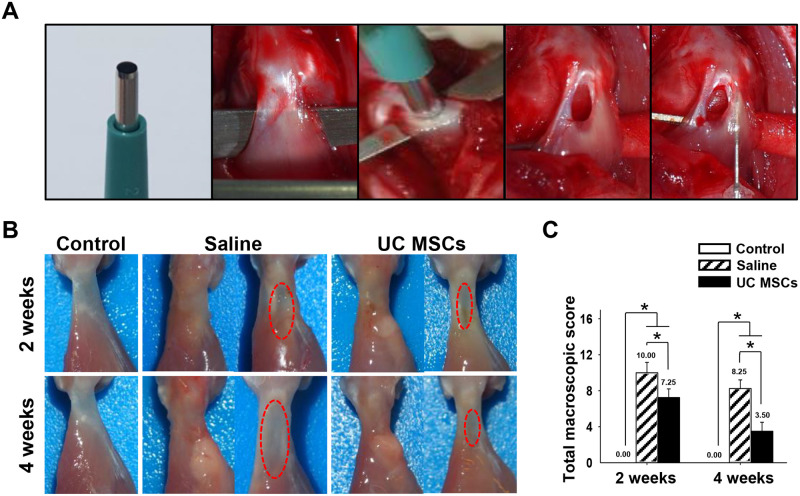
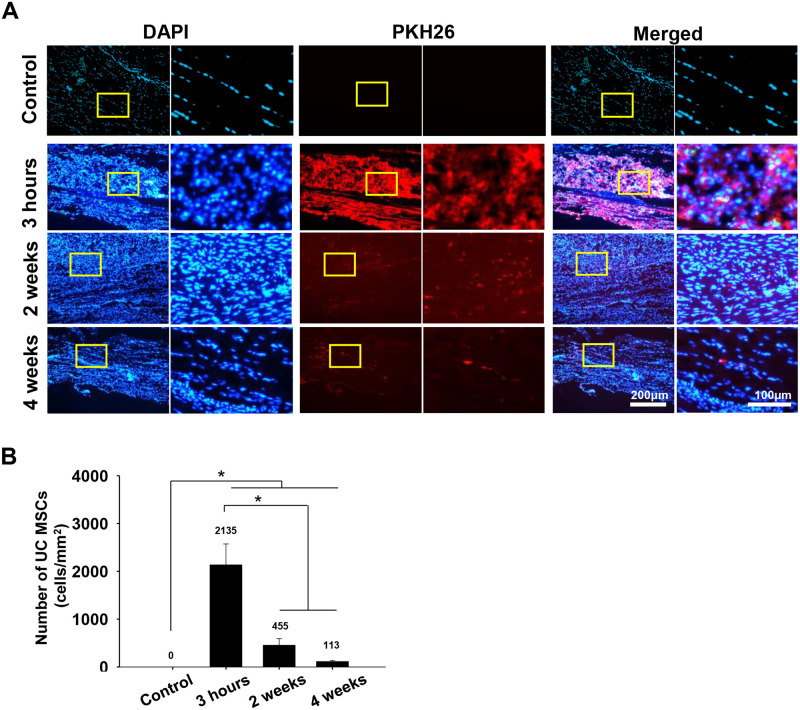
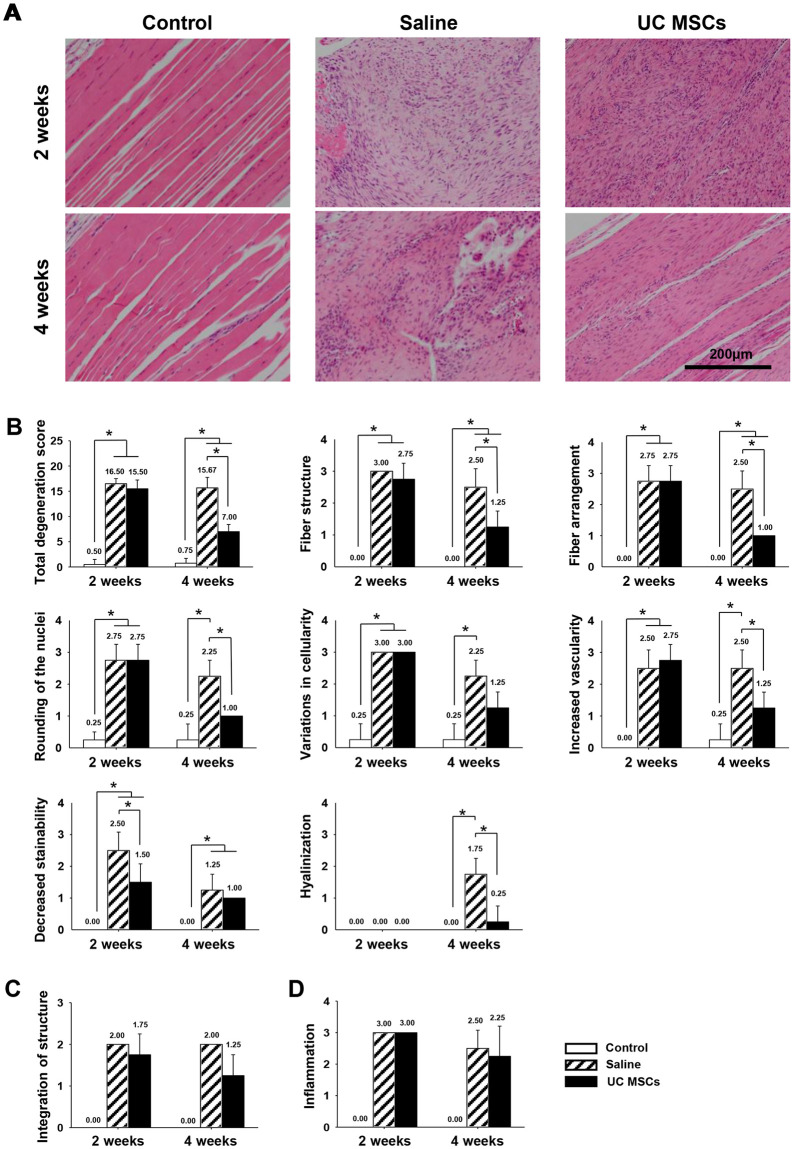
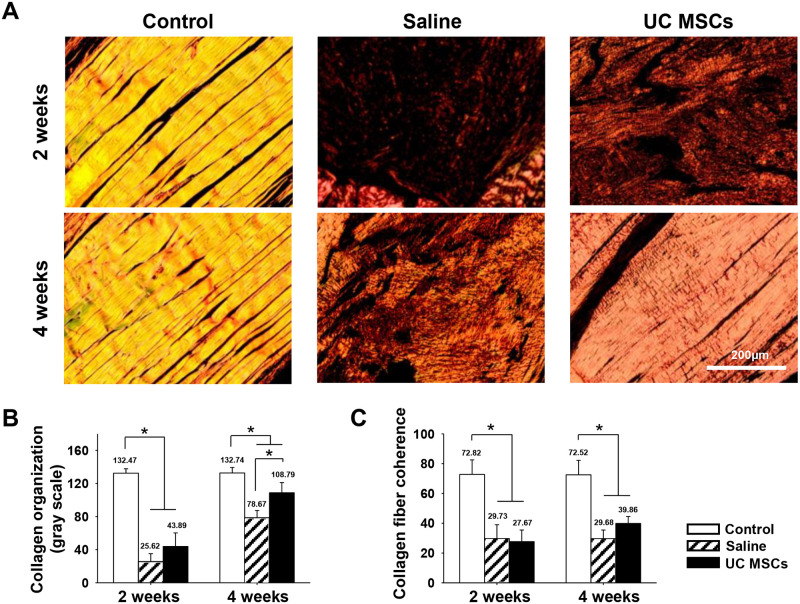
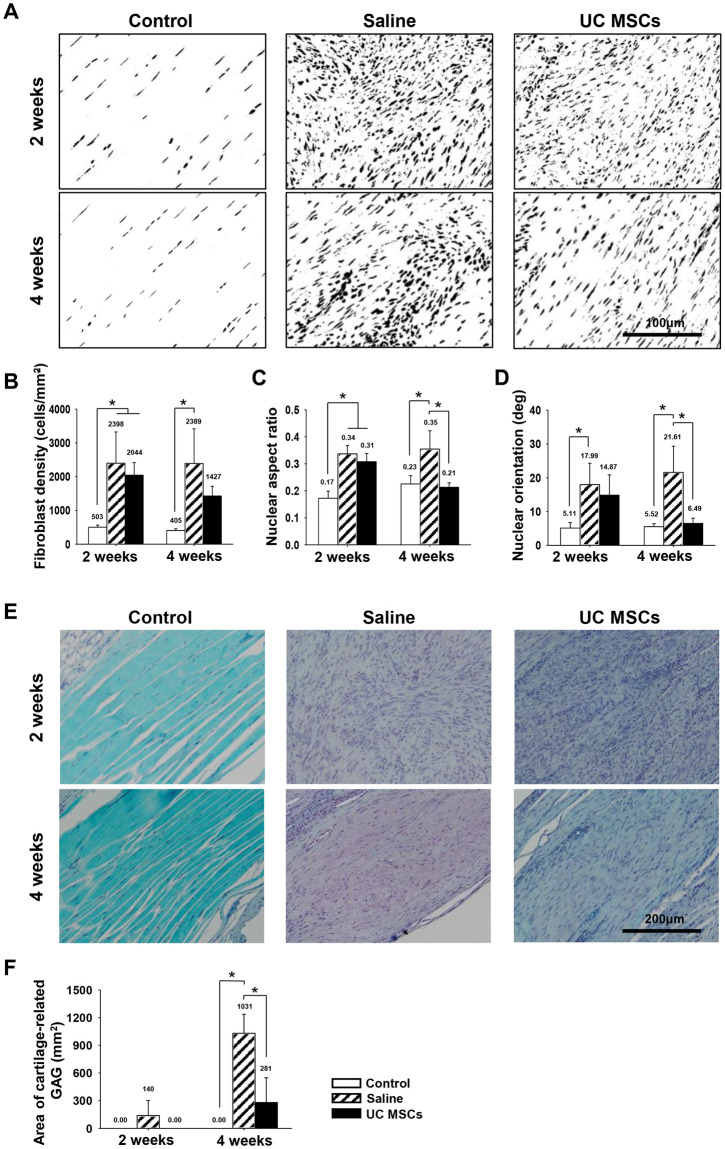
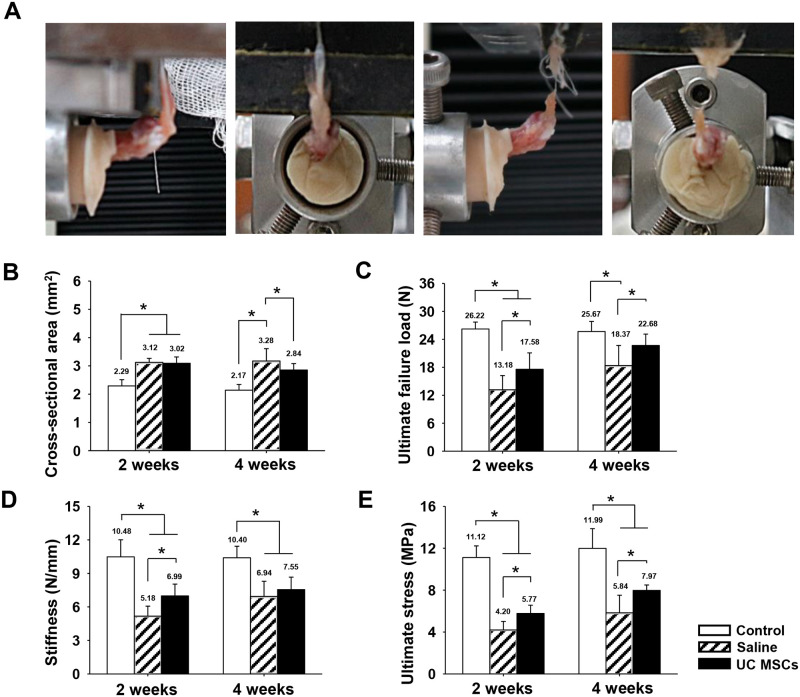
Although rotator cuff disease is a common cause of shoulder pain, there is still no treatment method that could halt or reveres its development and progression. The purpose of this study was to investigate the efficacy of umbilical cord-derived mesenchymal stem cells (UC MSCs) on the regeneration of a full-thickness rotator cuff defect (FTD) in a rat model. We injected either UC MSCs or saline to the FTD and investigated macroscopic, histological and biomechanical results and cell trafficking. Treatment with UC MSCs improved macroscopic appearance in terms of tendon thickness at two weeks, and inflammation, defect size, swelling/redness and connection surrounding tissue and slidability at four weeks compared to the saline group. Histologically, UC MSCs induced the tendon matrix formation recovering collagen organization, nuclear aspect ratio and orientation angle of fibroblast as well as suppressing cartilage-related glycosaminoglycan compared to saline group at four weeks. The UC MSCs group also improved ultimate failure load by 25.0% and 19.0% and ultimate stress by 27.3% and 26.8% at two and four weeks compared to saline group. UC MSCs labeled with PKH26 exhibited 5.3% survival at four weeks compared to three hours after injection. This study demonstrated that UC MSCs regenerated the FTD with tendon tissue similar properties to the normal tendon in terms of macroscopic, histological and biomechanical characteristics in a rat model.
尽管肩袖疾病是引起肩部疼痛的常见原因,但目前仍没有能够阻止或逆转其发展和进展的治疗方法。本研究旨在探讨脐带间充质干细胞(UC MSCs)在大鼠全层肩袖缺损(FTD)模型中的再生效果。我们将 UC MSCs 或生理盐水注射到 FTD 中,并对宏观、组织学和生物力学结果以及细胞迁移进行了研究。与生理盐水组相比,UC MSCs 治疗在两周时改善了肌腱厚度的宏观外观,在四周时改善了炎症、缺损大小、肿胀/发红以及周围组织的连接和滑动性。组织学上,与生理盐水组相比,UC MSCs 在四周时诱导了肌腱基质的形成,恢复了胶原组织、成纤维细胞核的纵横比和取向角,并抑制了软骨相关的糖胺聚糖。与生理盐水组相比,UC MSCs 组在两周和四周时的最终失效负荷分别提高了 25.0%和 19.0%,最终应力分别提高了 27.3%和 26.8%。注射后 4 周,PKH26 标记的 UC MSCs 存活率为 5.3%。本研究表明,UC MSCs 在大鼠模型中再生了 FTD,其在宏观、组织学和生物力学特征方面具有与正常肌腱相似的肌腱组织特性。