Department of Molecular Biotechnology, University of Siena, Via Aldo Moro 2, 53100 Siena, Italy.
Int J Mol Sci. 2020 Nov 5;21(21):8282. doi: 10.3390/ijms21218282.
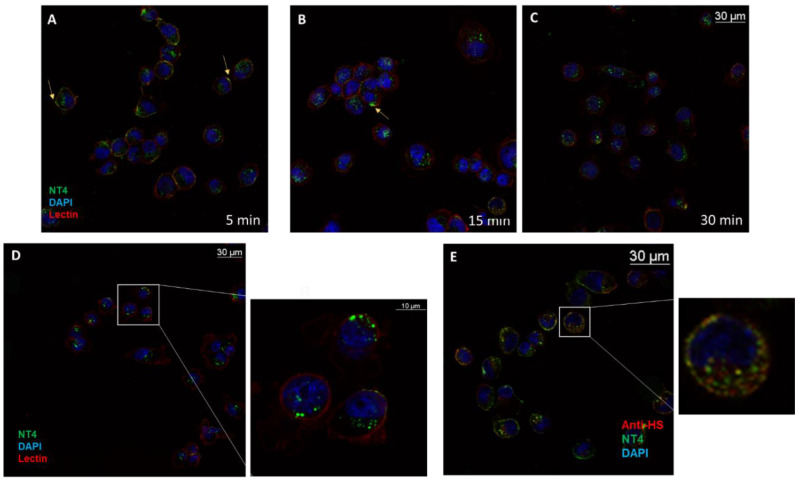
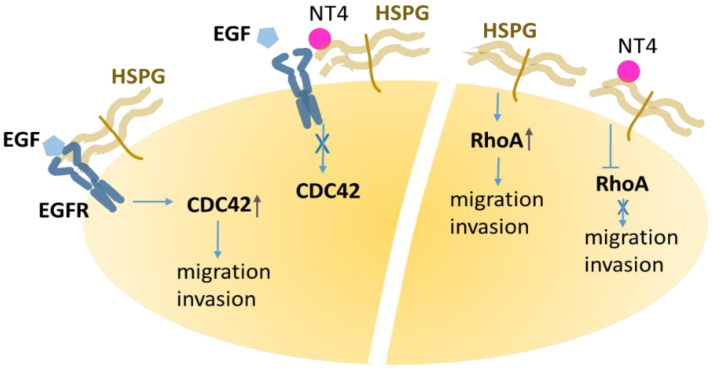
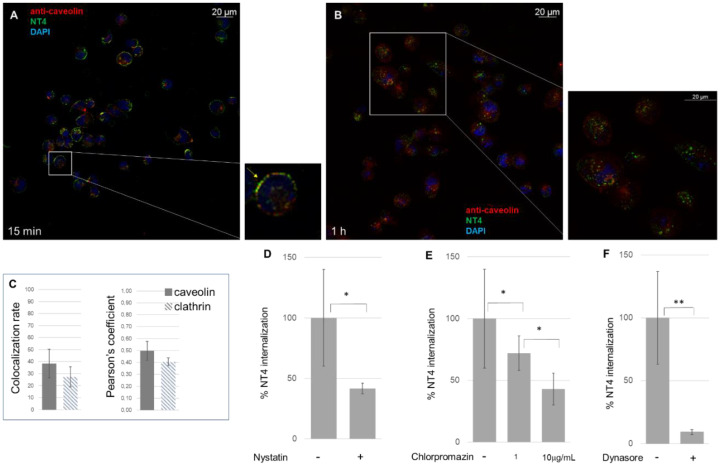
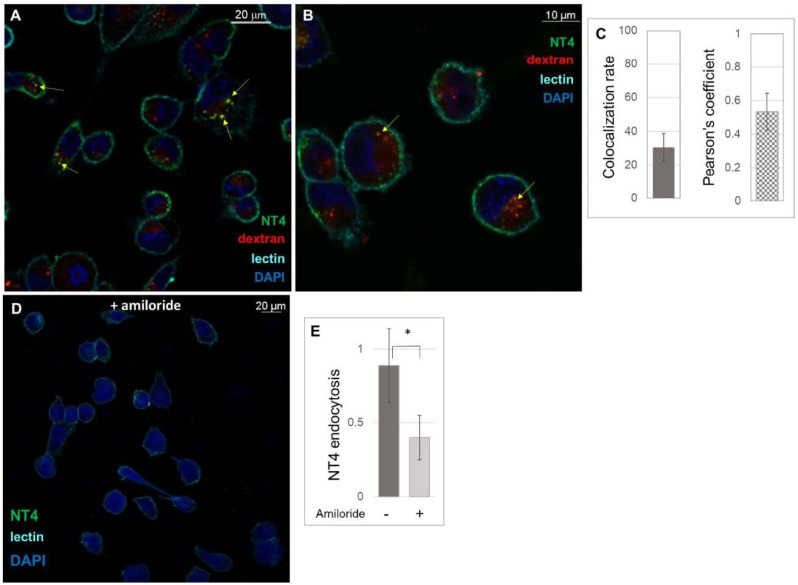
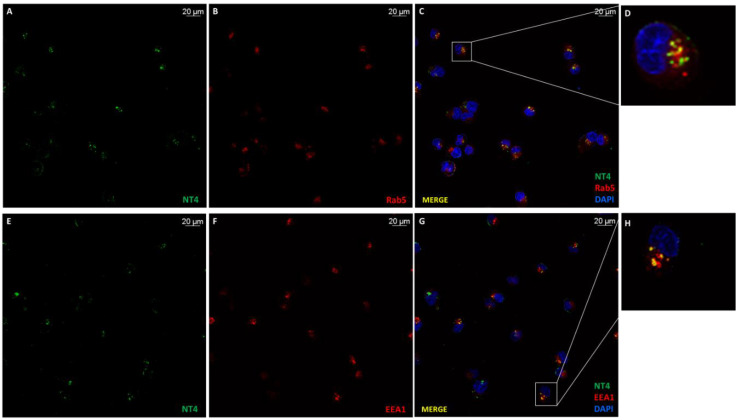
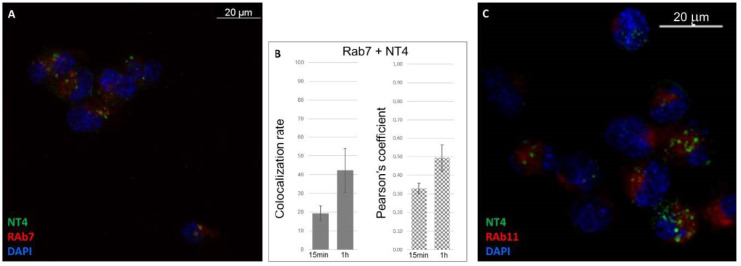
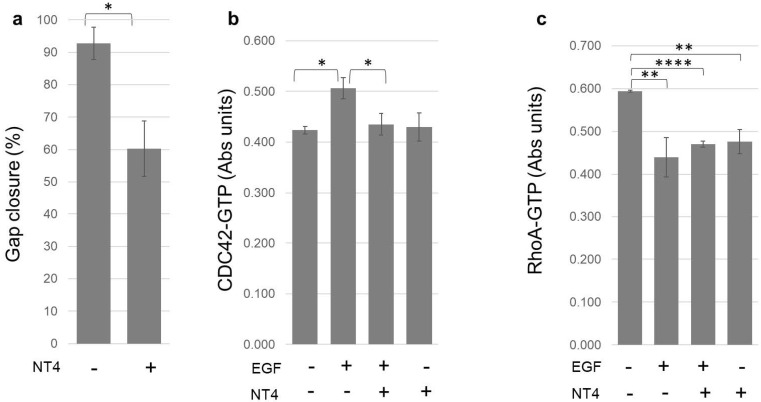
The process of heparan sulfate proteoglycan (HSPG) internalization has been described as following different pathways. The tumor-specific branched NT4 peptide has been demonstrated to bind HSPGs on the plasma membrane and to be internalized in tumor cell lines. The polycationic peptide has been also shown to impair migration of different cancer cell lines in 2D and 3D models. Our hypothesis was that HSPG endocytosis could affect two important phenomena of cancer development: cell migration and nourishment. Using NT4 as an experimental tool mimicking heparin-binding ligands, we studied endocytosis and trafficking of HSPGs in a triple-negative human breast cancer cell line, MDA-MB-231. The peptide entered cells employing caveolin- or clathrin-dependent endocytosis and macropinocytosis, in line with what is already known about HSPGs. NT4 then localized in early and late endosomes in a time-dependent manner. The peptide had a negative effect on CDC42-activation triggered by EGF. The effect can be explained if we consider NT4 a competitive inhibitor of EGF on HS that impairs the co-receptor activity of the proteoglycan, reducing EGFR activation. Reduction of the invasive migratory phenotype of MDA-MB-231 induced by NT4 can be ascribed to this effect. RhoA activation was damped by EGF in MDA-MB-231. Indeed, EGF reduced RhoA-GTP and NT4 did not interfere with this receptor-mediated signaling. On the other hand, the peptide alone determined a small but solid reduction in active RhoA in breast cancer cells. This result supports the observation of few other studies, showing direct activation of the GTPase through HSPG, not mediated by EGF/EGFR.
硫酸乙酰肝素蛋白聚糖 (HSPG) 内化的过程被描述为以下不同途径。已经证明肿瘤特异性分支 NT4 肽与质膜上的 HSPG 结合,并被内化到肿瘤细胞系中。该多阳离子肽也已被证明可在 2D 和 3D 模型中损害不同癌细胞系的迁移。我们的假设是 HSPG 内吞作用可能会影响癌症发展的两个重要现象:细胞迁移和营养。我们使用 NT4 作为模拟肝素结合配体的实验工具,研究了三阴性人乳腺癌细胞系 MDA-MB-231 中 HSPG 的内吞作用和转运。该肽通过网格蛋白或胞吞作用依赖的内吞作用进入细胞,这与已知的 HSPG 情况一致。NT4 随后以时间依赖性方式定位于早期和晚期内涵体。该肽对 EGF 触发的 CDC42 激活具有负效应。如果我们认为 NT4 是 HS 上 EGF 的竞争性抑制剂,会损害蛋白聚糖的共受体活性,从而降低 EGFR 激活,那么这种效应就可以得到解释。NT4 对 MDA-MB-231 诱导的侵袭性迁移表型的抑制作用可以归因于这种效应。RhoA 激活被 MDA-MB-231 中的 EGF 抑制。事实上,EGF 降低了 RhoA-GTP,而 NT4 并未干扰这种受体介导的信号转导。另一方面,该肽本身可使乳腺癌细胞中活性 RhoA 略有降低。这一结果支持了其他一些研究的观察结果,表明 HSPG 可直接激活 GTPase,而不通过 EGF/EGFR 介导。