Grazioso Rinaldo, García-Viñuales Sara, Russo Luigi, D'Abrosca Gianluca, Esposito Sabrina, Zaccaro Laura, Iacovino Rosa, Milardi Danilo, Fattorusso Roberto, Malgieri Gaetano, Isernia Carla
Department of Environmental, Biological and Pharmaceutical Science and Technology, University of Campania-Luigi Vanvitelli, Via Vivaldi 43, 81100 Caserta, Italy.
Institute of Crystallography-CNR, Via Paolo Gaifami 18, 95126 Catania, Italy.
Int J Mol Sci. 2020 Nov 5;21(21):8285. doi: 10.3390/ijms21218285.
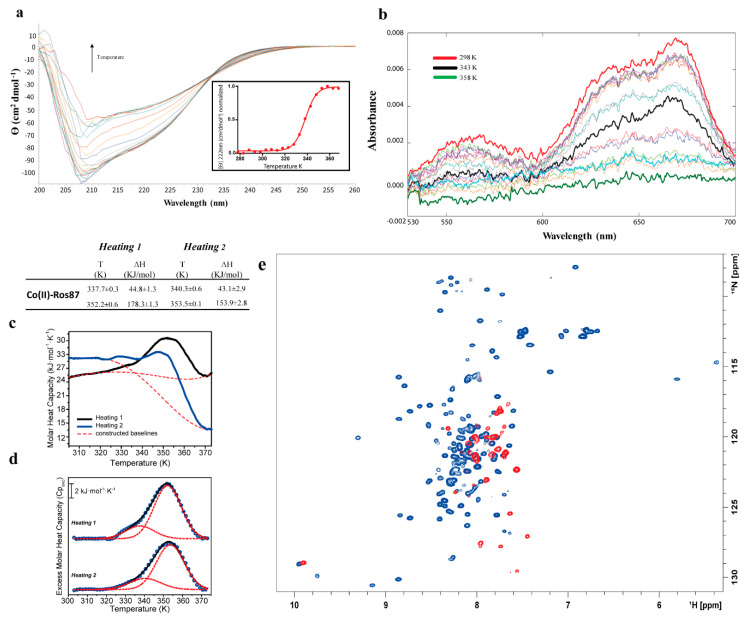
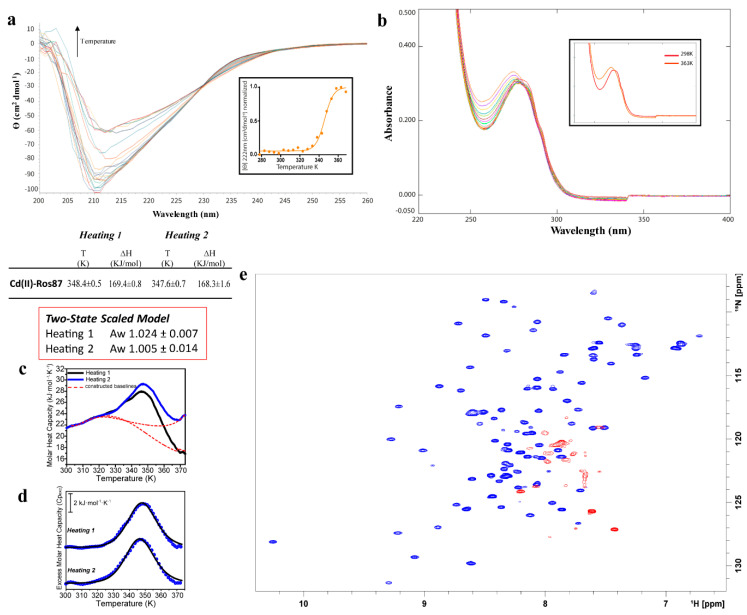
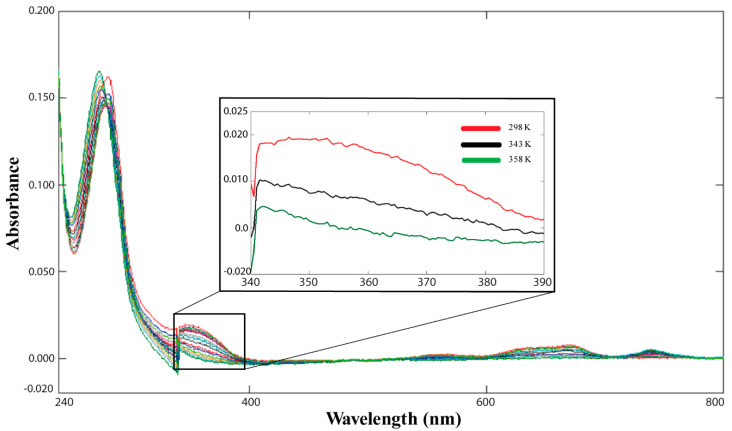
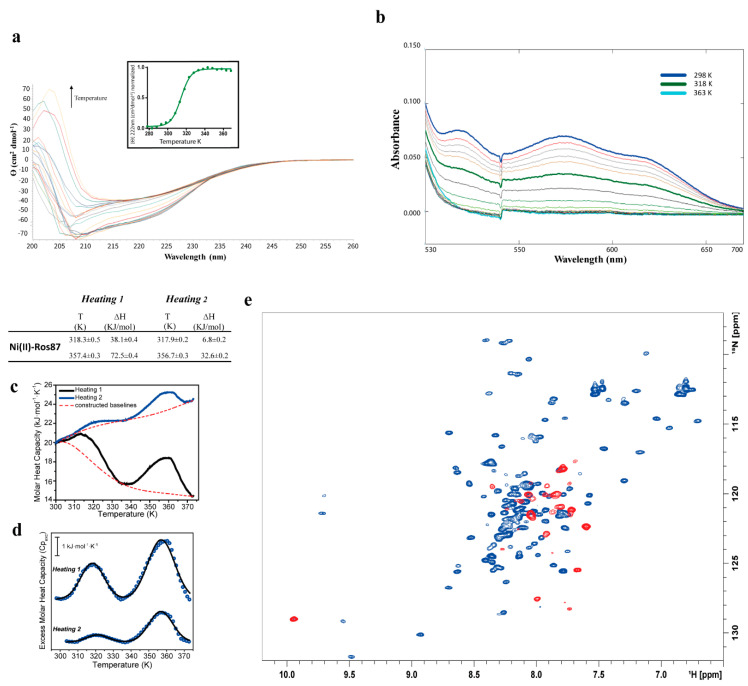
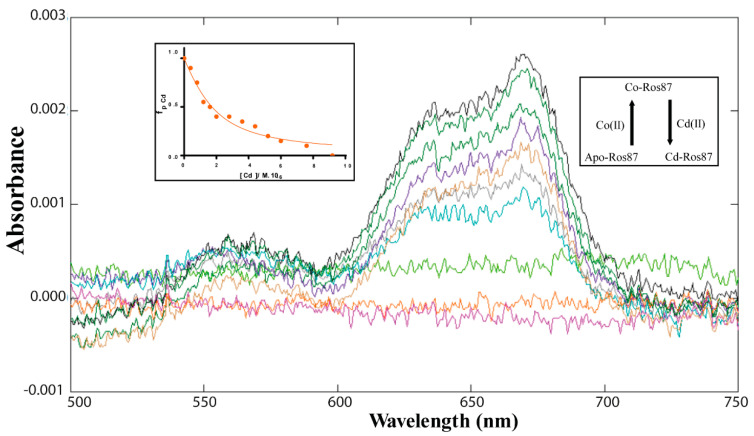
The structural effects of zinc replacement by xenobiotic metal ions have been widely studied in several eukaryotic and prokaryotic zinc-finger-containing proteins. The prokaryotic zinc finger, that presents a bigger βββαα domain with a larger hydrophobic core with respect to its eukaryotic counterpart, represents a valuable model protein to study metal ion interaction with metallo-proteins. Several studies have been conducted on Ros87, the DNA binding domain of the prokaryotic zinc finger Ros, and have demonstrated that the domain appears to structurally tolerate Ni(II), albeit with important structural perturbations, but not Pb(II) and Hg(II), and it is in vitro functional when the zinc ion is replaced by Cd(II). We have previously shown that Ros87 unfolding is a two-step process in which a zinc binding intermediate converts to the native structure thorough a delicate downhill folding transition. Here, we explore the folding/unfolding behaviour of Ros87 coordinated to Co(II), Ni(II) or Cd(II), by UV-Vis, CD, DSC and NMR techniques. Interestingly, we show how the substitution of the native metal ion results in complete different folding scenarios. We found a two-state unfolding mechanism for Cd-Ros87 whose metal affinity is comparable to the one obtained for the native Zn-Ros87, and a more complex mechanism for Co-Ros87 and Ni-Ros87, that show higher values. Our data outline the complex cross-correlation between the protein-metal ion equilibrium and the folding mechanism proposing such an interplay as a key factor in the proper metal ion selection by a specific metallo-protein.
在几种含有锌指的真核和原核蛋白质中,异源生物金属离子取代锌的结构效应已得到广泛研究。原核锌指相对于其真核对应物呈现出更大的βββαα结构域和更大的疏水核心,是研究金属离子与金属蛋白相互作用的有价值的模型蛋白。对原核锌指Ros的DNA结合结构域Ros87进行了多项研究,结果表明该结构域似乎在结构上能够耐受Ni(II),尽管存在重要的结构扰动,但不能耐受Pb(II)和Hg(II),并且当锌离子被Cd(II)取代时,它在体外具有功能。我们之前已经表明,Ros87的去折叠是一个两步过程,其中锌结合中间体通过微妙的下坡折叠转变转化为天然结构。在这里,我们通过紫外可见光谱、圆二色光谱、差示扫描量热法和核磁共振技术,探索了与Co(II)、Ni(II)或Cd(II)配位的Ros87的折叠/去折叠行为。有趣的是,我们展示了天然金属离子的取代如何导致完全不同的折叠情况。我们发现Cd-Ros87的去折叠机制为两态,其金属亲和力与天然Zn-Ros87相当,而Co-Ros87和Ni-Ros87的机制更为复杂,显示出更高的值。我们的数据概述了蛋白质-金属离子平衡与折叠机制之间复杂的相互关系,提出这种相互作用是特定金属蛋白正确选择金属离子的关键因素。