Department of Sports and Physical Education, University of Granada, 18071 Granada, Spain.
Department of Physical Education, Sport and Recreation, Universidad de La Frontera, Temuco, Chile.
Int J Environ Res Public Health. 2020 Nov 5;17(21):8184. doi: 10.3390/ijerph17218184.
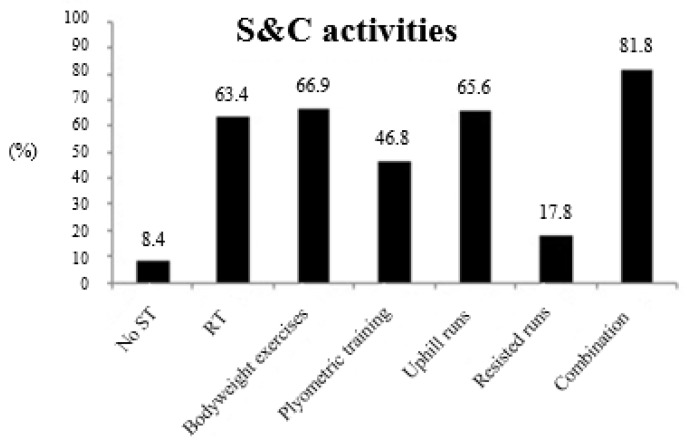
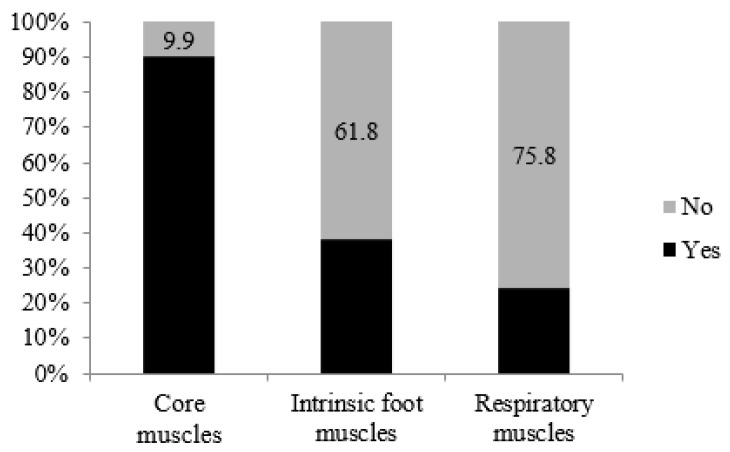
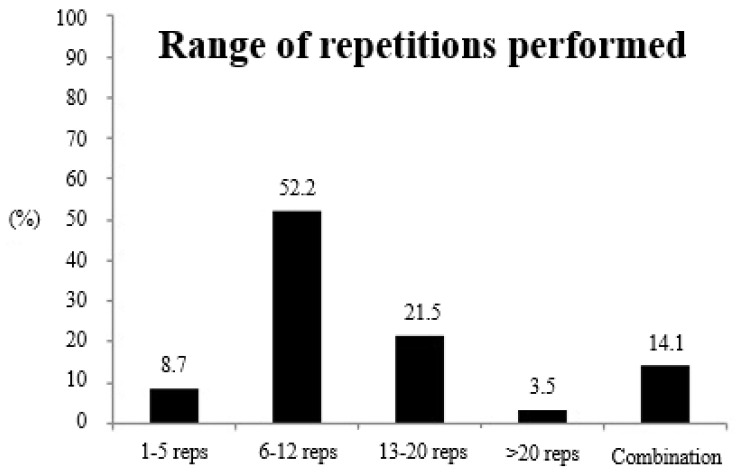
This study determined the strength training (ST) habits of amateur endurance runners in Spain regarding athletic level. A sixteen-item online questionnaire comprised of (i) demographic information, (ii) performance, and (iii) training contents was completed by 1179 athletes. Five group levels were determined according to the personal best times of the athletes in a 10-km trial (LG1: level group 1, 50-55 min; LG2: level group 2, 45-50 min; LG3: level group 3, 40-45 min; LG4: level group 4, 35-40 min; LG5: level group 5, 30-35 min). Most athletes ( = 735, 62.3%) perceived ST as being a key component in their training program. Resistance training (RT) was reported as a ST type used by 63.4% of the athletes, 66.9% reported using bodyweight exercises, 46.8% reported using plyometric training, 65.6% reported using uphill runs, and 17.8% reported using resisted runs. The prevalence of runners who excluded ST from their training programs decreased as the athletic performance level increased (18.2% in lower-level athletes vs. 3.0% in higher-level), while the inclusion of RT, bodyweight exercises, plyometric training, and uphill and resisted runs was more frequent within higher-level groups. Most athletes included ST using low-to-moderate loads and high a number of repetitions/sets comprised of RT, plyometric training, resisted runs, and core, respiratory, and foot muscles training.
本研究旨在确定西班牙业余耐力跑者的力量训练(ST)习惯与运动水平的关系。一份由 16 个项目组成的在线问卷,包括(i)人口统计学信息,(ii)表现,和(iii)训练内容,由 1179 名运动员完成。根据运动员在 10 公里试跑中的个人最佳成绩(LG1:水平组 1,50-55 分钟;LG2:水平组 2,45-50 分钟;LG3:水平组 3,40-45 分钟;LG4:水平组 4,35-40 分钟;LG5:水平组 5,30-35 分钟),确定了五个组别的水平。大多数运动员(=735,62.3%)认为 ST 是他们训练计划的关键组成部分。阻力训练(RT)被 63.4%的运动员报告为一种 ST 类型,66.9%的运动员报告使用自重练习,46.8%的运动员报告使用增强式训练,65.6%的运动员报告使用上坡跑,17.8%的运动员报告使用抗阻跑。随着运动水平的提高,不将 ST 纳入训练计划的跑者比例下降(低水平运动员中为 18.2%,高水平运动员中为 3.0%),而高水平组中更频繁地包含 RT、自重练习、增强式训练以及上坡跑和抗阻跑。大多数运动员使用低至中等负荷的 ST,并采用高次数的重复/组,包括 RT、增强式训练、抗阻跑以及核心、呼吸和足部肌肉训练。