Laboratory of Cell Biology, Center for Cancer Research, National Cancer Institute, NIH, Bethesda, MD 20892.
Laboratory of Cell Biology, Center for Cancer Research, National Cancer Institute, NIH, Bethesda, MD 20892
Proc Natl Acad Sci U S A. 2020 Nov 24;117(47):29609-29617. doi: 10.1073/pnas.2016270117. Epub 2020 Nov 9.
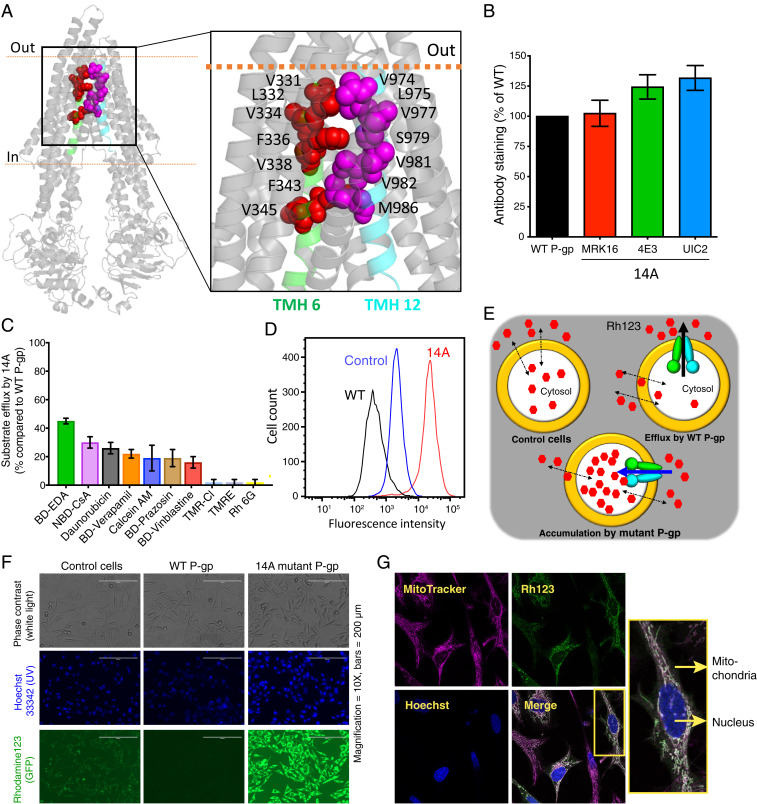
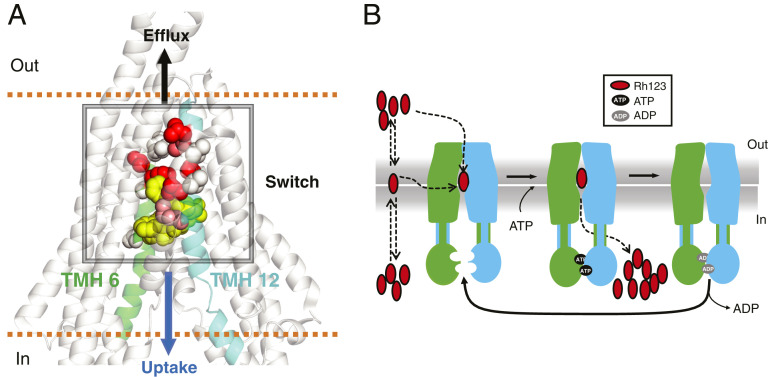
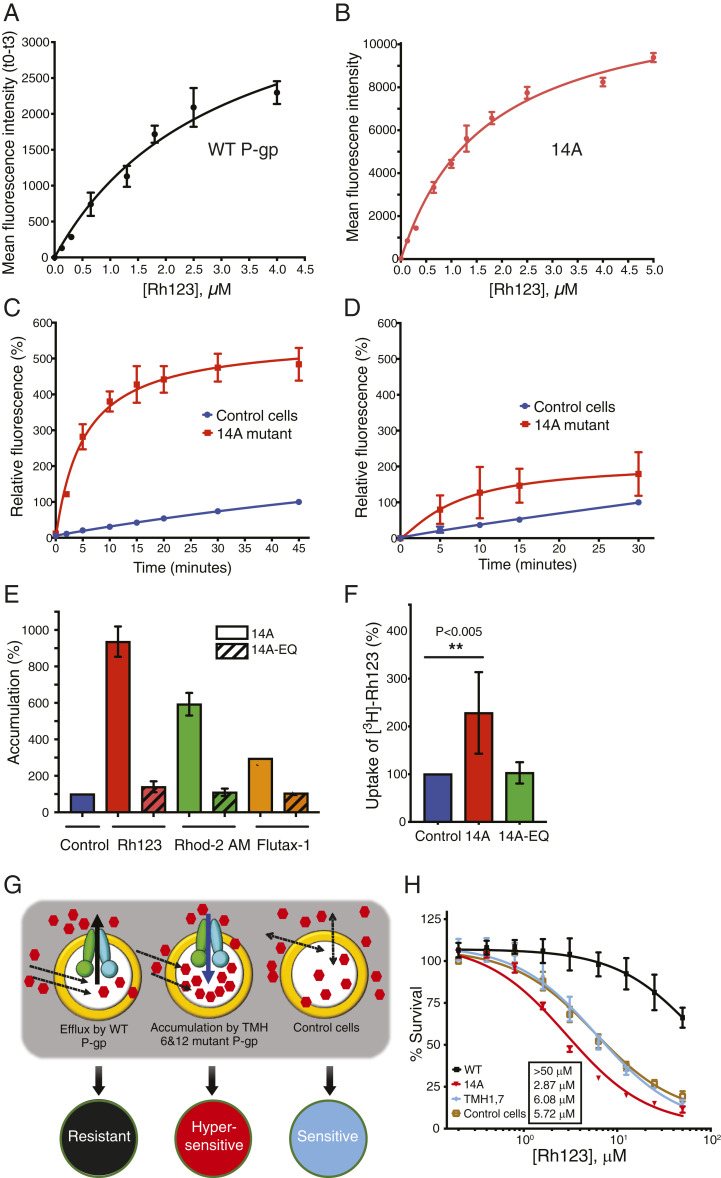
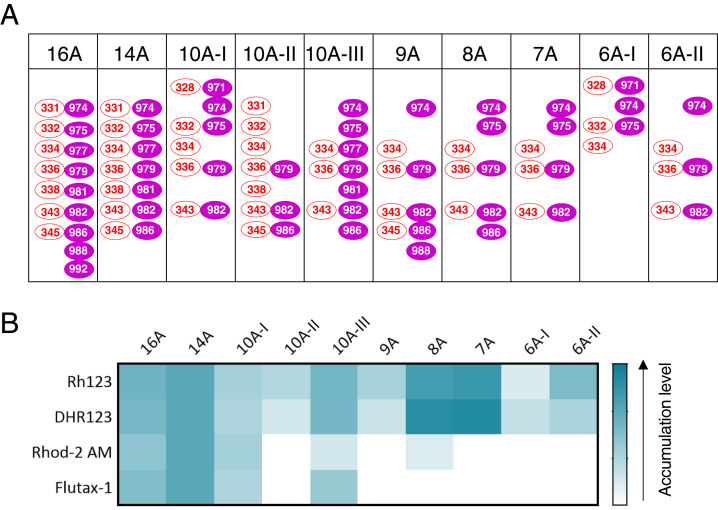
P-glycoprotein (P-gp), also known as ABCB1, is a cell membrane transporter that mediates the efflux of chemically dissimilar amphipathic drugs and confers resistance to chemotherapy in most cancers. Homologous transmembrane helices (TMHs) 6 and 12 of human P-gp connect the transmembrane domains with its nucleotide-binding domains, and several residues in these TMHs contribute to the drug-binding pocket. To investigate the role of these helices in the transport function of P-gp, we substituted a group of 14 conserved residues (seven in both TMHs 6 and 12) with alanine and generated a mutant termed 14A. Although the 14A mutant lost the ability to pump most of the substrates tested out of cancer cells, surprisingly, it acquired a new function. It was able to import four substrates, including rhodamine 123 (Rh123) and the taxol derivative flutax-1. Similar to the efflux function of wild-type P-gp, we found that uptake by the 14A mutant is ATP hydrolysis-, substrate concentration-, and time-dependent. Consistent with the uptake function, the mutant P-gp also hypersensitizes HeLa cells to Rh123 by 2- to 2.5-fold. Further mutagenesis identified residues from both TMHs 6 and 12 that synergistically form a switch in the central region of the two helices that governs whether a given substrate is pumped out of or into the cell. Transforming P-gp or an ABC drug exporter from an efflux transporter into a drug uptake pump would constitute a paradigm shift in efforts to overcome cancer drug resistance.
P-糖蛋白(P-gp),也称为 ABCB1,是一种细胞膜转运蛋白,可介导化学上不同的两亲性药物的外排,并使大多数癌症对化疗产生耐药性。人 P-gp 的同源跨膜螺旋(TMHs)6 和 12 将跨膜结构域与其核苷酸结合结构域连接起来,这些 TMHs 中的几个残基有助于药物结合口袋。为了研究这些螺旋在 P-gp 转运功能中的作用,我们用丙氨酸取代了一组 14 个保守残基(TMHs 6 和 12 各 7 个),并生成了一个突变体,称为 14A。尽管 14A 突变体丧失了将大多数测试的底物泵出癌细胞的能力,但令人惊讶的是,它获得了一个新功能。它能够导入四种底物,包括罗丹明 123(Rh123)和紫杉醇衍生物 flutax-1。与野生型 P-gp 的外排功能相似,我们发现 14A 突变体的摄取是依赖于 ATP 水解、底物浓度和时间的。与摄取功能一致,该突变体 P-gp 还使 HeLa 细胞对 Rh123 的敏感性增加了 2 到 2.5 倍。进一步的突变分析确定了来自 TMHs 6 和 12 的残基,它们协同形成了两条螺旋中央区域的开关,该开关决定了给定的底物是被泵出还是泵入细胞。将 P-gp 或 ABC 药物外排泵从外排转运蛋白转变为药物摄取泵,将构成克服癌症药物耐药性努力的范式转变。