The National Key Clinical Specialty, The Engineering Technology Research Center of Education Ministry of China, Guangdong Provincial Key Laboratory on Brain Function Repair and Regeneration, Department of Neurosurgery, Zhujiang Hospital, Southern Medical University, Guangzhou, China.
Department of Neurosurgery, Affiliated Hengyang Hospital, Southern Medical University (Hengyang Central Hospital), Hengyang, China.
Aging (Albany NY). 2020 Nov 7;12(21):21161-21185. doi: 10.18632/aging.103796.
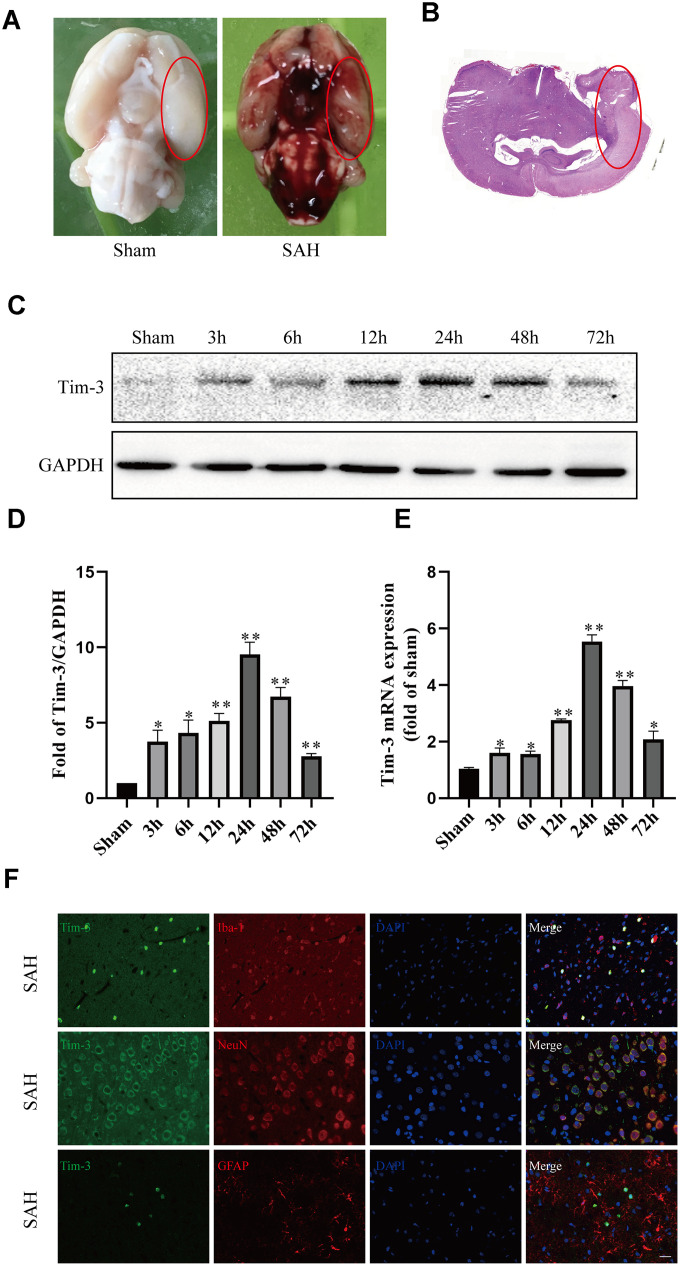
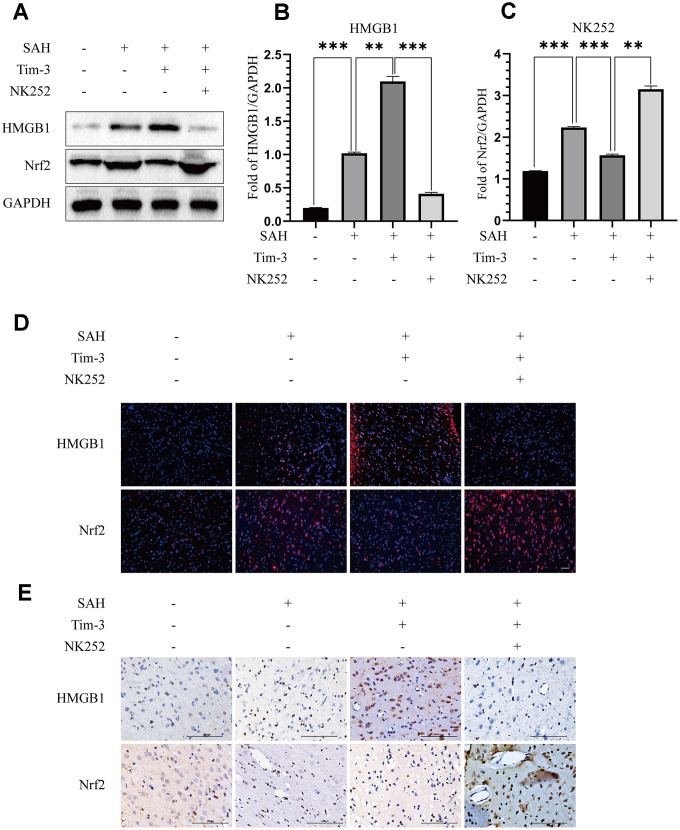
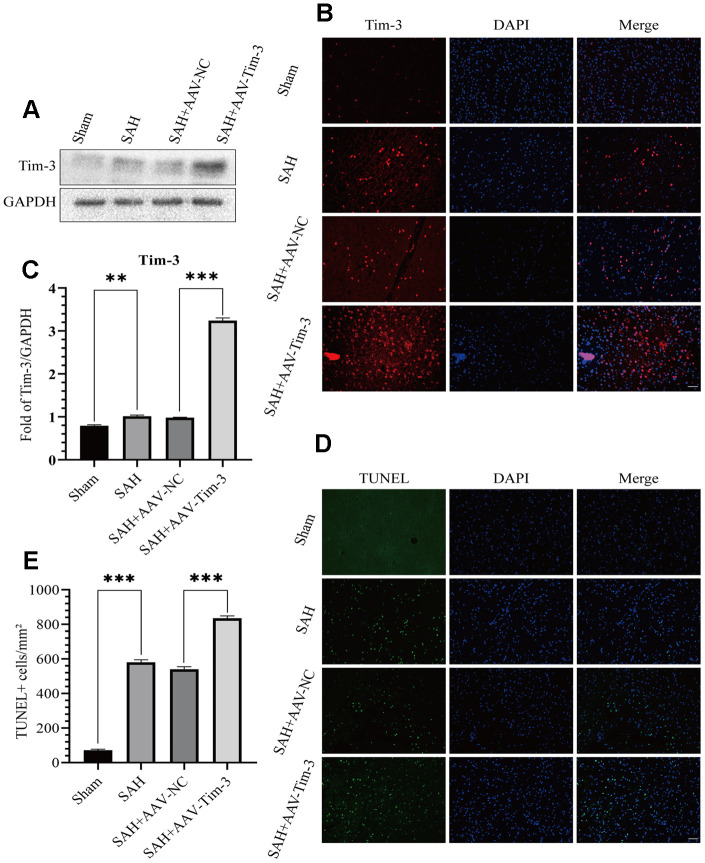
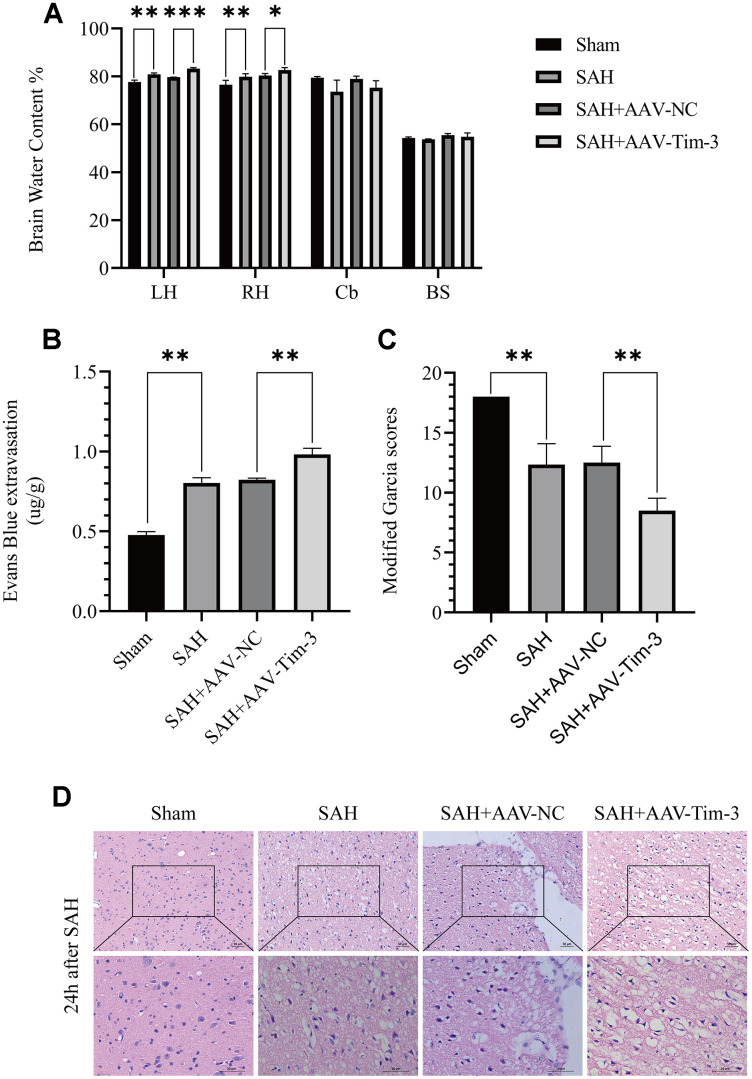
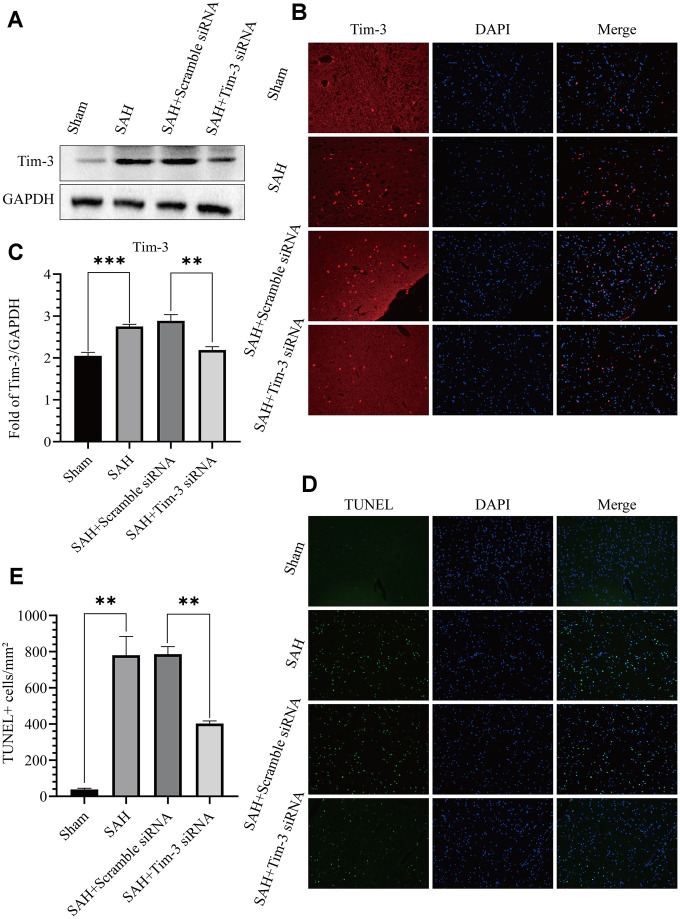
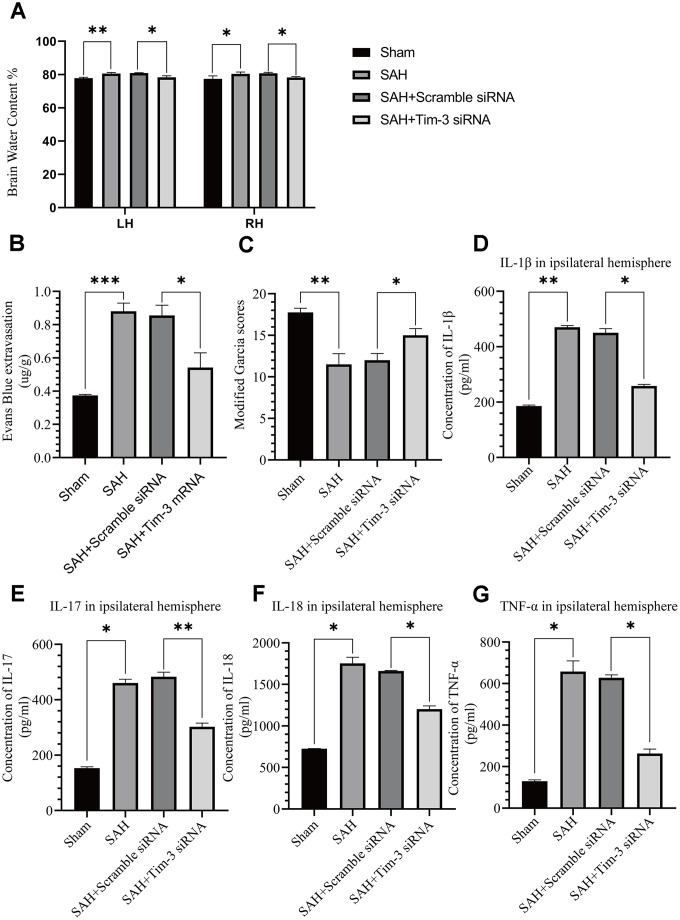
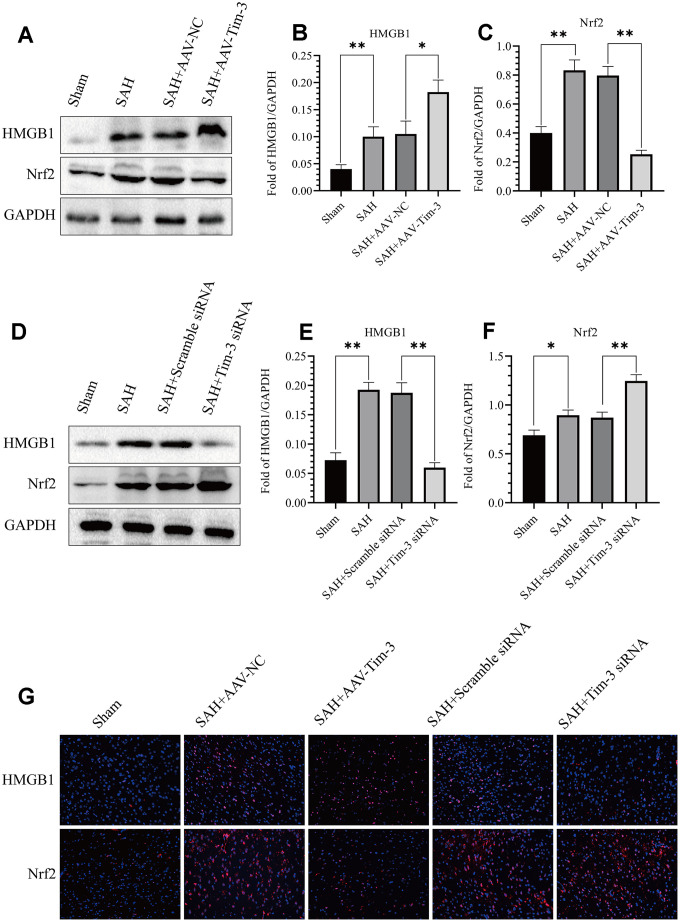
Inflammation is known to play an important role in early brain injury (EBI) after subarachnoid hemorrhage (SAH). T cell immunoglobulin and mucin domain-3 (Tim-3) has emerged as a critical regulator of adaptive and innate immune responses, and has been identified to play a vital role in certain inflammatory diseases; The present study explored the effect of Tim-3 on inflammatory responses and detailed mechanism in EBI following SAH. We investigated the effects of Tim-3 on SAH models established by endovascular puncture method in Sprague-Dawley rats. The present studies revealed that SAH induced a significant inflammatory response and significantly increased Tim-3 expression. Tim-3-AAV administration aggravated neurocyte apoptosis, brain edema, blood-brain barrier permeability, and neurological dysfunction; significantly inhibited Nrf2 expression; and increased HMGB1 expression and secretion of pro-inflammatory cytokines, such as tumor necrosis factor alpha, interleukin (IL)-1 beta, IL-17, and IL-18. However, Tim-3 siRNA or NK252 administration abolished the pro-inflammatory effects of Tim-3. Our results indicate a function for Tim-3 as a molecular player that links neuroinflammation and brain damage after SAH. We reveal that Tim-3 overexpression deteriorates neuroinflammatory and neurocyte apoptosis after subarachnoid hemorrhage through the Nrf2/HMGB1 signaling pathway in rats.
炎症被认为在蛛网膜下腔出血(SAH)后早期脑损伤(EBI)中起重要作用。T 细胞免疫球蛋白和粘蛋白结构域-3(Tim-3)已成为适应性和先天免疫反应的关键调节剂,并被确定在某些炎症性疾病中发挥重要作用;本研究探讨了 Tim-3 对蛛网膜下腔出血后 EBI 中炎症反应的影响及其详细机制。我们通过血管内穿刺法建立 Sprague-Dawley 大鼠的 SAH 模型,研究了 Tim-3 的作用。本研究表明,SAH 诱导了明显的炎症反应,Tim-3 表达明显增加。Tim-3-AAV 给药加重了神经细胞凋亡、脑水肿、血脑屏障通透性和神经功能障碍;显著抑制 Nrf2 表达;并增加 HMGB1 表达和促炎细胞因子(如肿瘤坏死因子-α、白细胞介素-1β、白细胞介素-17 和白细胞介素-18)的分泌。然而,Tim-3 siRNA 或 NK252 给药消除了 Tim-3 的促炎作用。我们的结果表明,Tim-3 作为一种分子参与者,在 SAH 后连接神经炎症和脑损伤。我们揭示了 Tim-3 通过 Nrf2/HMGB1 信号通路在大鼠蛛网膜下腔出血后过度表达加重神经炎症和神经细胞凋亡。